
Maruti Suzuki Aims for 30% Female Enrollment at Manesar JIM by 2028-29
- Published By: Vishal
- September 21, 2026 / 07:10 PM IST


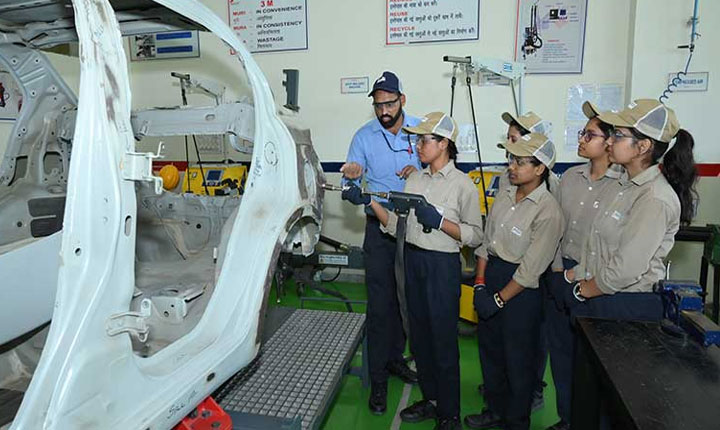
Maruti Suzuki India Limited (“Maruti Suzuki”) is intensifying efforts to enhance women participation in India’s automotive manufacturing workforce through its Japan-India Institute for Manufacturing (JIM) at Uncha Majra, Manesar. JIMs are established as a collaborative effort between the Governments of India and Japan to create a skilled workforce pool for the Indian manufacturing sector. Maruti Suzuki has built four such institutes—located in Mehsana and Gandhinagar in Gujarat, and Uncha Majra (Manesar) and Sonipat in Haryana. To build a stronger pipeline of trained women, JIM Uncha Majra is inducting female students in alignment with regional job opportunities. Building on steady enrollment growth over the past two academic years, the institute targets increasing female enrollment from approximately 5% in Academic Year (AY) 2025-26 to 30% of total admissions by AY 2028-29. JIM Uncha Majra offers courses across 9 trades primarily focused on the automotive sector.
Leadership Perspectives and Academic Excellence:
Highlighting the academic excellence of female students, Mr. Rahul Bharti, Senior Executive Officer for Corporate Affairs at Maruti Suzuki India Limited, stated that achieving a 360-degree completeness of skills requires diversity, affirming the company’s commitment to increasing women’s participation in manufacturing. While talented women exist across the country, many remain unaware of sector opportunities or have not considered it as a career choice. He expressed encouragement that two female students from JIM Uncha Majra emerged as Haryana state toppers in manufacturing trades this year, demonstrating women’s immense potential. Furthermore, JIM Uncha Majra students continue to secure top state ranks, achieving top rankers across four trades this year, with all three top positions secured by institute students in two of those trades.
Holistic Support and Infrastructure Measures:
To increase female enrollment, Maruti Suzuki is adopting a holistic approach centered on creating a supportive and inclusive learning environment. This strategy includes providing a dedicated women’s hostel and increasing women’s representation across faculty and support functions. Additionally, starting from the current academic year, the institute has introduced a 100% tuition fee waiver for women students to encourage young women to pursue manufacturing careers and contribute to India’s industrial workforce growth.
Related News

Ai+ Nova 2 Power 5G Debuts in India Merging High Fashion with Long-Lasting Performance

Amazon.in Announces Great Indian Festival 2026 Starting October 8
Design Democracy 2026 Kicks Off Its Fourth Edition at HITEX Exhibition Center, Hyderabad

ICICI Prudential Life Posts Industry-High 99.31% Claim Settlement Ratio for Q1-FY2027
Sundaram Finance Celebrates Legacy and Loyalty at Exclusive Karimnagar Customer Meet