

Delayed Monsoon and Super El Niño Threaten India’s $300 Billion Agricultural Growth Engine
- Published By: Phanindra
- June 30, 2026 / 08:54 AM IST


The biggest threat to the Indian economy right now isn’t volatile global supply chains or fluctuating crude oil prices. Instead, financial analysts are turning their eyes to the skies, where a severely delayed monsoon is causing widespread distress. With vital June rains missing in action across multiple regions, the planting schedule for Kharif (summer-sown) crops has taken a significant hit, triggering deep economic anxiety.
Crop Belts Go Dry Across Major States
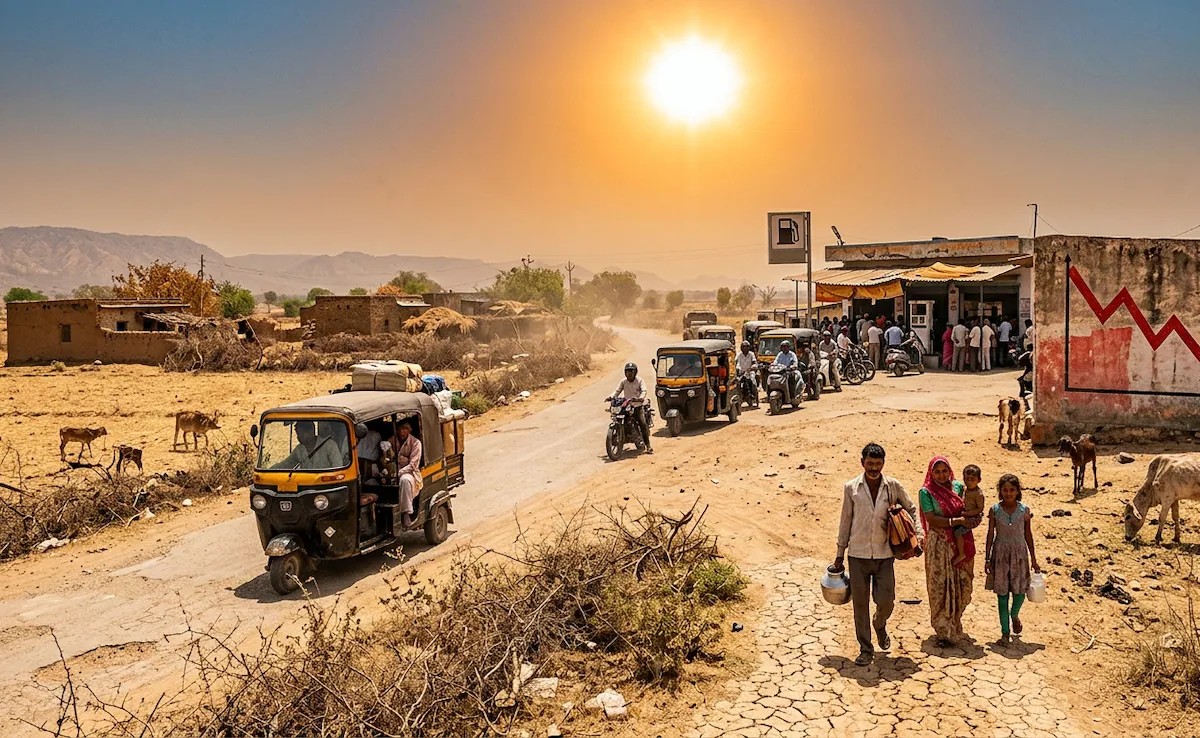
A persistent rainfall deficit is stretching across India’s core agricultural heartland. The dry spell is heavily impacting a massive farming belt that spans Rajasthan, Gujarat, Maharashtra, Karnataka, Madhya Pradesh, Telangana, and Uttar Pradesh. This regional drought places immense pressure on the production of essential staples, as these states generate the lion’s share of the nation’s soybean, sugarcane, cotton, and pulses. The situation is particularly critical in Nashik, the country’s primary onion production hub, which has recorded just 16% of its normal seasonal rainfall. This acute water shortage is highly likely to send onion prices skyrocketing, threatening to disrupt household kitchen budgets nationwide.
The anxiety deepened when the monsoon arrived two weeks late in Mumbai, a city usually hit by heavy downpours early in June. As fields remain parched, millions of farmers are holding off on sowing seeds, pushing India’s crucial $300 billion agricultural sector toward a major productivity crisis.
The Looming Shadow of a Super El Niño
Making matters worse, meteorologists are warning about the imminent arrival of a “Super El Niño” phenomenon in the Pacific Ocean. Climate experts caution that this warming pattern could result in the weakest monsoon season the country has witnessed in 11 years. The Reserve Bank of India (RBI) has already issued an alert regarding the macroeconomic fallout. A weak monsoon will likely drive up the cost of cooking oils, sugar, and cotton, adding fresh fuel to the stubborn inflation trends that have lingered since 2025.
Threat of Restricting Global Exports
The government has used aggressive trade barriers to stabilize the domestic market during past droughts. For instance, when rains failed in 2023, New Delhi immediately banned non-basmati white rice exports to secure local supplies, a move that sent shockwaves through international food markets. Industry insiders predict a similar playbook could be deployed this year, with tight restrictions potentially hitting sugar exports next. On paper, India’s food production framework is structurally stronger than in previous decades, thanks to healthy fertilizer reserves and expanded scientific irrigation networks. However, accelerating global warming has made seasonal weather patterns completely unpredictable. The impending economic fallout from this Super El Niño will travel far beyond rural farmlands, directly impacting the wallets of consumers across South Asia, a region that houses a quarter of the world’s population.
Related News

Stars Unite in Mumbai for The Earthshot Prize 2026 Awards Night Prime Video Named Exclusive Streaming Partner

HCCB-Backed Archer Ganesh Mani Ratnam Thirumuru Wins Gold and Bronze at 20th Asian Games

Ultraviolette Expands Retail Footprint with New UV Space Station in Anantapur

Amazon Expands Ultra-Fast Delivery Service ‘Amazon Now’ to Over 120 Cities Across India

GREW Solar Announces Channel Partnership with Energy Cubez in Kerala