
Coca-Cola India and IRCTC Repurpose Waste for the Sprite Tejas Express
- Published By: Vishal
- August 21, 2026 / 06:52 PM IST


In a significant stride toward circular economy initiatives in public transit, Coca-Cola India and the Indian Railway Catering and Tourism Corporation (IRCTC) have integrated practical waste-to-value solutions into India’s first branded train, the Sprite Tejas Express. Building upon their ongoing partnership, this latest collaboration showcases how post-consumer waste can be successfully repurposed into meaningful, high-utility infrastructure across prominent public spaces.
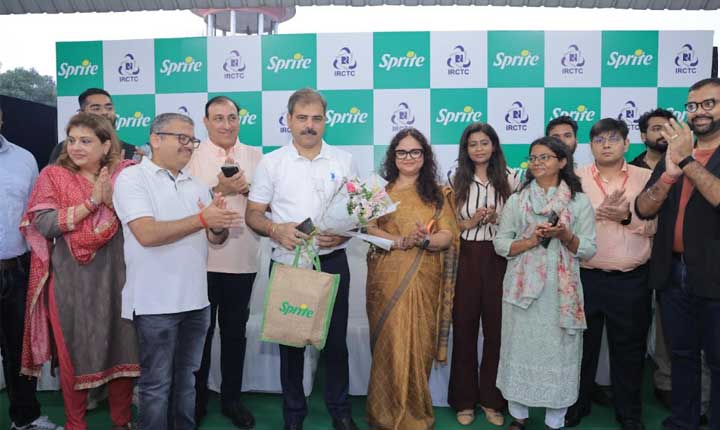
During an official launch event attended by senior leadership from Indian Railways, IRCTC, and Coca-Cola India, a prominent highlight was a specially designed ceremonial flag crafted entirely from recycled PET bottles. Furthermore, this environmental approach translates into durable, public-facing utility at Lucknow Station, where newly installed park benches have been manufactured using recycled plastic waste. Each individual bench successfully repurposes approximately 45 kilograms of post-consumer packaging waste.
Detailing the vision behind the project, Devyani RL Rana, Vice President of Public Affairs, Communications and Sustainability for Coca-Cola India and Southwest Asia, emphasized: “In partnership with IRCTC, we are bringing practical waste-to-value solutions directly into public settings by transforming post-consumer waste into high-utility assets at prominent transit hubs. We are turning responsible waste management into a practical, scalable reality. We look forward to expanding such public-sector collaborations to support impactful, long-term solutions across India.”
Looking ahead, the operation of the Sprite Tejas Express offers continuous opportunities to explore further applications of recycled and repurposed materials throughout the passenger journey both at railway stations and on board the train itself. This initiative reflects Coca-Cola India’s broader commitment to partnering with government and public-sector stakeholders to champion environmental responsibility across local communities and shared public spaces.
Related News
Major Indian Banks Report Strong Q2 FY27 Financial Results with Record Profits and Asset Quality Improvements
KRAFTON Unveils ‘Battlin’, India’s First Unified Esports Tournament Platform for BGMI
Cotecna Expands Global Life Sciences Footprint with Acquisition of Hyderabad-Based Energon Labs

ITC Hotels Signs 104-Key Welcomhotel in Manesar Gurugram to Expand NCR Presence

Weverse Con Festival India Unveils a Landmark Lineup of Global K-Pop and Indian Artists for its Inaugural Edition