

Shocking: Do You Know How AI Is Teaching Robots About the Real World?
- Published By: techteam
- August 10, 2026 / 07:00 PM IST


— Surya Prakash Josyula
Imagine a day in the future when you have a robot at home. You look at it and say, “Bring me the water bottle from the kitchen.” The robot understands you and walks into the kitchen. It finds the bottle, but that is only the beginning. Is the bottle made of glass or plastic? How tightly should it hold it? How should it get past the chair in front of it? What if the floor is wet? Once it picks up the bottle, how should it safely return to you? Unless the robot can understand all these things, it has not really understood your command.
So, how does a robot learn all this knowledge? A human can stand beside it and demonstrate different tasks. We can teach it how to hold a bottle, show it how to open a door, or teach it to walk carefully on a wet floor. But can we teach a robot every object, every room, every road, every situation and every possible danger one by one? That is simply not possible. The real world is not an instruction manual.
So how did humans learn all this knowledge in the first place? Nobody taught us thousands of times that a glass should not be placed near the edge of a table because it could fall. When we were children, we saw a glass fall. We saw it happen again. We noticed that it could break. Slowly, our brain learned a simple connection: if this happens, that may happen next. That is one of the basic ways humans understand the real world.
When we throw a ball, we can roughly predict where it will go. When we see a wet floor, we naturally become more careful. When a fast-moving car approaches, we know not to step into its path. When we see a heavy object, we understand that it may be difficult to lift with one hand. Humans did not memorize every possible situation separately. We watched how things behaved and gradually learned the basic rules behind them. Now AI researchers are trying to give machines a similar ability.
Robots Don’t Just Need Tasks. They Need to Understand the World
Teaching a robot to “bring the bottle” is not the biggest challenge. The real problem begins when the robot encounters a bottle it has never seen before. What if it enters a completely new room? What if the floor is wet? What if the bottle is hidden behind a chair? What if another person is walking nearby while the robot is trying to pick it up? We cannot give the robot a separate instruction for every possible situation.
That is why AI researchers are exploring a different approach. Instead of giving robots a long list of instructions, they want to teach them how the world works. If an object moves, what is likely to happen next? If a person takes one step, where is the next step likely to be? If you push an object, how far might it move? If you throw a ball into the air, where is it likely to land? If a car is moving quickly, how might a person on the road react? If AI can learn to predict such things, it could become much better at operating in the real world.
But that raises another question: how do we show the real world to AI?
Video Could Become a Giant Classroom for AI
Humans learn about the world largely by watching it. We observe people, objects, vehicles, animals and machines, and over time our brains build an understanding of how they behave. AI cannot simply be sent into homes, factories or busy roads without proper training. But there is already an enormous visual record of the real world available to us. That record is video.
Think about what videos contain. People walking, cars moving on roads, children playing, objects falling, machines operating, doors opening, people picking things up, holding them, pulling them, pushing them and putting them down. There are countless examples of actions and reactions captured in visual data. If an AI model can study these videos not simply by asking “What is happening here?”, but also by learning “What is likely to happen next?”, video becomes much more than a visual record. It becomes a way for AI to learn how the real world behaves.
This is one of the most interesting shifts happening in AI research. An AI system should not only be able to recognize an object. It should also understand how that object behaves and what could happen when someone interacts with it. A system that can see a glass on a table is useful. A system that can understand that pushing the glass toward the edge could make it fall is much more powerful. In other words, AI needs to move from simply recognizing the world to understanding and predicting the world.
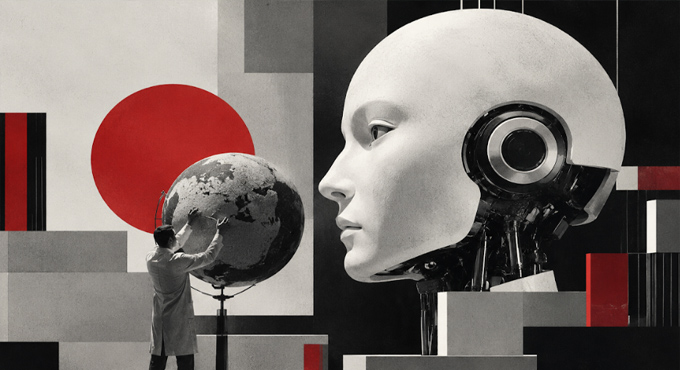
This idea is broadly connected to what researchers call a World Model.
What Is a World Model?
In simple terms, a World Model is an AI system that tries to understand how the world works and predict what could happen next. A robot should not only be able to recognize that something is a chair. It should understand that a chair can be sat on, that it occupies a certain amount of space, that it can block its path and that it should move around it rather than through it.
The human brain does this constantly. When you see a chair, you immediately understand that you can sit on it. When you see a wall, you know you cannot simply walk through it. When you see a glass close to the edge of a table, you understand that it could fall. We do not stop and perform mathematical calculations every time we encounter these situations. Our brain uses past experiences to predict what might happen next.
That is the kind of ability AI researchers want machines to develop. Instead of simply telling a robot what to do in every situation, the goal is to give it enough understanding of the world so that it can make decisions when something unexpected happens.
That would be a major change in robotics. A robot that has only memorized tasks may work well in situations it has already seen. But a robot that understands the basic rules of the world could potentially deal with situations it has never encountered before. It could look at a new object, consider how it might behave and decide what to do next.
That is why AI research is gradually moving from one question to a much bigger one. The question is no longer just “How should this task be done?” It is becoming “How does the real world work?”
And that may ultimately determine how useful the next generation of robots becomes.
Because the real power of tomorrow’s robot may not be in its hands, its cameras or even its mechanical body.
It may be in the AI brain that understands the world around it.
Related News

Are Loan Recovery Agents Threatening You at Home? What RBI’s New Rules Say
AI Sensation in Telangana Fields! World Bank’s Mind-Blowing Report!
Google’s AI Talent Exodus: Is Salary Really the Problem?

The Strange Loop

UAE: Passport Work to Be Completed in 30 Minutes! Big Relief for 4.3 Million Indians