
One Man, Two Faiths, One Message: The Remarkable Legacy
- Published By: shivaduvvuru
- July 10, 2026 / 12:50 PM IST


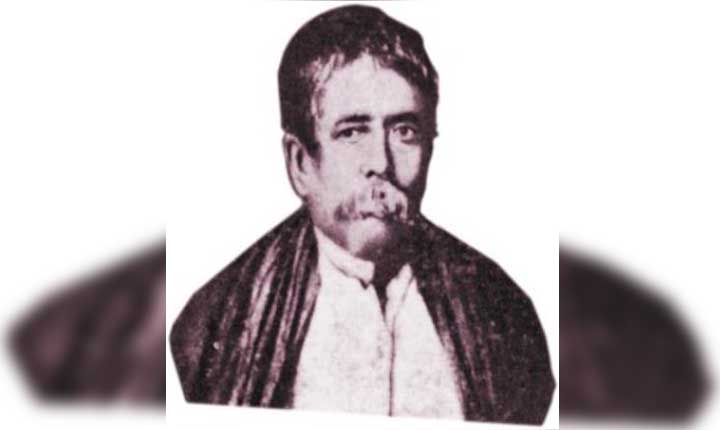
How Girish Chandra Sen ( (1835–1910), the first scholar to publish a complete Bengali translation of the Holy Quran) became the first person to translate the Holy Quran into Bengali and, through scholarship, humility, and mutual respect, earned the trust of an entire community.
An Inter-faith Bridge Builder:
History often remembers kings, conquerors, and political leaders. Yet some of history’s greatest bridge-builders never commanded armies or ruled kingdoms. They transformed society through ideas, scholarship, and moral courage.
One such man was Girish Chandra Sen.
In 1881, this remarkable Bengali scholar embarked on an extraordinary mission. Though born into a Hindu family and later becoming a Brahmo reformer, he devoted himself to translating the Holy Quran into Bengali with explanatory notes. His purpose was neither religious debate nor conversion. He believed that ordinary people irrespective of faith should have the opportunity to read one of the world’s most influential religious texts in their own language.
The project demanded years of disciplined study. When he completed it in 1886, Girish Chandra Sen had produced the first complete Bengali translation of the Holy Quran, opening its teachings to an entire linguistic community.
His achievement earned an extraordinary response. Muslims affectionately called him “Bhai Girish Chandra”. Some honored him with the title “Moulavi,” while many respectfully addressed him as “father.”
A Lifelong Quest for Knowledge:
Born in 1835 in the village now in Bangladesh’s Narsingdi District, Girish Chandra Sen displayed an early passion for learning. He studied Persian and Sanskrit.
His interests soon expanded into teaching, journalism, and literature. He championed women’s education through his book Banitabinodan and worked with leading Bengali publications. Throughout his life, education and social reform remained inseparable from his literary pursuits.
Under the influence of Keshab Chandra Sen the Bramho Samaj movement encouraged him to study other religions with intellectual honesty. It was Keshab Chandra Sen who urged him to undertake a serious study of Islam—a decision that would shape the rest of his life.
The Scholarship:
Determined to understand Islam from its original sources, Girish Chandra Sen studied Arabic and Islamic theology.For years he immersed himself in the Arabic language, classical commentaries, and Islamic scholarship. Only after this rigorous preparation did he begin translating the Quran.
The completed translation, published in 1886, became a landmark in both Bengali literature and interfaith understanding. Islamic scholars admired it for its accuracy, clarity, and intellectual integrity. They recognized that Sen’s objective was faithful understanding rather than interpretation through the lens of another tradition.
Beyond the Quran:
Girish Chandra Sen introduced Bengali readers to Islamic and Persian classics by translating Gulistan, Bustan, Diwan-e-Hafiz, important collections of the Hadith, and Tapasmala, adapted from Fariduddin Attar’s Tazkirat al-Awliya, which chronicled the lives of ninety-six Islamic saints.
He also wrote biographies of Prophet Muhammad, Imam Hasan, Imam Husayn, and the first four Caliphs, helping generations of Bengali readers understand Islamic history and thought.
In his lifetime, he wrote or translated forty-two books, making him one of Bengal’s most prolific scholars.
Harmony Without Compromise:
Perhaps the most remarkable aspect of Girish Chandra Sen’s life was that his deep engagement with Islam never diminished his admiration for Sri Ramakrishna Paramahamsa.
He met Ramakrishna in 1875 and remained closely associated with him until the saint’s passing in 1886. Sen attended Ramakrishna’s cremation and later authored one of the earliest biographies of the revered mystic.
To Girish Chandra Sen, there was no contradiction between the Muslim and the Hindu faiths. Both reflected a larger conviction that sincere seekers of truth find the same truth through various lens.
His life quietly embodied Ramakrishna’s timeless teaching:”Jata Mat, Tata Path” As many faiths, so many paths.
A Legacy for Our Times:
Girish Chandra Sen passed away on 15 August 1910.
Thirty-seven years later, India would gain independence on the same date, though amid the communal violence of Partition the very divisions his life’s work had quietly sought to overcome.
His greatest achievement was was demonstrating that scholarship, empathy, and intellectual integrity can build bridges where prejudice and politics often erect walls.
More than a century after his death, his message remains profoundly relevant.