

Is Your Belly Fat Quietly Stealing Your Sweetest Memories? A Shocking New Study Reveals the Truth!
- Published By: Tech Team
- July 29, 2026 / 04:00 PM IST


By Surya Prakash Josyula
When you pause for a moment and reflect on your life, what stands out as your most precious possession? Is it the wealth you have built, the home you live in, or the gold safely tucked away? None of these truly compare to the priceless tapestry of your personal memories.
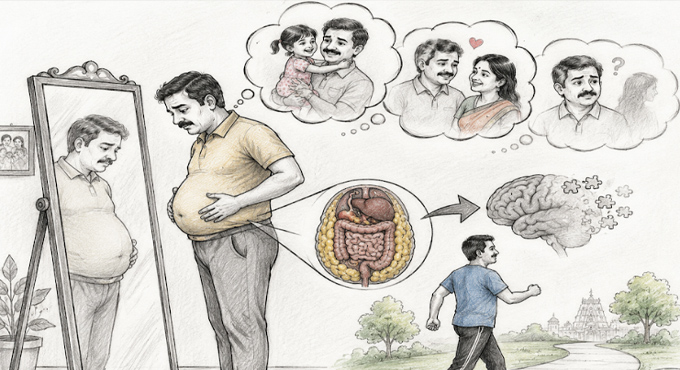
Now, imagine waking up one morning to the voice of your daughter calling out “Dad…”, only to realize with a sudden pang of panic that her face looks entirely unfamiliar. Picture the life you built with your spouse slowly dissolving into a blur of forgotten moments. It sounds like a distant nightmare, but what if the subtle culprit behind such a tragic decline was sitting right in front of you every single day?
That soft, bulging belly you glance at in the mirror each morning might be doing far more than just altering your physical silhouette. A groundbreaking study analyzing the health profiles of over 18,000 individuals has raised a deeply concerning alarm, linking abdominal fat directly to accelerated brain aging and memory loss.
“I’m Fine… It’s Just a Little Belly!”
In today’s fast-paced world, sitting at a desk for long hours, navigating daily urban stress, and grabbing quick meals on the go have become the norm. When we notice our waistlines expanding, it is natural to dismiss it with reassuring excuses:
“My scale says I’m only 70 kilograms…”
“My BMI falls well within the healthy range…”
“I look fairly lean overall, so a small belly shouldn’t matter!”
However, modern neuroscience presents a startling reality that challenges these common beliefs. Having a normal body weight or a healthy Body Mass Index (BMI) does not automatically guarantee that your brain is out of harm’s way. Even if you appear slim on the outside, the hidden fat packed deep within your midsection could be silently compromising your brain’s long-term health.
What Is This ‘Hidden Fat’ Inside the Belly?
To understand the danger, it helps to distinguish between the different types of fat in the body. The soft layer of fat you can pinch just beneath your skin is known as subcutaneous fat. While it gets plenty of attention, a far more hazardous player operates out of sight: visceral fat. This dense fat wraps itself tightly around your vital internal organs, including your liver, intestines, kidneys, and heart.
Researchers at The Hong Kong Polytechnic University delved deep into the UK Biobank dataset, examining advanced brain scans and body compositions of more than 18,000 adults. Their findings revealed a striking pattern:
Individuals carrying higher levels of visceral fat deep inside their abdominal cavity showed clear signs of accelerated brain aging, a structural decline that was noticeably absent in those carrying fat primarily in their arms, legs, or outer waist.
Why Is This Happening? Is Our Brain’s ‘Wiring’ Snapping?
To process thoughts, store cherished experiences, and retrieve memories, billions of neurons in your brain communicate through a vast, intricate network often referred to as the brain’s ‘wiring system’—scientifically known as white matter.
Visceral fat is far from an inactive storage space; it behaves like an active organ, constantly secreting pro-inflammatory chemicals into your bloodstream. As these toxic factors travel through your circulatory system and reach the brain, they trigger chronic, low-grade inflammation. Over time, this biological stress directly damages the delicate white matter connections that transport your memories and keep your mind sharp.
When this neural wiring begins to break down, the consequences unfold gradually:
Your mental processing speed slows down, making quick decision-making noticeably harder.
The long-term risk of developing cognitive impairment and conditions like dementia increases significantly as you age.
Alert: Has Your Waistline Crossed the Danger Line?
Relying solely on a traditional bathroom scale can easily give you a false sense of security. A much more reliable tool for assessing your hidden health risks is a simple measuring tape placed around your waist.
Recommended Waist Measurements for South Asians:
Men: Waist size should ideally remain under 90 cm (35.4 inches).
Women: Waist size should ideally remain under 80 cm (31.5 inches).
If your waist measurement crosses these critical thresholds, it indicates that visceral fat has accumulated to levels that could actively pose a risk to your neurological health.
Don’t Panic… The Solution Is in Your Hands!
While these findings sound alarming, the study is not meant to inspire fear, but rather to serve as a timely wake-up call. The most encouraging aspect of visceral fat is that it responds remarkably well to targeted lifestyle changes. Because it is metabolically active, it is often one of the first types of fat your body burns when you adopt healthier habits.
Engage in Daily Brisk Walking: Committing to a fast-paced 30-to-40-minute walk every day stimulates your metabolism and effectively mobilizes deep abdominal fat.
Refine Your Daily Diet: Shift away from ultra-processed snacks, refined sugars, and white flour, replacing them with wholesome, fiber-rich foods and lean proteins that keep your blood sugar stable.
Incorporate Resistance Training: Adding light bodyweight exercises or strength workouts two to three times a week helps build lean muscle tissue, which burns calories even at rest.
Prioritize Quality Sleep & Stress Reduction: Securing 7 to 8 hours of restful sleep each night allows your brain to clear away metabolic waste while keeping stress hormones like cortisol—a major driver of belly fat—in check.
Conclusion
Financial assets, property, and material possessions can always be rebuilt or earned back over time. However, once the precious memories of the people you love begin to fade, no amount of wealth can restore them.
Moving forward, try not to view a growing waistline merely as a minor cosmetic inconvenience. Instead, recognize it as an early warning signal protecting the future of your cognitive health. By making small, deliberate choices in your daily routine today, you can safeguard not only your physical vitality, but also the lifetime of memories that make your world complete.