
Is It Coincidence? Earth’s Delicate Balance
- Published By: shivaduvvuru
- August 3, 2026 / 11:00 AM IST


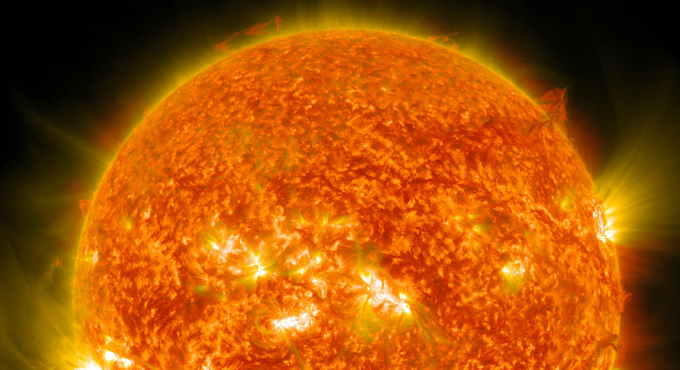
Most of us wake each morning expecting the Sun to rise.
We rarely stop to ask why Earth has remained a place where life can flourish for more than four billion years.
As scientists explore our solar system and discover planets around distant stars, they are learning something remarkable.
A living planet is not the universe’s default setting.
Most worlds appear too hot.
Too cold.
Too dry.
Too violent.
Many have no atmosphere worth breathing.
Others lost theirs long ago.
Yet here we are.
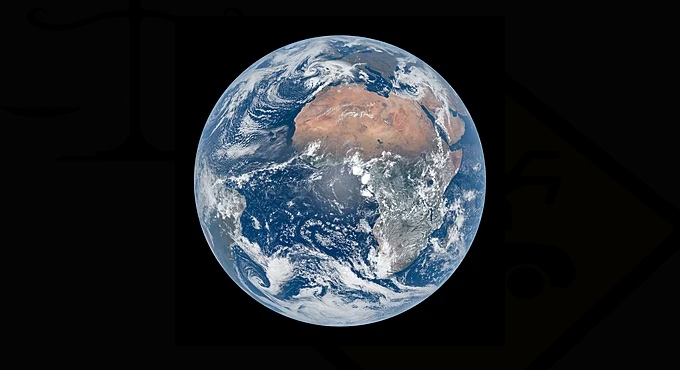
On a small blue planet where rivers still flow, forests still grow, and life has endured across immense stretches of time.
How?
The Right Distance
Imagine sitting beside a campfire on a cool evening.
Move too close and the heat becomes unbearable.
Move too far away and the warmth disappears.
Comfort exists within a surprisingly narrow range.
Earth occupies that same narrow range around the Sun.
Astronomers call it the habitable zone—the region where temperatures allow liquid water to exist.
A little closer and our oceans would gradually disappear into the atmosphere, much as they did on Venus.
A little farther away and much of our planet would freeze, resembling the cold deserts of Mars.
Life, as we know it, depends upon that remarkably narrow window.
Earth happens to live inside it.
The Invisible Shield
Distance alone is not enough.
Deep beneath our feet, nearly 1,800 miles below the surface, an ocean of molten iron slowly circulates around Earth’s solid inner core.
That motion generates a magnetic field that stretches far into space, quietly deflecting much of the charged particles streaming from the Sun.
Without this invisible shield, the solar wind would gradually erode our atmosphere and expose the surface to far greater radiation.
Mars offers a glimpse of what such a world might become.
One planet kept its shield.
The other largely lost it.
The Silent Partner
The Moon appears small against the night sky.
Yet its influence reaches far beyond the tides.
Its gravity helps stabilize Earth’s tilt over long periods of time, contributing to a more stable climate than Earth might otherwise have experienced.
The quiet companion that lights our nights also helps steady the world beneath our feet.
A Planet Built on Balance
No single condition made Earth a home.
It was the combination.
The right distance from the Sun.
A planet massive enough to hold an atmosphere.
A long-lived magnetic field.
A stabilizing Moon.
Liquid water.
Together they created a world where life could persist, adapt, and eventually become aware of itself.
The balance was never perfect.
Yet life endured.
The Bigger Question
Scientists continue searching for worlds like ours.
Each discovery teaches us more about how unusual—or perhaps how common—a planet like Earth may be.
But one fact already inspires awe.
Our existence depends upon an extraordinary combination of conditions that has remained remarkably stable across immense spans of time.
Whether one sees this delicate balance as the unfolding of natural laws alone or as evidence of a deeper design, our small blue planet leaves us with the same enduring gift:
Wonder.