

AI Is No Longer Confined to a Screen… It Could Soon Live Alongside You! OpenAI’s New Device
- Published By: Tech Team
- July 15, 2026 / 05:20 PM IST


— Surya Prakash Josyula
Imagine this.
Your mother is cooking in the kitchen.
The milk is about to boil over on the stove.
You are sitting in the living room watching television.
Suddenly, a voice says, “The milk is boiling over.”
No one in the house said it.
Not even your mother.
A little later, the same voice reminds your father, “It’s time to take your medicine.”
Then it asks your child, who is watching TV instead of studying, “Have you finished your homework?”
Now think for a moment. Who is saying all these things?
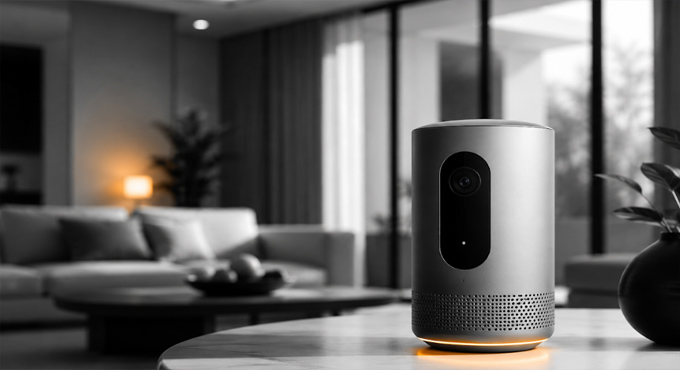
According to reports, it could be a small device placed on a table in your home. It is not just a speaker that plays music, and it is not simply ChatGPT answering questions.
What is this device?
It is a screenless, portable smart speaker being developed under the leadership of former Apple design chief Jony Ive.
Key Features
The device is expected to include cameras and environmental sensors, allowing it to understand its surroundings and recognize people. Reports also suggest that it will have mechanical movement, enabling parts of the device to move on their own.
It is expected to feature an advanced voice model called “GPT-Live,” designed to communicate with people in a natural and conversational manner. Based on a user’s habits, it could provide personalized assistance, such as reminding someone to go to bed early if they have an important meeting the next morning.
What is OpenAI trying to achieve?
The device is being developed to compete with Amazon Echo (Alexa) and Apple’s HomePod. However, OpenAI’s goal is not simply to build another smart speaker that responds to voice commands. Instead, the company wants to create a computer that interacts with people in a much more natural way.
How is it different from Alexa?
Traditional smart speakers respond to commands such as “Play music,” “Set an alarm,” or “What’s the weather?” OpenAI’s vision goes beyond voice commands. The company aims to build AI that understands context, not just spoken instructions. That is why many observers believe this could represent the next major step in personal computing after the smartphone.
Who is behind the project?
The project is being led by Jony Ive, the former Apple Chief Design Officer who played a key role in designing products such as the iPhone, iPad, and Apple Watch. He is now working with OpenAI on this new hardware initiative.
A Question That Still Remains
AI may make everyday life easier, but an important question remains.
What happens if a device equipped with cameras and microphones stays inside your home all day?
How will user data be stored?
What information will be collected?
How much control will users have over their own data?
OpenAI has not yet provided detailed answers to these questions. As a result, privacy is expected to become one of the biggest topics of discussion before the device reaches the market.
Price and Launch Timeline
According to the information currently available, the device is expected to be priced between $200 and $300.
OpenAI is reportedly aiming to unveil the device in 2026 and launch it in 2027.
The company has not yet announced when the device will be available in India or whether it will support regional languages, including Telugu.
Final Thoughts
Television entered our homes first.
Then came the personal computer.
After that, the smartphone became an essential part of daily life.
Now, AI could become another permanent presence inside our homes.
One thing seems clear: OpenAI no longer wants ChatGPT to exist only on a screen. The company wants it to become part of everyday life. The real question is how willing people will be to embrace that change.