
CM orders 10 percent Increase in diet charges for hostel and gurukul students from second quarter of current financial year
- Published By: Tech Team
- July 8, 2026 / 07:40 PM IST


Special coaching centres for meritorious SC, ST, BC and Minority students
Rs 100 crore allotted to improve infrastructure of hostels and residential schools
Amaravati: Chief Minister N Chandrababu Naidu announced a 10 percent increase in diet charges for students studying in government hostels and Gurukul institutions, providing a significant boost to the welfare of students from economically weaker sections and directed officials to implement the revised diet charges from the second quarter of the current financial year.
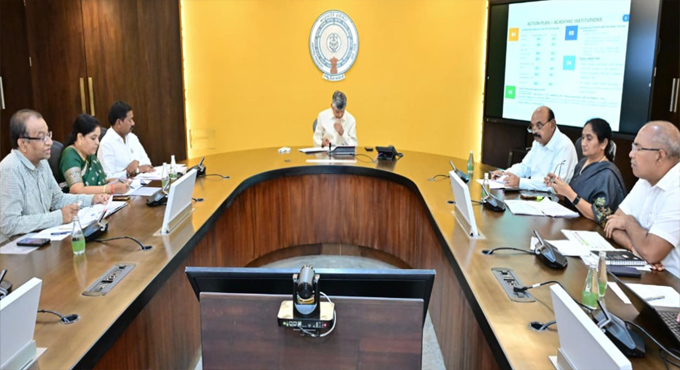
During a review meeting of Welfare department officials at th Secretariat today the Chief Minister instructed the officials that enhanced diet charges should be implemented immediately from the second quarter of this year despite of financial Department plea to postpone implementation date due to financial constraints and added that the lives of BC, SC, ST and Minority communities can be transformed through education.
The Chief Minister stressed that students studying in Welfare Department institutions should receive high-quality education comparable to the best private institutions. He directed officials to establish more Gurukul institutions across the State.He instructed that priority should be given to constructing Gurukuls instead of conventional hostels and called for an assessment of the benefits of implementing Net Zero practices in residential schools. He suggested developing Gurukul campuses on the lines of biodiversity parks with improved infrastructure and modern facilities.To improve living conditions, the government has allocated Rs 100 crore for maintenance grants to hostels and residential schools.The Chief Minister also directed officials to train students in hostels and Gurukuls for higher education and competitive examinations such as IIT, NIT and NEET.Recruit the best teachers to provide quality coaching.
The Chief Minister directed officials to encourage NRIs to adopt welfare hostels.Build strong alumni networks for welfare hostels, residential schools, Gurukuls and Ashram schools.Encourage voluntary participation by professionals willing to provide educational and medical services in these institutions.
The Chief Minister said welfare should go beyond financial assistance and help improve the livelihoods and incomes of weaker sections.The Chief Minister instructed officials to ensure that schemes such as SASKI, Poorvodaya and VBG Ramji effectively reach disadvantaged sections. He also stressed promoting cultivation of horticulture crops, rubber, coffee and turmeric to improve farmers’ incomes in these communities.Highlighting existing livelihood initiatives, he noted that the government has already provided reservation in liquor shops for traditional toddy tappers, quota in quarries for Vaddera communities, and financial assistance to barbers, fishermen and handloom workers. He directed officials to prepare comprehensive proposals for further improving the economic status of various communities and examine amendments to the by-laws of different caste corporations, taking the Brahmin Corporation’s model as a benchmark.The Chief Minister also instructed officials to construct Anganwadi buildings under the VBG Ram G programme.
Officials informed the Chief Minister that a smart card-based telephone system has been introduced for students experiencing homesickness, enabling them to speak with their parents for four minutes each day.They also informed him that under the SASKI programme, infrastructure works worth Rs 120 crore, including installation of RO plants, construction of toilets and other facilities in Social Welfare and Tribal Welfare schools, are underway.
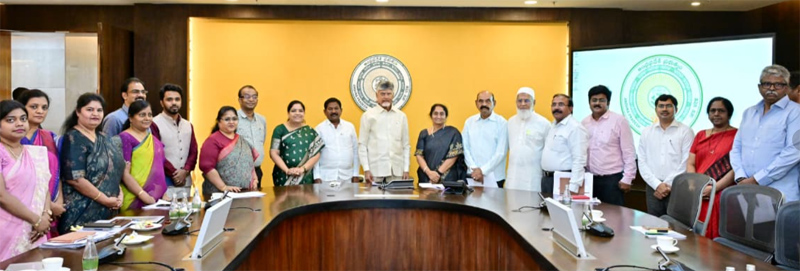
Ministers D.B.V. Swamy, S Savitha, G Sandhyarani and N.M.D. Farooq, Minority Welfare Advisor Mohammed Sharif participated.
Related News
Coalition Government giving equal priority for Welfare, Development and Good Governance: CM
CM Chandrababu Naidu to inaugurate Veligonda project Phase-I and release water on Monday
CM Chandrababu Naidu directs officials to coordinate with Centre to trace missing people in Nepal floods
AP Minister T.G Bharath Meets HCCB Leadership Ahead of CII Summit 2026 Executive Summary
Suzlon and Andhra Pradesh Government Break Ground on 1,325 MW Wind Projects in Ananthapuramu