
Taught in Secret, She Taught a Generation
- Published By: shivaduvvuru
- June 24, 2026 / 03:26 PM IST


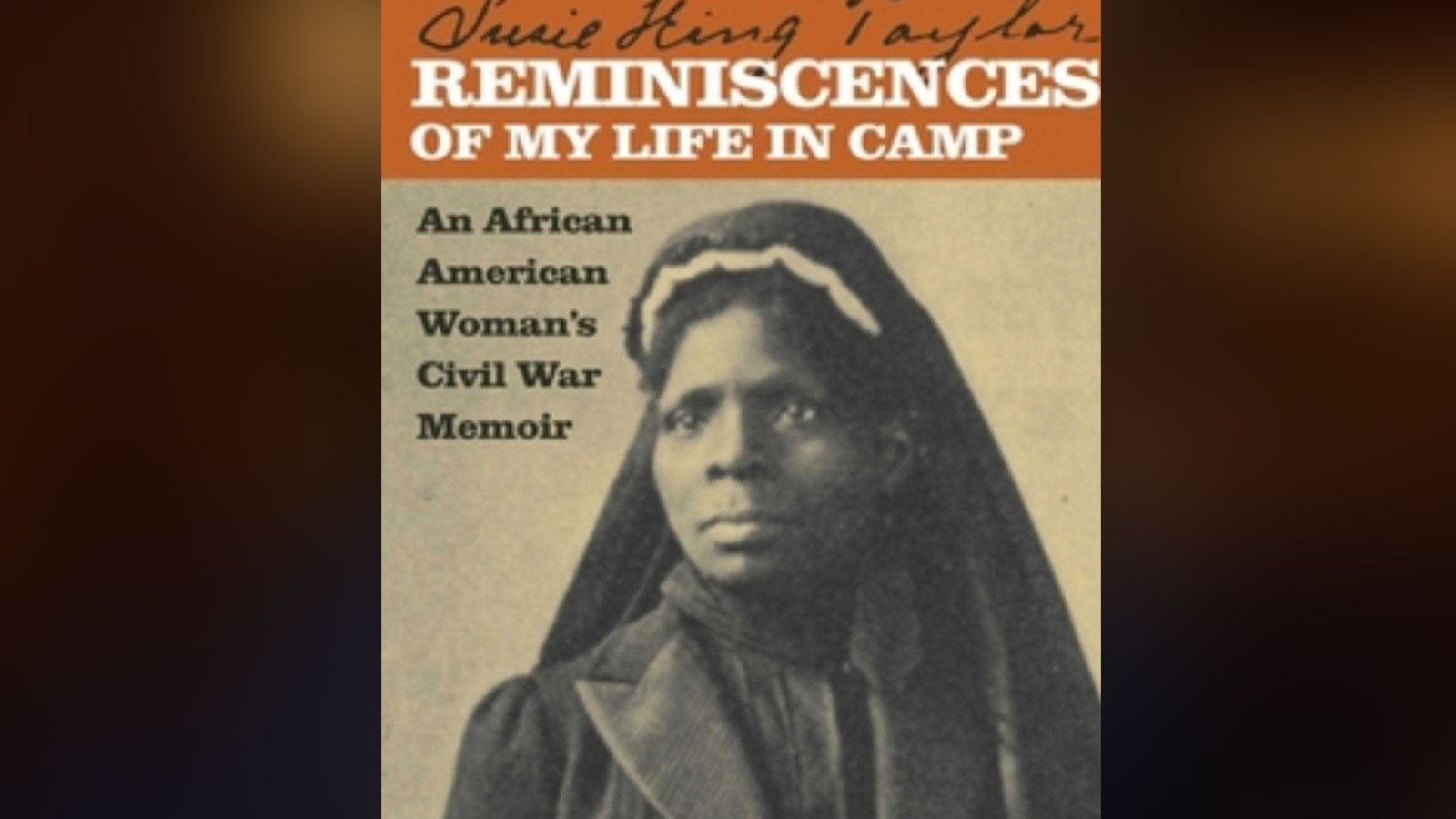
Susie King Taylor learned to read in secret, taught freed people by candlelight, and served the Union Army for four years without pay. Her 1902 memoir is still the only Civil War account written by a Black woman.
Susie King Taylor was born into slavery in 1848 on a coastal island in Georgia, a state where teaching an African American child to read was a criminal offense. The law did not slow the people around her. When she was about seven, her grandmother arranged for Susie and her brother to travel quietly to Savannah, where she was enrolled in two secret schools run by Black women who risked prosecution to teach.
The schools operated by stealth. Students arrived one at a time to avoid drawing notice, carried their books concealed in brown paper, and entered through unmarked doors. Susie learned to read and write there, then continued her education with a white neighbor’s son until he left to enlist, and afterward on her own.
That education would shape the rest of her life and, decades later, produce a document that historians now treat as one of the few first-person windows into the Civil War from a Black woman’s point of view.
A school at fourteen:
In April 1862, as the war spread across the South, the fourteen-year-old crossed Confederate-held territory with her uncle’s family to reach Union lines, arriving on the Georgia Sea Islands among thousands of formerly enslaved people gathered behind Union forces.
Union officers quickly recognized that the teenager was literate, a rarity in a population that had been denied schooling by law. They asked whether she would organize a school if they supplied books and materials. She agreed, becoming the first Black teacher to openly run a school for freed African Americans in Georgia.
Roughly forty children attended by day, she recorded, and adults came in the evenings men and women who had been forbidden to learn for their entire lives. In her memoir she described her students as “so eager to learn to read, to read above anything else.”
Four years without pay:
Susie soon married Edward King, a noncommissioned officer in the First South Carolina Volunteers, among the earliest Black regiments in the Union Army. She moved with the regiment and served it for what she recorded as four years and three months, without pay, rank, or formal standing.
Her duties were wide-ranging. She nursed soldiers through dysentery, typhoid, battle wounds, and a smallpox outbreak in the camp, and worked alongside Clara Barton, the future founder of the American Red Cross. By her own account she also packed ammunition haversacks, handled rifles, and stood picket duty. In quieter stretches she taught soldiers many of them formerly enslaved and never permitted to learn to read and write.
After the war
When the fighting ended, the Kings returned to Savannah, where Susie opened another school for freed children. Edward died in September 1866, before the birth of their child. She kept the school running on small tuition payments, without help from northern freedmen’s organizations, until a free public school opened nearby and enrollment fell away.
She then moved north to Boston, took work as a domestic servant, and remarried in 1879. For decades the war faded into monuments and veterans’ reunions.
The record she left
More than thirty years later, Taylor published her account. Reminiscences of My Life in Camp with the 33d United States Colored Troops, Late 1st S.C. Volunteers appeared in 1902 and remains the only memoir written by an African American woman about her Civil War service.
In it she documented the conduct of Black soldiers fighting for a country that did not yet recognize their full citizenship, and the labor of the women nurses, teachers, and wives who followed the regiments and whose contributions went largely unrecorded. “There were loyal women, as well as men, in those days,” she wrote, “who did not fear the shell or the shot, who cared for the sick and the dying.”
Taylor died in 1912. She never received a military pension, and the federal government never formally acknowledged her service. Her memoir survives as a primary historical source a firsthand account of the war as experienced by Black women, Black soldiers, and the freed people who crowded behind Union lines in search of safety and education. Born in a state that made it illegal to teach her, she died having taught hundreds, and left a record that ensured her place in the history would not be lost.
Related News
Citizens Specialty Hospitals Launches “Don’t Miss a Beat. Be an Informed Citizen” Campaign for World Heart Day

‘Arz Kiya Hai’ by Anuv Jain and Lost Stories Reaches No. 1 on Spotify India and Global Charts

Experts Advocate Prevention, Early Detection, and Community Awareness at World Heart Day Conference

Pullela Gopichand Emphasizes Sports as Essential for Viksit Bharat at PRana 2026

Litemed India Launches ‘Curapod M’, an Innovative Health-Tech Device for Menstrual Pain