

U.S. Consumer Confidence Plummets to Record Low as Iran Conflict Fuels Inflation Fears
- Published By: shivaduvvuru
- April 24, 2026 / 10:54 AM IST


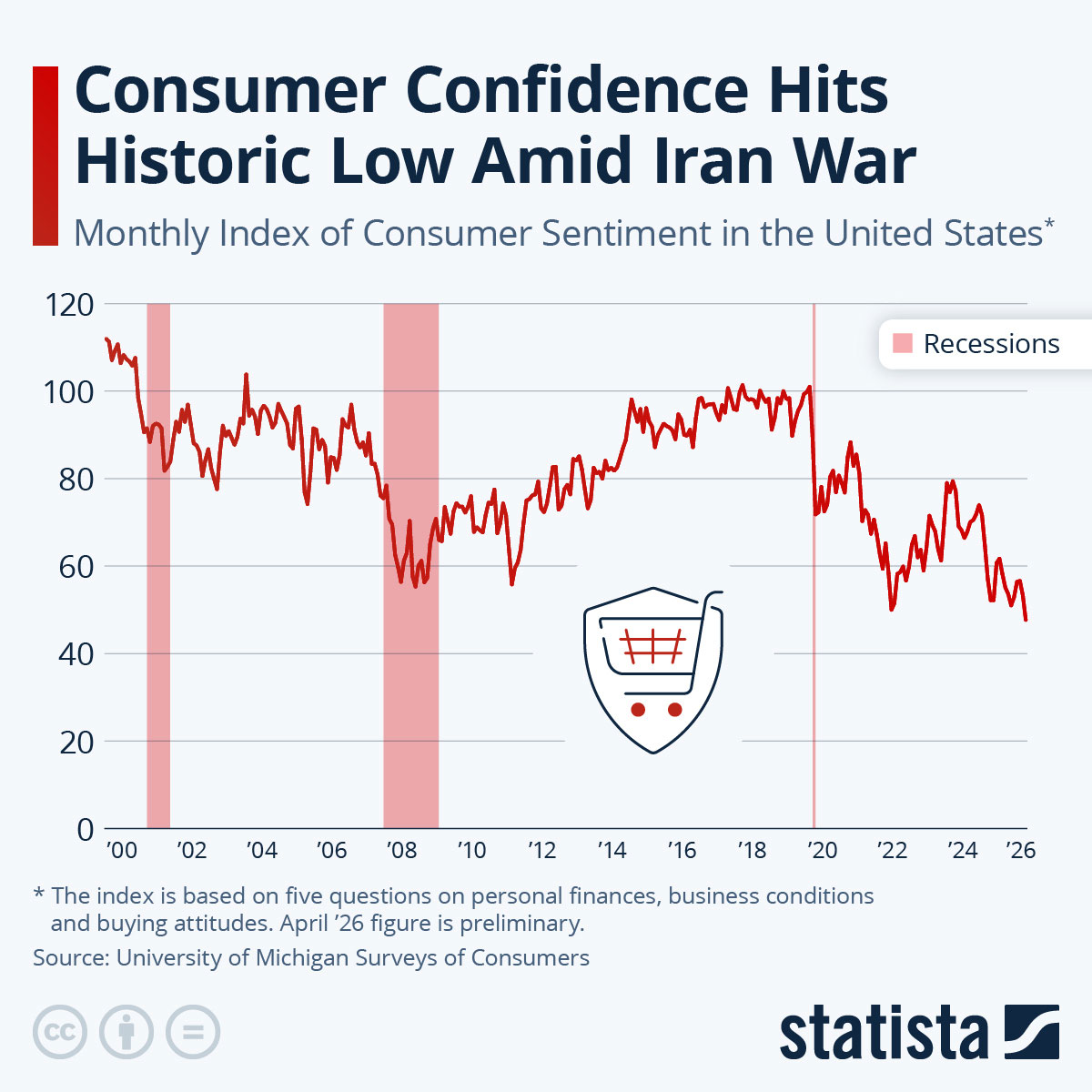
Consumer sentiment in the United States hit an unprecedented low in April 2026, driven by the geopolitical instability of the war in Iran and its direct impact on energy costs. According to preliminary data from the University of Michigan’s Index of Consumer Sentiment, the headline figure dropped by 11%, marking the first time since the survey began in 1952 that the index has fallen below the 50-point threshold.
The decline was widespread, with both the Index of Current Economic Conditions and the Index of Consumer Expectations experiencing double-digit losses. This sharp downturn reflects deep-seated pessimism regarding personal finances and the nation’s broader economic trajectory. Central to these concerns is a significant spike in inflation expectations; consumers now anticipate prices to rise by 4.8% over the next year, a sharp increase from the 3.8% projected in March.
Joanne Hsu, Director of the Surveys of Consumers, identified the conflict in the Middle East as the primary catalyst for this shift. Respondents highlighted rising prices and declining asset values as their chief anxieties. While a ceasefire was announced on April 7, most survey interviews were conducted prior to the news, suggesting a potential—though cautious—rebound in the final April report.
Despite the truce, the continued blockage of the Strait of Hormuz remains a critical bottleneck for global supply chains, likely delaying any immediate economic relief. However, one bright spot remains the resilient U.S. stock market; a surprising April rally has pushed the S&P 500 to record highs, offering a possible counterbalance to the prevailing consumer gloom.
Click here for Source Link
Related News

Top 6 Stays in Dubai for Your Next Workation

SriLankan Airlines Restores Complete Middle East Network With Kuwait Service Resumption
Two Years After Trump’s Inflation Spotlight, Rising Grocery Prices Loom as a Political Vulnerability for Republicans Ahead of Midterms
US Imposes Up to 100% Tariffs on Drones to Curb Chinese Dominance and Bolster Security
Iran Mocks Trump Over Secret Aircraft Switch During Turkey Visit