
Did a Digital War Just Begin Against Nolan? Elon Musk Fires Back as ‘The Odyssey’ Faces Millions of Dislikes!
- Published By: Tech Team
- July 7, 2026 / 10:18 AM IST


— By Surya Prakash Josyula
Every legend has a vulnerability. If you cannot defeat his cinema, you try to alter his story, and if you cannot change his story, you attempt to tarnish his image. This begs the question: Is the world’s most trusted director currently facing such a coordinated campaign, or have audiences genuinely lost faith in him? The answer cannot be found in a mere trailer; instead, it lies hidden beneath millions of dislikes.
In Hollywood, Christopher Nolan is a rare director whose name carries genuine stardom, commanding global anticipation whenever a new project is announced. However, the trailer for his upcoming film, The Odyssey, has suddenly found itself mired in an unprecedented controversy.
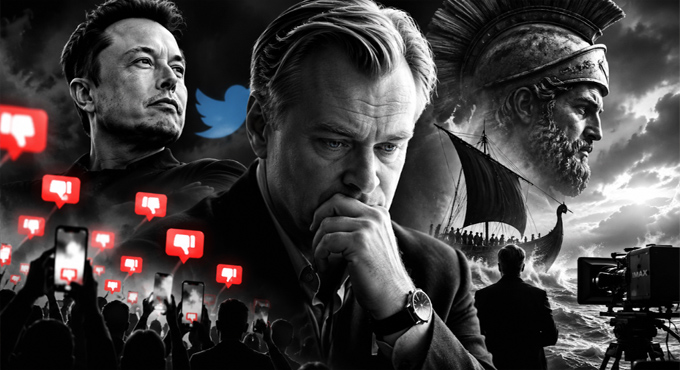
According to browser extensions that restore hidden YouTube metrics, the film’s countdown trailer has amassed over 566,000 dislikes against a mere 60,000 likes. This means nearly 90% of the reactions are negative, making it the most disliked trailer in Christopher Nolan’s entire career. Remarkably, this backlash escalated rapidly, with dislikes skyrocketing from 55,000 to over half a million in less than a week.
Compounding the controversy, Universal Pictures restricted user comments on the film’s official promotional posts, sparking intense debate across social media. Limiting public interaction during a marketing campaign for a massive $250 million tentpole project has raised serious eyebrows within the film industry, leading many to ask if the studio is genuinely terrified of negative public backlash.
A Coordinated Digital Attack?
Christopher Nolan has long enjoyed a unique level of trust among international audiences, who view his films not just as entertainment, but as cinematic experiences. Consequently, such an aggressive wave of pre-release negativity has caught many by surprise.
Public opinion on social media is deeply divided. While some users claim the visual effects in the trailer fell short of expectations, others have taken issue with specific casting choices. Concurrently, a segment of fans alleges that this is not an organic audience reaction, but rather a coordinated dislike campaign. However, no official evidence has been released to substantiate these claims of targeted “review bombing.”
The Anatomy of the Backlash
The controversies fueling this digital warfare stem from multiple fronts:
The Cultural and Casting Dispute: The Greek media and public are reportedly furious because The Odyssey, a seminal piece of ancient Greek literature, features an ensemble cast without a single Greek actor.
The Lupita Nyong’o Controversy: Casting Afro-American actress Lupita Nyong’o as Helen of Troy has ignited intense debates regarding historical accuracy, diversity rules, and representation in Hollywood.
Elon Musk’s Intervention: Adding fuel to the fire, tech billionaire Elon Musk publicly targeted the director on X (formerly Twitter), calling Nolan “a worm” just hours before the London premiere. Critics suggest Musk’s ire stems from a belief that the original narrative was compromised merely to satisfy modern Academy Award diversity criteria.
Anachronistic Dialogues and Trolling: The internet has heavily targeted the trailer for having ancient Greek characters speak in contemporary American accents, utilizing modern slang terms like “pining for a daddy” and “Let’s gooooo,” which critics claim opened the floodgates for online bot armies.
The Critic Divide and the Final Verdict
Intriguingly, while the trailer faces overwhelming online hostility, the initial reactions from critics and premiere attendees in London have been overwhelmingly positive. Early reviews describe the film as a monumental triumph, creating a bizarre paradox where online users slam the trailer while those who have watched the movie praise its brilliance. This raises the question of whether the trailer simply misrepresent the film, or if social media rushed to a premature judgment.
Presently, there is no definitive proof to confirm a conspiracy against Nolan, just as we cannot definitively prove these dislikes are entirely organic. The controversy remains sustained by hidden analytics, viral posts, and fan debates.
In the past, Nolan’s cinema played with time, but today, it is the digital algorithm that tests his legacy. While it appears online spaces have already passed their verdict, history reminds us that while trends might dictate daily narratives, the ultimate audience writes history.
As the film approaches its release, more is at stake than just the box office fate of a single movie. We are about to witness whether the world will rewrite Christopher Nolan’s story, or if Nolan will once again redefine cinematic history. Will the ultimate victor be Nolan, or the algorithm?
Related News

Raja Kumari debuts as music director with IMPURE, and OMG is the Sangeet song for wedding season
‘Narayanamma’ Song from ONG FROM ‘– AK47’ Released
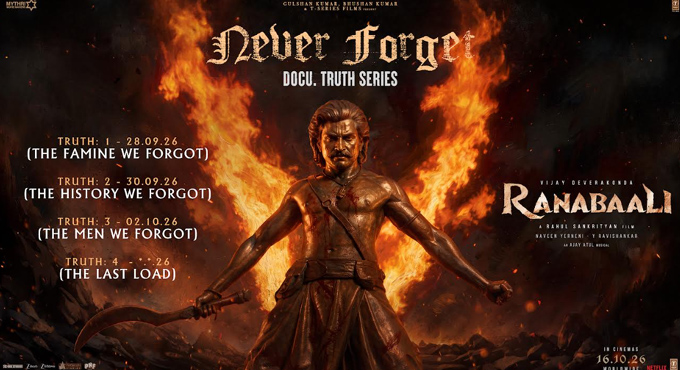
Vijay Deverakonda’s Ranabaali: Never Forget The Truth Documentary Series Announced
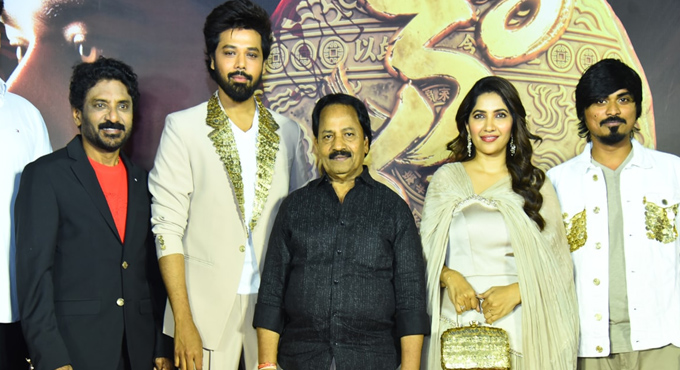
Star Producer A.M. Rathnam Graces Shree Nandu’s Kaasu Glimpse Launch Event

Director Pradeep Madugula’s Wife Deepti Reddy Sets an Example Through Organ Donation