
Travel Passions and Local Behaviors Reshaping Hotel Loyalty Across APEC
- Published By: Tech Team
- May 23, 2026 / 08:03 PM IST


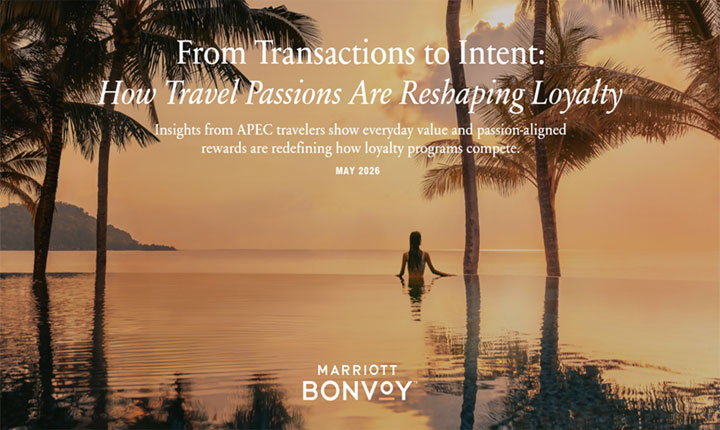
Hotel Loyalty Trends: The traditional, one-size-fits-all rewards model is officially obsolete across the Asia Pacific region (excluding China). According to the newly released Loyalty Trends Report 2026 by Marriott Bonvoy, while 89% of APEC travelers participate in a loyalty scheme, how they engage is fragmented. Rather than standard corporate structures, loyalty engagement is now driven by personal travel passions, everyday value expectations, and distinct local market dynamics, signaling a clear shift toward adaptive digital rewards ecosystems.
A traveler’s core motivation is now the strongest indicator of loyalty engagement. Food & Dining leads the pack, with 63% of travelers prioritizing culinary experiences, earning points through dining and redeeming them for food and beverage rewards. Concurrently, hotel loyalty has anchored itself at the center of travel rewards with a 66% participation rate. To retain these members, brands must balance big-ticket aspirations with instant gratification; 77% of travelers favor small, immediate rewards using points accumulated via everyday spending on co-branded credit cards (53%), food delivery (48%), and retail partners (45%).
The report highlights three distinct consumer loyalty mindsets shaping the region:
Loyalty Strategists (Japan & South Korea): Highly rational and deliberate. They maximize value through disciplined earning, co-branded card usage, and practical redemptions like cost offsets.
Value Optimizers (Singapore, Australia, & Thailand): Pragmatic and selective. They engage when programs clearly enhance trip value, responding best to direct booking incentives, room upgrades, and late checkouts.
Experience Seekers (India, Indonesia, & Vietnam): Emotional and transactional. Driven by rising affluence, these fast-growing markets view loyalty as a gateway to status, exclusive experiences, and broad partnership networks.
To capture the next generation of travelers, hospitality brands must abandon rigid regional playbooks. Success belongs to flexible ecosystems that can seamlessly pivot from acting as a disciplined savings tool for a strategist in Tokyo, to serving as an exclusive gateway for an experience seeker in Mumbai.
Related News

Stars Unite in Mumbai for The Earthshot Prize 2026 Awards Night Prime Video Named Exclusive Streaming Partner
HCCB-Backed Archer Ganesh Mani Ratnam Thirumuru Wins Gold and Bronze at 20th Asian Games
Ultraviolette Expands Retail Footprint with New UV Space Station in Anantapur

Amazon Expands Ultra-Fast Delivery Service ‘Amazon Now’ to Over 120 Cities Across India

GREW Solar Announces Channel Partnership with Energy Cubez in Kerala