
SpaceX’s Record IPO Puts Elon Musk’s Taxpayer-Funded Rise Back Under Scrutiny
- Published By: Phanindra
- June 27, 2026 / 08:01 AM IST


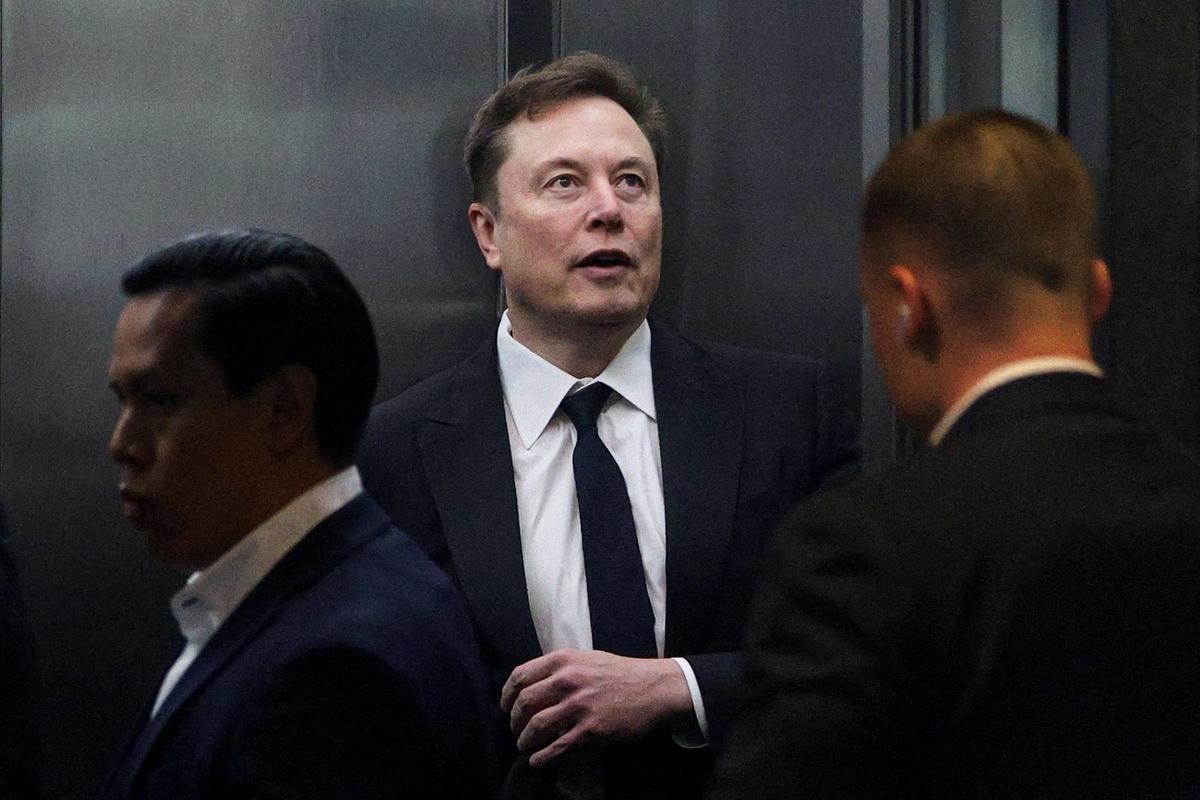
Elon Musk has made history as the world’s first trillionaire. But the question now being asked is whether that fortune was built purely on talent and risk-taking, or whether taxpayer money played a far bigger role than his public image suggests. Musk is widely seen as a self-made entrepreneur who reshaped entire industries through bold bets and personal genius. But a closer look at SpaceX’s early years tells a more complicated story. In 2006, when the company had barely any revenue to speak of, it landed contracts worth hundreds of millions of dollars from NASA. Musk himself has acknowledged that the billion-dollar deals that followed are what kept the company standing.
Several analyses point to a pattern that has continued for two decades: Musk’s companies have received massive public backing in the form of government contracts, subsidies, loans, and tax breaks. Critics have increasingly argued that Musk’s success isn’t purely a product of individual brilliance, but one substantially propped up by government support.
An Empire Built On Public Money
The numbers behind that argument are large. SpaceX received $278 million (more than Rs 2,600 crore) from NASA back in 2006, at a time when the company had no real track record to point to. Over the past two decades, Musk’s companies have collectively received $38 billion (roughly Rs 3.58 lakh crore) in public money through government contracts, subsidies, and tax exemptions. What stands out is the timing: two-thirds of that $38 billion came in just the last five years. SpaceX currently pulls in $2 billion to $4 billion annually in contracts from government bodies including NASA and the US Space Force.
A Record IPO, And Pension Funds Tied To The Risk
On June 12, SpaceX went public and raised $75 billion in its market debut. Its market valuation hit $2.2 trillion on day one. But behind that headline success sits a significant risk: ordinary Americans’ retirement savings and pension accounts are now tied to this company’s market value.
If the stock falls in the future, that risk flows directly to ordinary savers. That exposure is precisely why international institutions like the Danish pension fund have blacklisted SpaceX from their portfolios. There’s also a structural concern: even though public investors now hold a stake in the company, Musk’s Class B shares carry ten times the voting power of regular shares, leaving him with total control over the company regardless of public ownership.
Questions Over The Valuation Itself
Critics argue SpaceX’s market value has been inflated well beyond what its underlying business justifies. The company’s price-to-sales ratio currently stands at 130, meaning it would take 130 years of current revenue to match its present market value, according to the New York Times. That ratio is 21 times higher than Nvidia’s, 12 times higher than Microsoft’s, and 7 times higher than Apple’s. Morningstar analysts have put SpaceX’s actual value at $780 billion (Rs 73.54 lakh crore), less than half of its current market price. Former US Labor Secretary Robert Reich has gone further, calling it the world’s “biggest Ponzi scheme.”
The DOGE Connection
There’s also a political dimension to this story. Musk took charge of the Department of Government Efficiency (DOGE) under the Trump administration, a role in which he helped shrink the IRS workforce by 25%. That reduction in enforcement capacity meant a $1.9 billion (Rs 18,000 crore) tax exemption benefiting SpaceX escaped audit scrutiny. Musk stepped down from the DOGE role just five months after taking it on.
A Warning Sign For The Wider Economy
Analysts see SpaceX’s rise as symptomatic of a deeper shift in the American economy. Middle-class incomes in the US have stagnated, while poverty and inequality continue to widen. At the same time, AI is threatening to displace jobs across multiple sectors, and AI data centers are consuming local environmental resources without delivering proportional benefit to the communities around them. Against that backdrop, critics argue that SpaceX’s IPO is emblematic of a broader pattern: business built substantially on taxpayer money, with profits flowing to private individuals while the economic cost is absorbed disproportionately by those with the least financial cushion to bear it.
Related News

Stars Unite in Mumbai for The Earthshot Prize 2026 Awards Night Prime Video Named Exclusive Streaming Partner

HCCB-Backed Archer Ganesh Mani Ratnam Thirumuru Wins Gold and Bronze at 20th Asian Games

Ultraviolette Expands Retail Footprint with New UV Space Station in Anantapur

Amazon Expands Ultra-Fast Delivery Service ‘Amazon Now’ to Over 120 Cities Across India

GREW Solar Announces Channel Partnership with Energy Cubez in Kerala