

RBI Keeps Repo Rate Steady at 5.25% Amid Geopolitical Tensions
- Published By: Phanindra
- August 10, 2026 / 10:40 AM IST


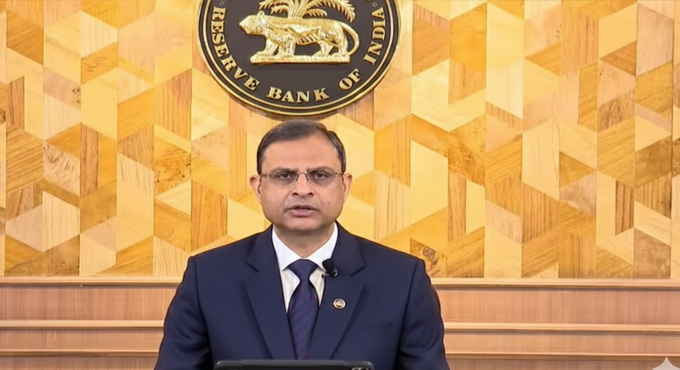
Following the conclusion of the three-day Monetary Policy Committee meeting, the Reserve Bank of India (RBI) announced that it is keeping key interest rates unchanged. Consequently, the crucial repo rate will remain steady at 5.25 percent. RBI Governor Sanjay Malhotra announced that the Standing Deposit Facility rate will remain at 5 percent, while the Marginal Standing Facility and bank rates will stay at 5.5 percent. The central bank stated that with the domestic economy remaining stable, it is best to maintain a neutral stance without making any hasty decisions. With this decision, banks are unlikely to increase their external benchmark lending rates, bringing immediate relief to millions of people with housing and auto loans on floating interest rates, as their monthly EMIs will not increase.
Despite adverse global conditions, the Indian economy is performing better than expected. Driven by a rebound in the manufacturing sector and private consumption in the first quarter, the RBI has raised India’s real GDP growth projection for the financial year 2027 from the previous 6.6 percent to 6.7 percent. Simultaneously, as price pressures on essential commodities ease, the retail inflation forecast has been reduced from 5.1 percent to 5 percent, offering major relief to businesses and the common public.
The RBI also made a key announcement regarding currency management. Governor Sanjay Malhotra stated that, subject to successful field trials, the central bank aims to introduce polymer (plastic) currency notes of Rs 10 and Rs 20 denominations into circulation for the first time in the country starting from the beginning of the next financial year. He explained that since low-denomination notes change hands frequently and get damaged quickly, the primary objective is to increase their lifespan, reduce the need for frequent reprinting, and cut down long-term currency management costs. The RBI clarified that there is no proposal to completely replace existing paper notes, and during the trial phase, the new polymer notes will circulate alongside traditional paper currency.
To increase transparency in determining interest rates on loans and further strengthen consumer interests, the RBI has proposed introducing uniform regulations for all Regulated Entities, including banks and NBFCs. Instead of the currently divergent practices regarding interest rate determination, benchmark reset dates, and interest calculation methods, the central bank plans to implement unified rules. The RBI stated that this move will enhance transparency in loan pricing, ensure that the benefits of repo rate changes reach consumers faster, and significantly strengthen customer protection. Draft guidelines on these proposed changes will be issued soon to seek public feedback.
However, the Governor warned that geopolitical tensions arising from the Iran war pose a downside risk to future economic projections. He expressed concern that the escalation of conflicts since the first week of July has led to extreme volatility in crude oil prices in the international market. Furthermore, if the El Nino weather phenomenon results in deficit rainfall, it could lead to a spike in food inflation. He clarified that while core inflation currently remains under control, the central bank is closely monitoring any potential spillover effects originating from the global food and energy sectors.
Related News

Ai+ Smartphone Expands Festive Portfolio with Pulse 2 FE, NovaTab, and Nova LapTab

HDFC Mutual Fund Re-opens BSE REITS and Commercial Real Estate Index Fund for Ongoing Subscriptions

GIRI Opens 39th Showroom and Cultural Hub on MG Road, Puducherry

Citizens Specialty Hospital in Nallagandala Marks World Heart Day with Community Walkathon

JioStar Unveils ‘Har Ghar Mein Jashn’ Festive Playbook to Help Brands Capture Surge in Consumer Spending