
India Will Need Around 1 Lakh Data Centre Professionals by 2030: Report
- Published By: Phanindra
- July 19, 2026 / 09:42 AM IST


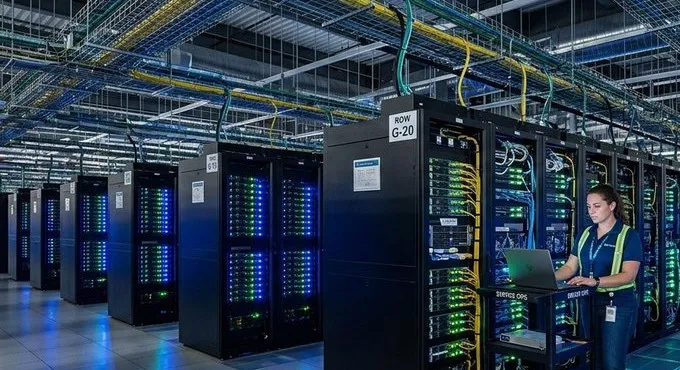
India’s rapidly growing data center industry is positioned to become one of the largest employment engines over the next five years. According to the latest projections by workforce solutions firm NLB Services, the sector will require approximately 1 lakh skilled engineering professionals by the year 2030.
However, the report highlights a significant talent readiness bottleneck: currently, only 15% to 20% of applicants seeking roles in this space possess the technical skill sets required by employers.
Exponential Capacity and Market Value Expansion
The hiring surge is directly aligned with a massive nationwide infrastructure build-out. Fueled by skyrocketing internet penetration, digital banking, and enterprise automation, India’s data center ecosystem is on an aggressive growth trajectory. Current Operational Capacity is around ~1.5 Gigawatts (GW), and it is projected to reach 6.5 Gigawatts (GW) in 2030. It’s market valuation is Over $22 Billion (~₹2.11 lakh crore).
The AI Revolution Rewriting Skill Requirements
This rapid infrastructure expansion is fundamentally shifting the nature of tech jobs in India. Standard IT skills are no longer sufficient as data hubs evolve to handle intense computational workloads. Industry data indicates that roughly 30% of India’s total data center capacity will be dedicated exclusively to processing AI workloads by 2030.
Consequently, enterprises are facing an urgent demand for highly specialized talent across several cutting-edge domains:
– AI Infrastructure Engineering & Platform Engineering
– Cloud Operations & Data Center Automation
– Machine Learning Operations (MLOps)
– AI-driven Infrastructure Management
Commenting on the widening talent mismatch, Sachin Alug, CEO of NLB Services, emphasized that as the digital economy scales up, a collaborative approach is vital. He noted that industry players, academic institutions, and government policymakers must work together closely to overhaul engineering curricula and provide targeted upskilling programs that align with these next-generation computing architectures.
Related News

BenQ Unveils “MOBIUZ Game Art Museum” Experience at Tokyo Game Show 2026

Dreame Technology Launches Flagship X60 Ultra Complete Robot Vacuum in India

Turtle Wax Marks 80 Years of Global Leadership as CEO Laurie King Visits India to Accelerate Expansion Plans

Hyundai Motor India Opens Bookings for the New Intelligent Utility Vehicle, Hyundai BAYON
Telangana AI Summit 2026 Drives State’s Vision to Become a Global Artificial Intelligence Hub