
Sonam Wangchuk follows in the footsteps of his father Sonam Wangyal
- Published By: Tech Team
- July 19, 2026 / 07:15 PM IST


It is a known fact that social activist Sonam Wangchuk went on a hunger strike demanding the resignation of Union Education Minister Dharmendra Pradhan, holding him responsible for the NEET paper leak. He has been protesting at Jantar Mantar for the past 20 days. However, his fast was recently broken. Medical experts stated that he had lost around 9 kg, his body’s uric acid levels had increased, and muscle wasting had begun. In this context, following the orders of the Delhi High Court and the advice of doctors, the police forcibly shifted him to Safdarjung Hospital to provide emergency treatment.
However… educationist and climate activist Sonam Wangchuk, who entered the third week of an indefinite hunger strike in solidarity with the student-led movement, has been the focal point of this demonstration. But embarking on such protests is in Sonam Wangchuk’s very blood. Sonam is merely continuing their family legacy.
Forty years ago, Sonam Wangchuk’s father, the late Ladakhi politician Sonam Wangyal, used the very same weapon of a hunger strike to change the political landscape of his homeland.
In the early 1980s, Ladakh, then a remote district in the state of Jammu and Kashmir, suffered from a sense of severe neglect both politically and developmentally. Local people felt that the far-off administration was neglecting their unique cultural identity, resource availability, and land rights.
On behalf of the people, Sonam Wangchuk’s father, Sonam Wangyal, undertook two highly crucial hunger strikes. In 1982, demanding tribal status, he launched a rigorous 16-day hunger strike.
Following that, Sonam Wangyal went on a hunger strike in 1984 as well. In January, he launched a pivotal 5-day hunger strike in Leh. This action successfully transformed the local movement into a national priority.
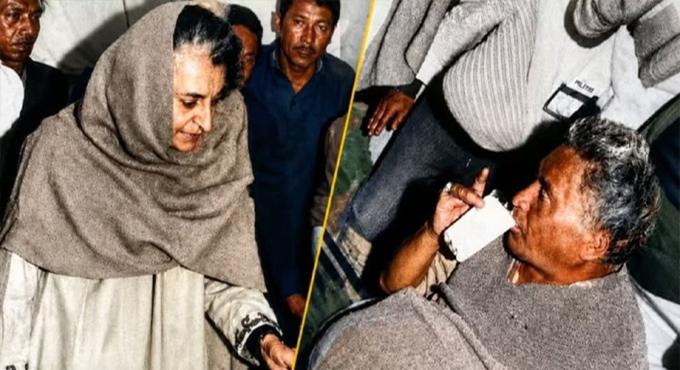
The protest in 1984 intensified the pressure significantly. The then Prime Minister of India, Indira Gandhi, personally undertook a special visit to the high-altitude town of Leh. In a powerful moment of political reconciliation, Prime Minister Gandhi personally visited the ailing Ladakhi leader. Standing by his bedside, she offered a glass of juice to Sonam Wangyal to formally break his fast. During this meeting, Gandhi assured him that her government would address the socio-political concerns of the Ladakhi people and would also consider their demands for tribal status.
Related News
Keystone STEM Alliance: A Youth-Led Model Transforming STEM Education and Community Engagement
Blueband Sports Rally of Coimbatore Set to Host Round 2 of INRC 2026 with 64 Cars on the Grid
Thanks To Telugu Audience for Making Mandaadi a Blockbuster: Soori
Govt. of West Bengal participates in Walmart Vriddhi MSME Connect 2026 in Kolkata
Retired Air Marshal Jitendra Mishra Appointed as New CEO of Ayodhya Trust