
From Budget Rooms to a Global Booking Empire: The Ritesh Agarwal Story
- Published By: shivaduvvuru
- July 1, 2026 / 05:02 PM IST


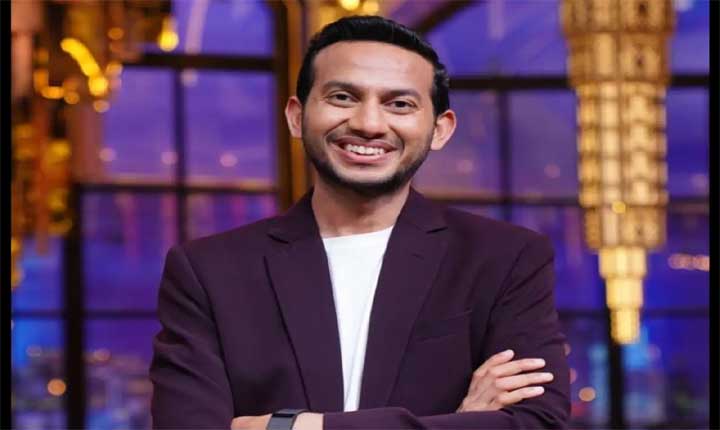
Ritesh Agarwal: A former college dropout from a village in Odisha is now steering OYO’s parent company, PRISM, toward the public markets through a ₹6,650-crore initial public offering. The milestone caps one of the most improbable journeys in Indian startup history from Bissamcuttack in Rayagada district to a hospitality platform operating across more than 35 countries.
Much of the personal reflection in this story comes from Agarwal’s own account, shared in interviews with The Economic Times (ET Online), whose reporting forms the backbone of the narrative below.
The boy who coded before he could pitch:
Agarwal grew up far from any startup scene. As he told The Economic Times, he was raised around problems rather than entrepreneurs an upbringing he credits with teaching him to build for people instead of applause. He taught himself to code at eight, and by sixteen his aptitude earned him a place at the Asian Science Camp held at the Tata Institute of Fundamental Research in Mumbai.
The ambition came with public stumbles. A teenage stint running a venture called Worth Growth Partners ended badly. Agarwal has since reframed those failures as an asset rather than a scar describing early, visible failure as a kind of vaccine that immunises a founder against the fear of starting. Today he is counted among India’s youngest billionaires, with an estimated net worth of roughly ₹18,402 crore (about $2 billion) on the Hurun list.
Sneaking into startup events:
Before OYO was a household name, Agarwal was a regular on India’s entrepreneurshipconference circuit, travelling between cities with almost no money and finding ways into events he couldn’t afford to attend. Those trips meant nights in inconsistent, poorly maintained budget hotels and, as he told The Economic Times, they led him to a simple conviction: that comfort is really a quiet form of dignity, and that the business was never about selling rooms so much as making a stranger feel expected.
In 2012 he launched Oravel, an Airbnb-style home-sharing platform funded by a ₹30 lakh cheque from VentureNursery. But the model didn’t map onto Indian consumer behaviour.The real gap, he realised, wasn’t a shortage of spare rooms it was the absence of predictable quality in budget hotels. He scrapped Oravel and pivoted to OYO, standardising budget accommodation under a single brand.
The Thiel Fellowship and the investor who passed:
At nineteen, Agarwal became the first Indian selected for Peter Thiel’s Thiel Fellowship, which came with a $100,000 grant and entry into Silicon Valley’s inner circles. The credibility it conferred proved more valuable than the cash.
As OYO gained momentum, some early rejections aged poorly. Entrepreneur Vishal Gondal has publicly recounted passing on a chance to buy a 15% stake in the company for ₹30 lakh, admitting he doubted Indians would stay in strangers’ homes and found the projections implausible a decision he later said he would undo if he could.
The twist: a global real-estate network
The company that taught millions of Indians how to book a budget room has become, in its current form, a sprawling global platform. PRISM formerly Oravel Stays now runs 43 brands across more than 35 countries. As of December 31, 2025, its network spanned roughly 24,303 hotels, 124,668 homes and 144,583 listings, a combined footprint approaching 294,000 storefronts.
The geography of the business has flipped. More than 84% of operating revenue now comes from outside India, with the United States its single largest market following the 2024 acquisition of G6 Hospitality (owner of the Motel 6 and Studio 6 chains) from Blackstone. The US alone contributes over half of PRISM’s global gross booking value, with Europe powered by vacation-rental brands like Belvilla and DanCenter close behind. In India, the company-serviced hotel business grew to 1,573 storefronts, up from 1,053 a year earlier.
As Agarwal framed it to The Economic Times, ambition isn’t something imported from big cities; the size of the place you come from has nothing to do with the size of what you’re allowed to build.
The road to Dalal Street:
The IPO is a ₹6,650-crore fresh issue with no offer-for-sale component, meaning existing backers SoftBank, Agarwal himself, Microsoft, Airbnb, Peak XV, Lightspeed, Khazanah and Greenoaks among them aren’t selling shares. PRISM plans to direct ₹4,987.5 crore of the proceeds toward repaying borrowings, with the rest for general corporate purposes, and has flagged a possible pre-IPO placement of up to ₹1,330 crore. The filing arrives on theback of sharply improved numbers: nine-month FY26 revenue of ₹6,941 crore and net profit of ₹748 crore, up from ₹245 crore for all of FY25.
From a self-taught eight-year-old programmer to a founder who once couldn’t afford his own rent, Agarwal’s story is now being priced and presented to the very public market that once doubted a teenager from a map-dot village could pull it off.
Related News

Stars Unite in Mumbai for The Earthshot Prize 2026 Awards Night Prime Video Named Exclusive Streaming Partner
HCCB-Backed Archer Ganesh Mani Ratnam Thirumuru Wins Gold and Bronze at 20th Asian Games
Ultraviolette Expands Retail Footprint with New UV Space Station in Anantapur

Amazon Expands Ultra-Fast Delivery Service ‘Amazon Now’ to Over 120 Cities Across India
GREW Solar Announces Channel Partnership with Energy Cubez in Kerala