

The Metric That Separates Great Businesses from Those That Are Great Only on Paper
- Published By: shivaduvvuru
- July 14, 2026 / 11:52 AM IST


Most people think a profitable business is automatically a healthy business.
It isn’t.
One of the biggest mistakes investors and even business owners make is assuming that reported profits are the same as cash in the bank. They are not. Understanding that difference can completely change how you evaluate a company.
Profit Isn’t Cash:
Imagine you own a small business that sells widgets.
You sell $20,000 worth of widgets in a month. After paying operating expenses, your EBITDA (Earnings Before Interest, Taxes, Depreciation and Amortization) is $6,000. On paper, you’ve had a successful month.
But customers paid only $16,000, leaving $4,000 as accounts receivable. At the same time, you purchased $2,000 of additional inventory for next month’s sales. Although your income statement shows a $6,000 operating profit, very little of that profit has become spendable cash.
The Ratio Professionals Watch:
Cash Flow from Operations (CFO) measures the cash generated by the business, while EBITDA measures operating profit. The CFO/EBITDA ratio tells you how much of reported profit is actually converting into cash. It is one of the clearest indicators of earnings quality.
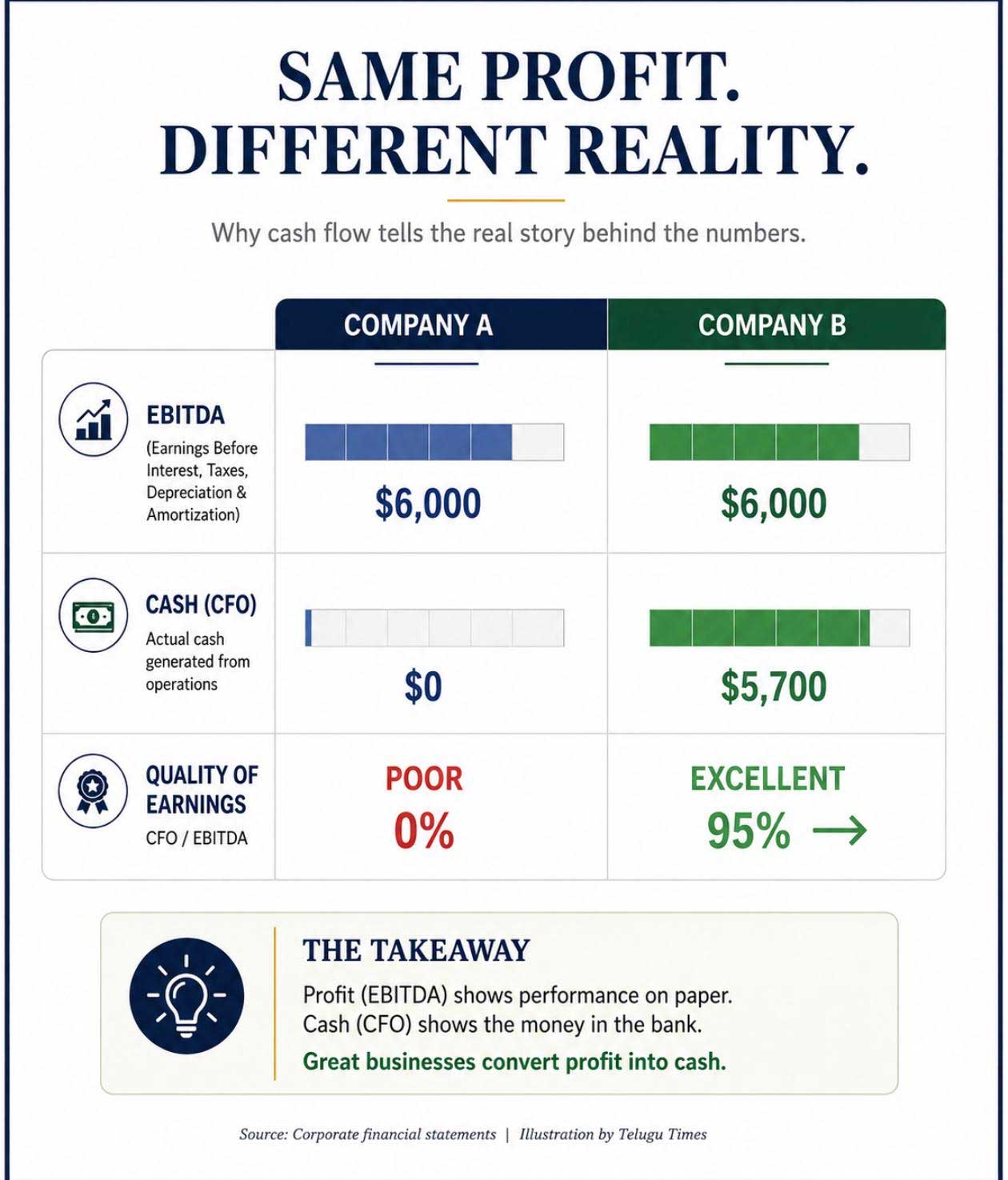
Two Companies, Same Profit Very Different Businesses
Company A: EBITDA $6,000, Operating Cash Flow $0, CFO/EBITDA 0%.
It looks profitable but generates no cash.
Company B: EBITDA $6,000, Operating Cash Flow $5,700, CFO/EBITDA 95%.
Almost every dollar of profit becomes cash that can fund growth, pay debt, or be returned to shareholders.
Why the Gap Exists:
Cash conversion suffers when customers delay payments, inventory builds up, or working capital expands. These factors may not immediately reduce EBITDA, but they reduce available cash.
Why Investors Should Care:
Whether you are buying shares or acquiring a private business, EBITDA should be the starting pointnot the final answer. A business that consistently converts profit into cash is generally stronger, more resilient, and better positioned for long-term growth.
The Bottom Line:
EBITDA tells you what a business earned on paper. Cash Flow from Operations tells you what it actually produced. The CFO/EBITDA ratio bridges the gap between the two.
Profit is opinion. Cash is reality.