

Is Telegram in Trouble? Here’s Why Millions of Users Are Suddenly Worried
- Published By: Tech Team
- July 29, 2026 / 03:11 PM IST


By Surya Prakash Josyula
“Is Telegram going to shut down?”
That question has been spreading rapidly across social media over the past few days.
Some users believe Telegram could face the same kind of restrictions that other popular apps have faced in different countries. Others are worried about something much simpler—what will happen to their channels, groups, files, and chats if the pressure on Telegram continues to grow?
The concern is not based on a single news report. It comes after a series of developments involving Telegram in different parts of the world.
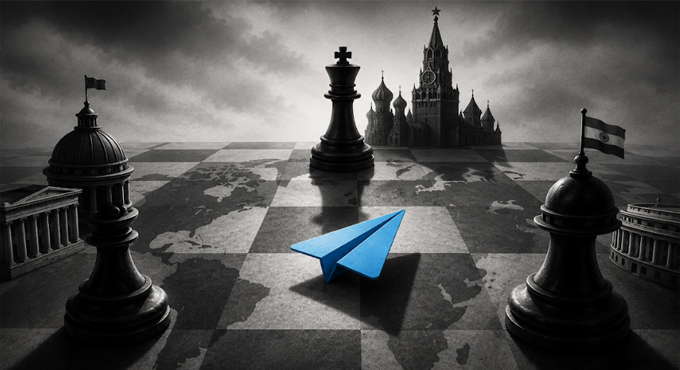
First came France. Then India. Now Russia.
Three countries. Three different issues. But one common name—Telegram.
Together, these events have raised a bigger question. Is Telegram facing the biggest challenge in its history?
Telegram is no longer just another messaging app. For millions of people, it has become a daily tool for work, education, business, entertainment, and communication. Students use it for study material and job alerts. Businesses use it to share documents. Investors follow market channels, while creators use it to build communities.
That is exactly why every major headline about Telegram now matters to millions of users.
Russia’s latest action has pushed the platform back into global headlines. Russian authorities have charged Telegram founder Pavel Durov with aiding terrorism, alleging that the platform failed to remove channels, bots, and groups that were being used by Ukrainian security agencies, terrorist organizations, and cybercriminals.
According to Russia, Telegram became a communication platform for activities that threatened national security. Durov has rejected such accusations and has consistently argued that governments are using security concerns to weaken privacy and freedom of speech.
This disagreement is no longer just about one criminal investigation. It has become part of a much larger debate over how much responsibility technology companies should carry for the content shared on their platforms.
Russia is not the only country increasing pressure on Telegram. French authorities have also investigated Durov over allegations that the platform failed to adequately address illegal content. In India, Telegram has come under government scrutiny over issues such as exam paper leaks, piracy, and illegal channels.
While the reasons may differ from country to country, the broader pattern is becoming increasingly clear. Governments across the world are demanding greater accountability from digital platforms.
Naturally, this has led to one question among users.
Is Telegram really going to shut down?
At this point, there is no evidence to suggest that Telegram is about to disappear globally. The platform serves hundreds of millions of users, and countless businesses, educational groups, media organizations, and online communities depend on it every day.
A legal case against its founder does not automatically mean the platform itself will stop operating.
However, that does not mean everything will remain the same.
The bigger impact is likely to be on how Telegram functions in the future. Governments are expected to push for stricter moderation of illegal content, faster responses to law enforcement requests, and stronger action against piracy networks, scam groups, and extremist channels.
Some countries could also introduce tighter regulations governing how the platform operates within their borders.
For ordinary users, Telegram is unlikely to disappear overnight. But the app they use in the future may not look exactly like the one they use today.
The real story, therefore, is not about Pavel Durov alone.
It is about whether Telegram can continue to balance its promise of privacy with the growing demands of governments seeking greater control over digital platforms.
That battle is only beginning.
And the outcome may shape not just Telegram’s future, but also the future of online privacy and digital freedom for millions of users around the world.