
India’s ‘Invisible’ James Bond… The Story of the Creator of R&AW!
- Published By: Tech Team
- July 25, 2026 / 05:45 PM IST


— Surya Prakash Josyula
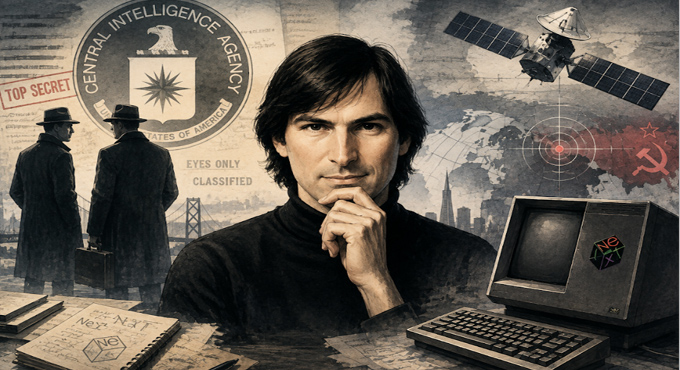
A man who never held a gun… never set foot on a battlefield. Yet in 1971, he played a pivotal role in a strategy that split a country into two and gave birth to a brand new nation on the world map!
And yet… his photos are nowhere to be found. He never gave a single interview in his lifetime. Most people in this country don’t even know his name.
We have seen R&AW agents in many movies like Salman Khan’s Tiger, Shah Rukh Khan’s Pathaan, and Mission Majnu. But how many people know about the spymaster who actually built R&AW in its initial stages?
We usually think heroes are only those who appear in front of the camera. But the public has never seen the faces of some real heroes who protected India. He is R. N. Kao. He is the one who built R&AW.
Who Exactly Was R. N. Kao?
Once upon a time, he lived an ordinary life just like us. Born into a Kashmiri Pandit family, Rameshwar Nath Kao (R. N. Kao) started his career as an ordinary police officer (IPS).
With his sharp intelligence, patience, and exceptional ability to read people, he soon assumed key responsibilities in the Indian Intelligence Bureau (IB).
After 1962 (Sino-Indian War) and 1965 (Indo-Pakistani War), the government realized that India urgently needed a strong foreign intelligence agency to know what was happening beyond its borders in advance.
Hundreds of Officers Were There… Why Did Indira Gandhi Choose Him?
In 1968, when it was decided to set up a new foreign intelligence agency called R&AW (Research and Analysis Wing), the first name that came to the mind of then Prime Minister Indira Gandhi was Rameshwar Nath Kao!
Why Him?
He trusted intelligence and information more than weapons. Before a war even begins at the border, the enemy should be defeated mentally—winning a war without making a sound was his specialty!
The 1971 Bangladesh Story: The Real Strategy!
The master plan Kao devised right after taking charge of R&AW changed the very contours of the Indian subcontinent’s borders.
In 1971, before the Indian Army directly stepped into the field to help East Pakistan—which was suffering under Pakistani military occupation—Kao disrupted the enemy’s plans with his intelligence strategies. He ran an invisible network that sent moment-to-moment information back to Delhi about what was happening across the border.
As a result, India achieved a historic victory in the 1971 war, and Kao stood as the primary architect behind the strategy that led to the birth of Bangladesh.
How Does a Spymaster Think? (The Spy Master Formula)
For R. N. Kao, war was not fought just at the borders. He believed it begins in the enemy’s mind.
Before a single bullet was fired at the border…
What is the enemy thinking?
Where are they planning to attack?
What are their weaknesses?
He quietly built a global Indian intelligence system so that such secret information reached Delhi within minutes. “Win the war before it even begins” — that was the Kao doctrine!
Why Didn’t He Ever Get His Photo Taken?
Despite playing such an impactful role, Kao maintained extreme secrecy. He stayed miles away from the camera’s limelight and publicity.
It was because of these quiet strategies that he seamlessly completed the process of integrating Sikkim into India without firing a single bullet. That is why Count Alexandre de Marenches, the head of the French intelligence agency, praised Kao as one of the world’s finest intelligence chiefs of the 1970s.
Why Did the Dalai Lama and Sam Manekshaw Respect Him So Much?
During the 25th-anniversary celebrations of the formation of Bangladesh, a Bangladeshi citizen recognized Kao and bowed to him, saying, “Sir… you are the reason our country exists today.” Do you know what Kao replied? “I did nothing. All credit goes to the people who fought,” he said, and quietly walked away.
Whether it was the Dalai Lama specially standing up to greet him upon seeing him in a gathering of hundreds… or 1971 war hero Field Marshal Sam Manekshaw getting thrilled at the mere mention of his name… it was all because of the quiet dedication he showed toward the country!
What You Have Seen So Far Is a Spy… What You Are About to See Is a Human Being!
He was not just a spymaster who struck terror into the hearts of enemies. Behind this invisible hero was a gentle human being known to very few.
He was an animal lover who opened his house gates to shelter stray dogs when it rained. He was so refined that he had the flower vases at home changed twice a day. With the very hands that drafted sharp intelligence strategies, he sculpted beautiful artworks. He was a true ‘gentleman’ who placed immense value on family and respect.
But… The Story Doesn’t End Here.
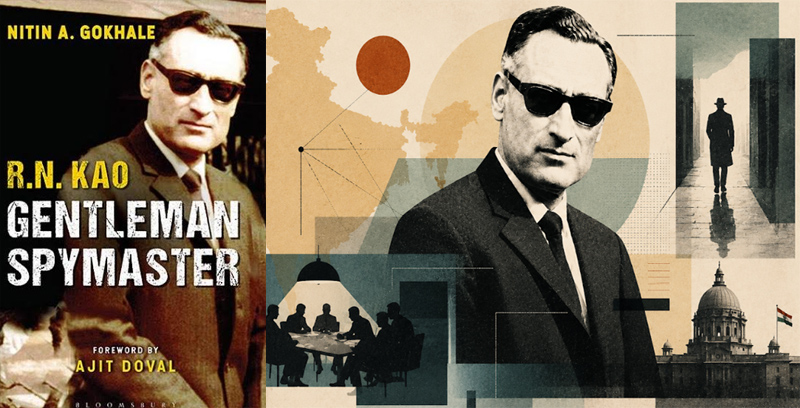
There is a book that introduced the life of R. N. Kao—a man who never spoke about himself and passed away without even writing an autobiography—to the world. Written by renowned defense analyst Nitin A. Gokhale, R. N. Kao: Gentleman Spymaster introduced the real man behind the silent spymaster to the world.
However, there is one thing that made this book extra special.
Do you know who wrote the foreword for it?
Not a famous author… not a former politician… but India’s National Security Advisor (NSA), Ajit Doval. For a person holding the highest security position in the country to personally write the foreword to a spymaster’s biography is a rare honor that speaks volumes about the deep impact R. N. Kao had on Indian intelligence. It was not just a ‘Foreword’. It was a silent salute offered by the Indian intelligence world to its greatest master!
What a Real Spymaster Means…
When most people think of a spy, they imagine guns, chases, and disguises. But R. N. Kao redefined that very concept. The most dangerous weapon in his hands was information. His greatest victory was defeating the enemy’s plan before they even started firing. His biggest award was that the world never knew his name.
That is why… a true spymaster is not someone who merely guards secrets… but someone who turns his very existence into a secret while protecting the nation.
R. N. Kao was such a spymaster. Salute, Sir.