

Can a Person Really Disappear? The Mystery of ‘Maya’ Through Vivekananda’s Explanation
- Published By: Tech Team
- September 1, 2026 / 11:30 AM IST


—Surya Prakash Josyula
During his stay near New York in the United States, Swami Vivekananda spent long hours speaking with his Western disciples about yoga, Maya and Brahma Jnana. But unlike followers who simply accept everything on faith, his Western disciples had a different approach. Every idea came with questions. How is that possible? What is the reason behind it? Can it be explained through science?
One day, the conversation turned to the extraordinary powers associated with yogis.
The Question That Came Up
The disciples reportedly asked Vivekananda whether yogis could really become invisible. They also wanted to know how a yogi could know about events happening far away and what the idea of being present everywhere, or Sarvantaryamitvam, actually meant.
For such questions, the easiest answer would have been to simply say, “It is divine power,” and move on. But Vivekananda, according to this account, took a different approach. Instead of asking his disciples to accept the idea blindly, he began explaining it through the nature of light.
Why Do We See an Object?
We normally do not think much about why we can see something. If a table is standing in front of us, we simply assume that we can see it because it is there.
But the explanation, Vivekananda reportedly suggested, is not that simple.
When light falls on an object and reaches our eyes after being reflected, we are able to see that object. But what happens if that light does not reach our eyes?
The object may still be right there, but we will not be able to see it.
You do not need a science textbook to understand this.
Imagine there is a power cut at night. The table, chair and cupboard in your room have not gone anywhere. They are still exactly where they were. But because the room is dark, you cannot see them.
Does that mean they have disappeared?
Of course not.
They are still there. They are simply not visible to your eyes at that moment.
And that raises an interesting point: just because something cannot be seen, can we say that it does not exist?
This Is Where the Idea of Maya Comes In
This, according to the account, is where Vivekananda’s explanation of Maya begins to make more sense.
We often assume that anything we cannot see does not exist. But have you ever seen air with your eyes? No. Yet we know that air exists.
Your mobile phone receives a signal, but can you actually see that signal? No. Still, it is there.
The point is simple: the world we can see may not be the entire world.
Our eyes can only see within their limits. Our ears can only hear within their limits. There may be many things around us that remain beyond the reach of our senses.
That is why the idea of Maya can be understood in another way: the mistake is in assuming that whatever we see is all that exists.
Can Yogis Really Become Invisible?
Indian spiritual traditions and religious texts speak about certain great yogis possessing extraordinary powers. There is a belief that such yogis may be able to do things that ordinary people cannot and may even gain a degree of control over nature.
Vivekananda is also said to have discussed this idea while explaining Maya and yogic powers. But according to this story, the interesting part comes next.
He did not stop with just an explanation.
Did Vivekananda Demonstrate It?
It is said that while staying at the ashram, Vivekananda was once speaking with his disciples inside a room about yogic powers. According to the account, he demonstrated the idea rather than merely discussing it.
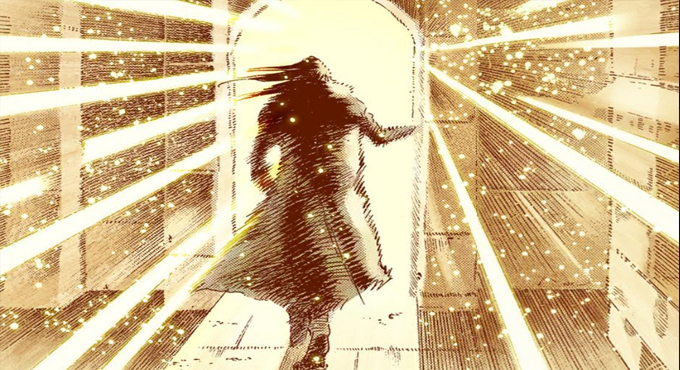
Those present reportedly saw Vivekananda disappear from their sight for a short time.
The story goes that he used the incident to give his disciples a practical demonstration of what he meant by Maya.
Whether one sees it as a spiritual experience, a story from yogic tradition or something that invites further questions, the central idea being discussed was simple:
Just because something is not visible to us does not necessarily mean that it has ceased to exist.
Related News

Credit Card Holder Dies: Who Pays the Outstanding Bill?

Dulquer’s ‘I’m Game’ Plot Leak: Is It Similar to an Old Hollywood Story?

The New Barrier to the American Dream May Not Be the Visa

This City Doesn’t Sell Homes to the Middle Class!

Scientists Built Bacteria That Makes Medicine When Your Sugar Rises