
Accident, Necessity, or Design?

- Published By: shivaduvvuru
- August 3, 2026 / 10:10 AM IST


Three Questions About the Order of the Universe
The Coincidence Series
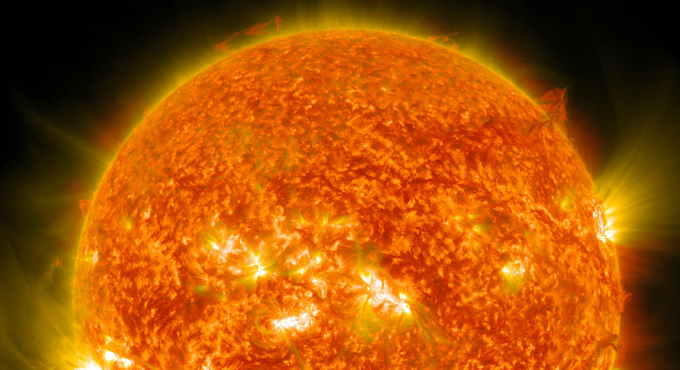
When scientists look into space, they find more than stars and galaxies.
They find order.
The same laws govern the universe wherever we look. A few fundamental forces allow matter to exist, stars to shine, and planets to form. On one small world, those laws have also produced beings capable of understanding them.
Together, these facts raise a profound question:
Is this extraordinary order an accident, an unavoidable necessity, or evidence of design?
The Same Laws Everywhere
Light from distant galaxies has traveled billions of years to reach us. Yet within it, scientists find the signatures of the same elements known on Earth.
Hydrogen behaves like hydrogen. Gravity shapes distant galaxies as it shapes our solar system. Light follows the same principles across the observable universe.
It might have been otherwise.
We can imagine a chaotic cosmos in which gravity changed from place to place or atoms altered their properties without warning. Science would be impossible because yesterday’s discovery would tell us nothing about tomorrow.
But our universe is remarkably consistent.
Equations written on Earth describe stars no human being will ever visit. Experiments conducted in laboratories reveal processes occurring across immense distances.
Across the ocean of space, nature appears to speak one language.
That is the first remarkable coincidence.
The Conditions That Make Life Possible
Universal laws alone are not enough. Their strengths and relationships also matter.
Gravity gathers matter into stars. Electromagnetism allows atoms and molecules to form. The strong nuclear force binds atomic nuclei. The properties of elementary particles permit stable matter and complex chemistry.
Alter some of these conditions sufficiently, and the universe might contain no long-lived stars, no planets, and no carbon-based life.
We should be cautious. Scientists do not know whether these constants could truly have been different. A deeper theory may eventually show that they could never have taken any other values.
Some physicists propose a multiverse containing many universes with different conditions. If so, we naturally find ourselves in one compatible with life. No observers could arise in the others to wonder why they were absent.
Yet the history of our universe remains astonishing.
From a hot and nearly uniform beginning came galaxies, stars, planets, oceans, cells, forests, and consciousness.
The universe was not merely able to exist.
It was able to become complex.
That is the second remarkable coincidence.
The Rise of Consciousness
For most of cosmic history, there were no known observers.
Stars were born and died unseen. Galaxies collided in silence. Light crossed immense distances with no eye waiting to receive it.
Then, on a small planet orbiting an ordinary star, matter began to live.
Life developed memory, imagination, and language. One species learned to reconstruct the past, anticipate the future, and ask how the universe began.
The atoms in our brains were forged through cosmic processes. Yet those atoms became capable of studying the processes that created them.
A human being can stand beneath the night sky and calculate what happens inside a distant star. We can determine the age of rocks, trace the evolution of life, and detect planets around other suns.
Our lives are brief. Our senses are limited. Yet the universe is orderly enough—and the human mind capable enough—that some understanding is possible.
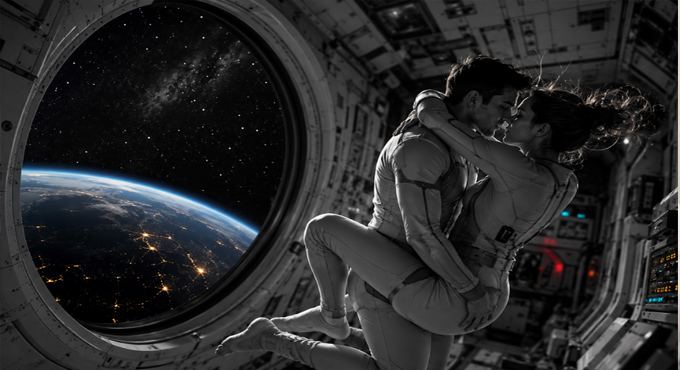
Through us, a small part of the cosmos has become aware of the whole.
That may be the strangest coincidence of all.
How Can We Explain It?
What are we to make of this extraordinary chain?
The laws are universal.
The forces permit complexity.
Complexity has produced consciousness capable of discovering those laws.
Science explains much of how this happened. It describes the birth of stars, the creation of elements, the formation of planets, and the evolution of life.
But a deeper question remains:
Why does a universe capable of all this exist?
There are three broad possibilities.
Perhaps it is an accident. Our universe may be one among countless others, and we happen to inhabit one in which life is possible.
Perhaps it is a necessity. The laws and constants may arise inevitably from a deeper principle that science has not yet discovered.
Or perhaps it is design. The order of nature may reflect an intelligence or creative ground beyond the physical universe.
None of these answers has been proved.
Fine-tuning does not scientifically establish the existence of God. A multiverse does not eliminate every mystery. And saying that the laws are necessary still leaves us asking why such laws exist at all.
The honest answer is that we do not yet know.
What We Still Do Not Know
Long before life appeared, stars followed their courses. Atoms obeyed their laws before anyone could name them. The universe carried within itself the possibility of consciousness before the first cell emerged.
Then, for a brief moment in cosmic time, we became able to look back at the universe that formed us.
We discovered that its laws reach everywhere.
That its forces permit extraordinary complexity.
That the human mind can understand at least a fragment of it.
Perhaps all this is a fortunate accident.
Perhaps it could never have been otherwise.
Perhaps it is the signature of something deeper.
Accident, necessity, or design?
We do not know.
But beneath the stars, contemplating a universe that made both life and understanding possible, we are left with one unmistakable response:
Wonder.