Coromandel International Launches Project Mamatha to Transform Anganwadi Centres in Kakinada Village
- Published By: Tech Team
- May 15, 2026 / 09:04 PM IST


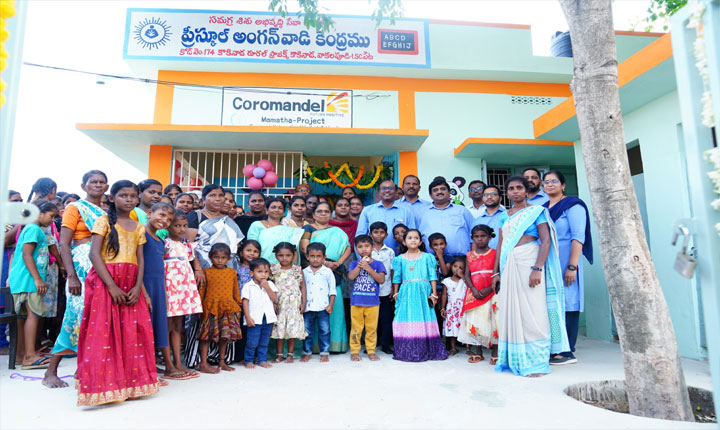
KAKINADA : In a significant boost to rural infrastructure, Coromandel International Limited, a premier agri-solutions provider, has officially launched Project Mamatha. This Corporate Social Responsibility (CSR) initiative is dedicated to the comprehensive revitalization of Anganwadi centres in the villages of Vakalapudi and Valasapakala, near Kakinada.
Fostering Growth Through Infrastructure:
The project aims to convert under-resourced community hubs into vibrant, nurturing environments for early childhood education. By upgrading these facilities, Coromandel is providing a safer and more inclusive space for young children, pregnant women, and adolescent girls to access essential health and educational services.
The revamped centres now boast several critical enhancements:
Hygiene & Sanitation: Installation of clean, functional toilets and dedicated safe handwashing stations.
Learning Environment: Bright, durable flooring and colourful educational wall art designed to stimulate young minds.
Child-Centric Design: Provision of age-appropriate furniture and a variety of engaging learning materials.
A Collaborative Vision for the Community:
The inauguration was led by Mr. Ch. Srinivasa Rao, Head of Fertiliser Manufacturing at Coromandel International, alongside local officials and representatives from the Integrated Child Development Services (ICDS).
During the ceremony, Ms. Lakshmi, Child Development Project Officer (CDPO) at ICDS, praised the initiative: “The transformation through Coromandel’s Mamatha project has been remarkable. The upgraded facilities have created spaces where learning becomes joyful. This collaboration demonstrates the power of partnerships in addressing community needs.”
Commitment to Long-Term Impact:
Project Mamatha underscores Coromandel International’s commitment to social upliftment beyond the agricultural sector. By focusing on the foundational years of childhood and the well-being of local women, the company is investing in the long-term human capital of the Kakinada region. The initiative serves as a model for how corporate interventions can effectively bridge the gap in rural educational infrastructure.
Related News
Maxivision Super Speciality Eye Hospital Inaugurates Second Facility in Vijayawada at Poranki
ReNew and Anakapalli District Administration Join Hands to Skill 300 Women for Clean Energy Jobs
Sri City IALA To Launch Free Internal Shuttle Bus Service
AP’s Principal Liaison for North America Investments, Satish Manduva Visits Sri City
Rotary Club of Madras East Delegation Visits Sri City