
Youth Facing Rapid Rise in Hypertension Due to Lifestyle Shifts, Warns Union Minister Prataprao Jadhav
- Published By: techteam
- May 15, 2026 / 07:52 PM IST


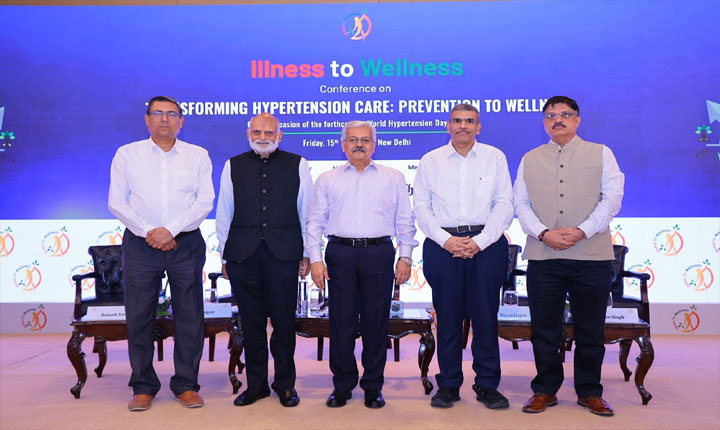
NEW DELHI: On the eve of World Hypertension Day 2026, the ‘Illness to Wellness’ conference highlighted a sobering trend: hypertension is no longer a condition exclusive to the elderly. Mr. Prataprao Jadhav, Union Minister of State for Health and Family Welfare, delivered a stern warning via video message, noting that changing lifestyles and a decline in physical and mental health focus have led to a rapid surge in high blood pressure among India’s youth.
The Minister characterized hypertension as a “silent killer” due to its asymptomatic nature and potential to trigger catastrophic events like heart attacks and strokes. He reaffirmed the government’s commitment to the National Programme for Prevention and Control of Non-Communicable Diseases (NPCDCS), which utilizes Health and Wellness Centres nationwide for population-based screening and early detection.
The Urban-Rural Myth and Economic Impact:
Mr. Rajesh Bhushan, Former Secretary of Health & Family Welfare, debunked the myth that hypertension is solely an urban struggle. He noted its equal prevalence in rural India and stressed that non-communicable diseases (NCDs) pose a significant threat to the national GDP. “Early detection is critical,” he stated, “as it is the only pathway to effective early treatment.”
Modern Triggers: From Sedentary Habits to AI Anxiety:
Mr. Anil Rajput, Chairperson of the Illness to Wellness Foundation’s Advisory Council, identified several modern lifestyle catalysts:
Prolonged working hours and constant digital connectivity.
Poor sleep hygiene and sedentary routines.
AI Anxiety: A rising fear among employees that Artificial Intelligence may lead to job displacement.
However, Mr. Rajput argued that AI, if deployed responsibly, could actually serve as a tool for healthier living and improved quality of life rather than just an automation engine.
Expert Recommendations for Prevention:
Medical experts at the conference provided a roadmap for managing the crisis:
Dr. Ripen Gupta (Max Smart Hospital): Emphasized annual screenings, aerobic exercise, and resistance training.
Prof. Rakesh Yadav (AIIMS New Delhi): Identified obesity as a primary driver and called for consistent treatment adherence, regardless of age or social standing.
Dr. Sanjeev Singh (Amrita Institute): Advised regular monitoring of BMI and waist circumference as key preventive indicators.
Special Sessions: Pregnancy and Organ Protection
The conference delved into specific high-risk scenarios through two expert-led sessions:
Maternal Health: Focused on identifying hypertensive disorders during pregnancy. Experts emphasized the need for pregnancy-safe therapies and multidisciplinary antenatal care to prevent complications for both mother and child.
Organ Damage: Discussed how hypertension ravages the heart, brain, and kidneys. Specialists from AIIMS and Fortis urged a shift toward “organ protection” through early screening for target organ damage and routine monitoring.
The event concluded with a unified call for a people-centric preventive healthcare approach, urging citizens to embrace healthier lifestyles to tackle the growing national burden of hypertension.
Related News

Trump Announces Up to 200% Tariffs on Generic Drugs; Move May Impact India
India Wants to Make EV Batteries at Home. Will Cars Get Cheaper?
Govt Allows FDI in Inventory-Based E-Commerce Only for Exports

Flipkart Getting Ready to Challenge Swiggy and Zomato With New Food Delivery Service

Godrej Capital Acquires Kanakadurga Finance to Enter Gold Loan Market