
Andhra Pradesh To Start Build Quantum Computers In Two Years from Now: CM
- Published By: techteam
- December 23, 2025 / 01:23 PM IST


Historic Quantum Lecture By Chief Minister Marks Launch of World’s Largest Quantum Skilling Programme in Andhra Pradesh
Chief Minister Lays Out His Quantum Vision to 50,000+ plus quantum tech students in a special lecture
Amaravati Quantum Valley to anchor knowledge economy of future on par with Silicon Valley: CM
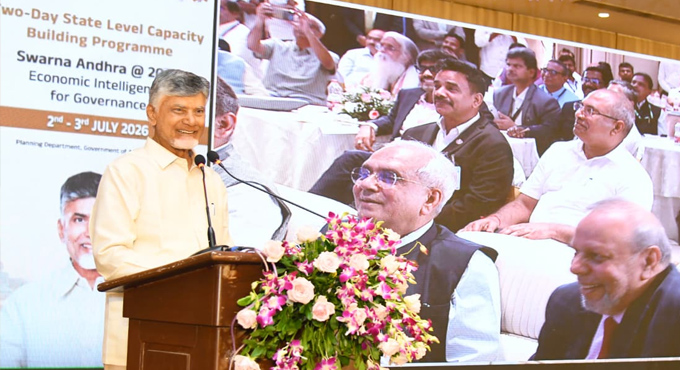
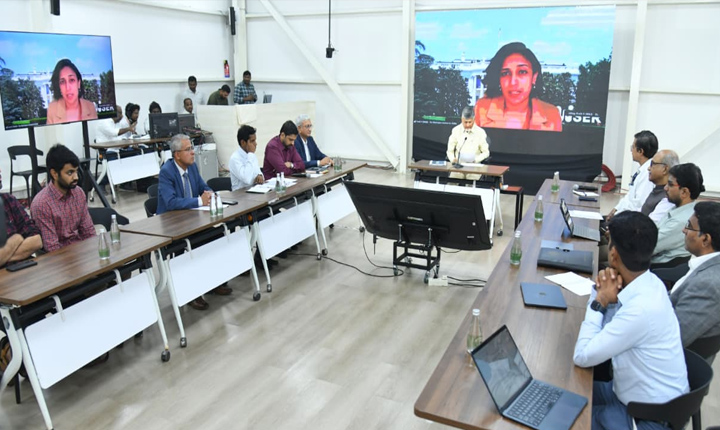
Amaravati, December 23: Andhra Pradesh Chief Minister N. Chandrababu Naidu delivered a vision-setting lecture on quantum technologies, marking the formal launch of the world’s largest quantum skilling programme in the state. For the first time globally a Chief Minister has personally delivered a lecture on quantum technology.
The lecture served as the keynote address for a landmark state initiative aimed at building a future-ready quantum workforce and strengthening the Amaravati Quantum Valley ecosystem. The programme is being implemented through a strategic partnership led by WISER (The Washington Institute for STEM, Entrepreneurship and Research) and Qubitech as the India partner. The initiative has already witnessed strong traction, with 50,000 registrations secured within just ten days, underscoring the enthusiasm among students and young professionals. Notably, women constitute 51 percent of the participants, reflecting the inclusive nature of the programme.
The Chief Minister addressed students through a structured presentation titled “Silicon Valley to Quantum Valley,” using a detailed PPT to outline Andhra Pradesh’s roadmap for leading the global quantum revolution. Setting the tone, the Chief Minister said, “Twenty-five years ago, I presented a vision for IT. Today, I am presenting a vision for Quantum.” Drawing a parallel, he added, “Just like Silicon Valley anchored the digital age, Amaravati’s Quantum Valley will anchor the knowledge economy of the future.”
During the lecture, the Chief Minister reflected on India’s economic history in global comparison. He spoke about missed opportunities during the agricultural and industrial revolutions, the impact of the license raj, and how restrictive policies stalled growth. He highlighted the transformative role of the 1991 economic reforms and telecom deregulation in unlocking India’s knowledge economy.
Recalling his role in establishing HITEC City, he noted that the initiative created a strong foundation for the IT ecosystem, resulting in Telugu youth today forming a significant part of the global digital workforce.
Describing the present moment as deeply inspiring, the Chief Minister said, “You can imagine anything. It is possible to achieve. These are very inspiring times.”
He emphasized that every citizen must participate in India’s growth journey and expressed confidence that India would emerge as the world’s leading economy. Highlighting the success of telecom reforms, he noted that 99.2 percent of mobile phones are now manufactured in India, and one out of every five handsets is produced in Andhra Pradesh, which he called a clear example of how policy reforms translate into economic outcomes.
The Chief Minister outlined four key strengths driving India’s future: the 1991 economic reforms, early adoption of IT in the mid-1990s, India’s demographic dividend until 2047, and the strong leadership of Prime Minister Narendra Modi. He also spoke about the complementary role of the public and private sectors in advancing technological revolutions and cited global Indian leaders such as Satya Nadella and Sundar Pichai as inspirations for students.
Highlighting the global success of Telugu professionals, he noted that Indian-origin households in the United States report a median income nearly double the national average, driven largely by STEM and professional employment. He cited that Telugu entrepreneurs have founded over 1,200 technology startups in Silicon Valley, over 2.5 lakh Telugu professionals hold key positions in top tech firms, and Telugu-origin leaders are at the helm of several Fortune 500 companies.
Outlining his vision for statewide development, the Chief Minister presented multiple development clusters planned across Andhra Pradesh and urged students to think holistically rather than in silos. “Do not look for bits and pieces. Aim for a big vision,” he said, declaring, “We want to produce quantum computers in Amaravati.”
Discussing applications of quantum technology, he highlighted its transformative potential in sectors such as green energy, personalised medicine, agriculture, and advanced manufacturing. “IT and AI have already transformed our lives. The next breakthrough will be the speed and efficiency of computing driven by quantum,” he said, adding that India would take first-mover advantage in this global transformation. He further announced that quantum computer production would begin in Andhra Pradesh within two years.
The Chief Minister appreciated organisations such as WISER, Qubitech, and QKrishi for inspiring over 5.4 lakh students to take up quantum skilling, stating that the initiative represents a full skilling roadmap, not just a classroom session. “Nobody can match Andhra Pradesh in visualisation, speed, and execution of pioneering projects,” he said.
Recalling his earlier call of “one IT professional per family,” the Chief Minister issued a similar call for quantum, urging students to understand the vision and plan their futures accordingly. He also announced a Rs. 100 crore award for the first Nobel laureate in Quantum Science from Andhra Pradesh.
The Chief Minister showcased detailed plans for the Quantum Valley ecosystem and urged industry leaders and dignitaries present to leverage Amaravati’s conducive environment for quantum research, manufacturing, and innovation.
Concluding his address, he called upon students to think out of the box, innovate, and focus on product development. “Product is the future,” he said, asserting that Andhra Pradesh will be a torchbearer of Viksit Bharat 2047, with Indians leading globally and Telugu youth emerging as the wealth creators of the future.
The programme was attended by Prof. Kamakoti, Director, IIT Madras; Prof. Satyanarayana, Director, IIT Tirupati; Dr. Abhay Karandikar, Secretary, Department of Science and Technology, Government of India; and experts from various institutions. The Chief Minister congratulated IT Secretary Katamaneni Bhaskar and CMO Secretary Pradyumna for effectively organising the quantum technology programme.