
The Wrong Turn That Burned Down a Century
- Published By: shivaduvvuru
- June 2, 2026 / 12:41 PM IST


History likes to pretend it had a plan. Often, it was simply an accident.
Take June 28, 1914. A car takes a wrong turn down a narrow street in Sarajevo. The driver, confused, slows down and starts to reverse. And by terrible chance, the car rolls to a stop right in front of a 19-year-old standing on the corner.
The man in the back seat is Archduke Franz Ferdinand, heir to the throne of Austria-Hungary. The teenager on the corner is Gavrilo Princip a Serbian nationalist who, just hours earlier, had watched his group fail in an attempt on the Archduke’s life. He had given up. He was, by some accounts, buying something to eat.
Now chance had parked his target two steps away.
Princip pulled out a pistol and fired twice. The Archduke and his wife were dead within minutes. And the 20th century caught fire.
Here is the part that should give you chills. That one bullet did not stay in Sarajevo. It spread, country by country, because of the way Europe had tied itself together.
It began with anger. Austria-Hungary blamed Serbia for the killing and decided to punish it. But Serbia was not alone. It had a powerful protector in Russia, a huge empire that saw itself as the defender of small Slavic nations like Serbia. So when Austria-Hungary moved against Serbia, Russia began preparing its army.
That frightened Germany. Germany was Austria-Hungary’s closest ally, and it could not allow Russia to grow strong on its border. So Germany declared war on Russia and then, fearing an attack from the other side, on Russia’s friend France as well. To reach France quickly, German troops marched through Belgium, a small neutral country. That was the final straw. Britain had promised to protect Belgium, and now Britain entered the war too.
See what happened? No single country wanted a giant war. But each one was bound by a promise, a fear, or an alliance to the next. Europe in 1914 was like a row of people standing in a line, each holding the hand of the next. When the first one was pushed, every one of them was pulled down. Within five weeks, a quarrel between two countries had become a war among the most powerful nations on Earth.
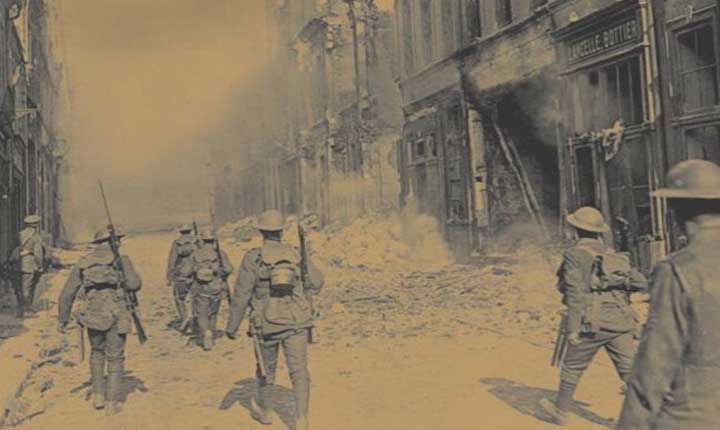
Within four years, nearly 20 million people were dead in the trenches of World War I.
But it did not stop there. The war destroyed four mighty empires. It pushed exhausted, starving Russia into revolution and gave the world its first communist government. The harsh peace that followed left Germany humiliated and bitter, and that bitterness was later used by a man named Hitler. Twenty years on, it exploded into World War II.
Trace the line backward and it is almost too much to believe. The Cold War. The fall of empires. The map of modern Europe and the Middle East. All of it ripples outward from a driver who took a wrong turn.
Historians will rightly remind us that Europe was already dangerous and tense, with proud nations, huge armies, and old hatreds. Some big war may have been coming anyway. True. But it was a wrong turn that decided that day, that spark, and that exact future instead of another.
And that is the unsettling lesson. We imagine history as a grand, unstoppable river. Often it is closer to a young man buying food, looking up, and finding that the future has pulled over right in front of him.
One wrong turn. A hundred years of consequences.
But here is something just as unsettling. The worst does not always need an accident. Sometimes it is chosen.
Look at 2026. On February 28, the United States and Israel launched a sudden attack on Iran not because of a wrong turn, but as a deliberate decision, made even as talks for peace were still going on. There was no fluke this time. It was a choice.
And yet the result rhymed with 1914. Iran struck back and closed the Strait of Hormuz, one of the most important sea routes in the world for fuel and gas, sending a shock through the global economy. The war has killed thousands, forced millions from their homes, and pulled in Lebanon, the Gulf states, and others exactly the widening circle the world saw a century ago.
So whether it begins by accident or by design, the lesson holds. One event, in one place, can reach across the entire world.
In 1914 it was a wrong turn. In 2026 it was a decision. The fire spreads either way.
Related News

Top 6 Stays in Dubai for Your Next Workation
SriLankan Airlines Restores Complete Middle East Network With Kuwait Service Resumption

Two Years After Trump’s Inflation Spotlight, Rising Grocery Prices Loom as a Political Vulnerability for Republicans Ahead of Midterms
US Imposes Up to 100% Tariffs on Drones to Curb Chinese Dominance and Bolster Security
Iran Mocks Trump Over Secret Aircraft Switch During Turkey Visit