
Spider-Man: Brand New Day Review, Did It Surpass No Way Home?

- Published By: Tech Team
- July 31, 2026 / 05:31 PM IST


Rating: 3.5/5
By Surya Prakash Josyula
Spider-Man (Tom Holland) is once again busy protecting the world from dangerous enemies. But this time, his biggest battle is not against a supervillain. It is against his own loneliness. After the events of Spider-Man: No Way Home, the world completely forgets Peter Parker. Even his best friend Ned and the love of his life, MJ, no longer remember him. Peter accepts this painful reality and continues to live as a lonely superhero, hiding his emotions behind the Spider-Man mask.
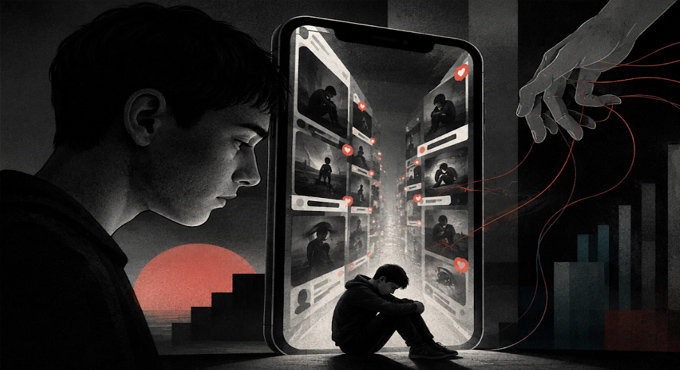
Things become even more painful when he secretly follows Ned and MJ on social media and realizes that MJ has moved on with another boyfriend. Unable to handle the emotional pain, Peter slowly falls into depression. Surprisingly, his mental struggle also begins affecting his Spider-Man abilities. His powers become unstable, making his toughest battle an internal one rather than a physical fight.
Even with all this pain, Peter never stops protecting New York City. Saving innocent people becomes the only purpose left in his life, earning him the reputation of being the “Friendly Neighborhood Spider-Man.” But every Spider-Man story eventually introduces a powerful new enemy, and this one is no different.
This time, the threat is an invisible force capable of entering people’s minds and controlling them. Its target is the Department of Damage Control (DODC), the government agency responsible for monitoring super-powered individuals. The mysterious force launches repeated attacks on the facility to steal a highly classified object known as V-MAX. Once Spider-Man learns about the danger, he steps in to stop it. But who is this invisible enemy? Why is V-MAX so important? How does Hulk become part of the conflict? And what role does The Punisher play in the story? The answers unfold on the big screen.
Analysis
Most superhero movies introduce the villain within the opening minutes and quickly move into large-scale action. Spider-Man: Brand New Day chooses a completely different path. Instead of focusing on explosions and action sequences, the screenplay spends almost the entire first act exploring Peter Parker’s emotional condition. Every day he saves New York, and the city celebrates Spider-Man as a hero. Yet, there isn’t a single person left who knows him as Peter Parker. That emotional conflict becomes the heart of the movie.
The central question of the film is not, “Who is Spider-Man fighting?” Instead, it asks, “How does Peter Parker live after the entire world forgets him?” That idea gives the movie its strongest emotional foundation. It also allows Tom Holland to deliver one of the most mature performances of his career, making Peter’s loneliness feel real rather than melodramatic.
However, the screenplay begins to lose its focus in the second half. Until then, the film is entirely Peter’s story. Once the larger MCU elements arrive, the narrative becomes more crowded. DODC, V-MAX, the invisible enemy, Hulk, Punisher, The Hand and several new mutant characters all enter the story within a short span. While each of these additions expands the Marvel universe, they also pull attention away from Peter’s emotional journey. The screenplay starts balancing two different goals at the same time—telling Peter Parker’s personal story while also setting up Marvel’s future. That balancing act doesn’t always work smoothly.
Hulk’s appearance is a perfect example. His entry generates excitement inside theatres, and for a moment it feels like the film is about to become even bigger. But once the story ends, it becomes clear that Hulk doesn’t significantly influence the main plot. His presence increases the scale of the movie more than its emotional impact.
Punisher, on the other hand, receives much less screen time but serves a much stronger narrative purpose. Every scene involving him either pushes Peter’s journey forward or adds something meaningful to the conflict. That is why Punisher leaves a much stronger impression despite appearing less frequently.
One of the screenplay’s smartest decisions comes near the climax, where the writers create an emotional parallel between Peter and the antagonist. Both characters have suffered deep personal loss. The difference is how they respond to that pain. Peter learns to live with it, while the villain turns pain into anger and destruction. That simple contrast beautifully captures what Spider-Man has always stood for.
Interestingly, the most memorable moment in the entire film is not the final battle. It is Peter’s reunion with Ned. Throughout the movie, Peter silently wonders whether anyone will ever remember him again. The screenplay answers that question in the closing minutes. Not through love. Not through magic. But through friendship. That emotional payoff becomes the film’s most satisfying and unforgettable moment.
Final Thought
People are not watching Spider-Man: Brand New Day simply because they want another superhero adventure. They are returning because they want to spend more time with Peter Parker, a character they have watched grow over several films. Tom Holland brings remarkable emotional depth to the role, and that performance helps the audience overlook many of the screenplay’s flaws.
Although the second half occasionally loses focus because of the need to expand the Marvel Cinematic Universe, the emotional core of the story never completely disappears. The film succeeds because it reminds audiences that Spider-Man has never been just about fighting villains or saving cities. At its heart, Spider-Man has always been about an ordinary young man carrying extraordinary pain while continuing to do the right thing. Brand New Day may not surpass No Way Home in scale or emotional highs, but it successfully gives Peter Parker a fresh beginning, and that is exactly why audiences are connecting with it.