

Ramayana: Rama Must Win in China, Not Just India! Is China the Real Target of Nitesh Tiwari’s ₹4,000-Crore Epic?
- Published By: Tech Team
- August 14, 2026 / 01:51 PM IST


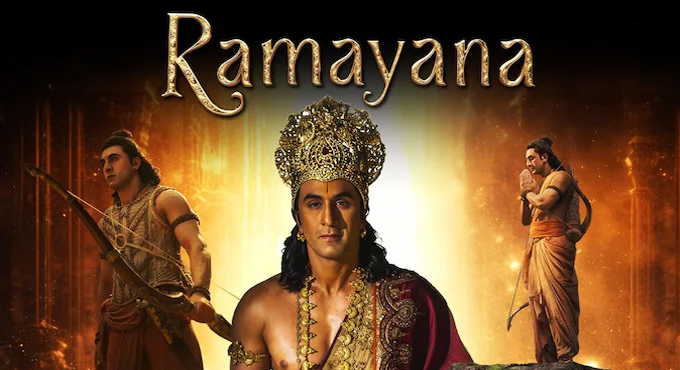
We all know the story of Ramayana. We know Rama, Sita, Ravana and Hanuman. We know how the story begins and how it ends. Yet Nitesh Tiwari is bringing the epic back on a massive scale, with Ranbir Kapoor as Rama, Sai Pallavi as Sita, Yash as Ravana and Sunny Deol as Hanuman. With A.R. Rahman and Hans Zimmer associated with the music and the film being planned as a two-part epic, the project is clearly aiming much higher than a regular Indian mythological film.
The biggest talking point, however, is the money. The two-part project has been linked to a budget of around $500 million, or more than ₹4,000 crore. That immediately raises the biggest question: how can such a massive investment be recovered? The answer may not come only from India. One market could become particularly important in this calculation — China.
Why Is China So Important?
Ramayana is being planned for a major release in China, along with other international markets. Normally, when we talk about the overseas business of an Indian film, we think of the US, Canada, the UK, Australia or the Gulf. But the Chinese market has become a different kind of opportunity for Indian filmmakers.
The global movie business has changed. Earlier, the standard strategy was to make money in India and then add overseas revenue. Now, filmmakers are thinking beyond the Indian diaspora. If a movie connects with Chinese audiences, it can unlock a huge additional market. For a film with a budget running into thousands of crores, that can make a major difference to the overall recovery plan.
The Dangal Connection
This is where Nitesh Tiwari’s connection with China becomes interesting. His Dangal was already a massive hit in India, but its performance in China surprised the Indian film industry. It proved that an Indian story, Indian actors and deeply Indian emotions could connect with a completely different audience.
Now Tiwari is going back to the same market with something far bigger. This time, he is not taking a sports drama or a family story. He is taking one of India’s greatest epics. So the question naturally arises: is the success of Dangal one of the reasons the team has confidence in the Chinese market for Ramayana?
Maharaja Also Sent a Signal
Vijay Sethupathi’s Maharaja has also shown how an Indian film can find a fresh audience in China after succeeding in India. The bigger lesson is simple: an Indian film does not necessarily need to be created specifically for China. If the core emotion works, audiences can connect across language and culture.
Emotion has no passport. A story about family, sacrifice, love, separation, ambition or revenge can work almost anywhere if it is told well. That could be one of the biggest advantages for Ramayana.
But Will Chinese Audiences Connect With Rama?
This is where the real challenge begins. For Indian audiences, the story is already part of our cultural memory. We know Rama, Sita and Ravana. But for a Chinese viewer, the same characters may not have that emotional familiarity. The film therefore cannot simply present Ramayana as a cultural lesson. It has to make the audience feel the story.
Rama has to work not only as a divine figure but also as a husband, son, king and human being. Sita needs to feel like a complete character with her own emotions and decisions. Ravana has to be more than a traditional villain. His intelligence, ambition, power and ego need to make him compelling even to someone who is seeing the story for the first time.
That becomes the biggest creative test for Nitesh Tiwari. The story itself cannot be changed beyond recognition because audiences already know its core. The challenge is to make a familiar story feel fresh through its characters, emotions, scale and visual storytelling.
The Real Strength: Namit Malhotra
There is another important name behind this ambitious plan — Namit Malhotra. He is not a conventional Bollywood producer. Through Prime Focus and DNEG, he has built a global presence in visual effects and post-production. DNEG has worked on some of Hollywood’s biggest VFX-driven productions, giving the project access to an international filmmaking ecosystem.
That is important because Ramayana is not being positioned simply as a big Indian film. The ambition is to create a global cinematic experience. The massive VFX work, international distribution strategy and worldwide release plans all point in the same direction.
For Namit Malhotra, the bigger opportunity may be to prove that an Indian epic can be packaged and sold as a global entertainment property.
If China Works, the Numbers Change
The business strategy is relatively simple. India contributes one part of the revenue. North America and Europe add another. The Gulf, Australia and other markets contribute more. But if China becomes a major success, the overall box-office equation could change significantly.
That is why China matters so much to a project of this scale. It does not have to carry the entire film on its shoulders. But if the movie performs strongly there, it can take some pressure off the other markets and make the huge investment easier to justify.
Could Ramayana Open a New Market for Indian Epics?
If Ramayana succeeds strongly in China, the impact could go beyond this one film. Indian filmmakers may start looking at China not simply as an overseas market, but as a serious destination for Indian stories.
That could encourage bigger projects based on the Mahabharata, Krishna, Buddha and other Indian epics and historical stories. The mindset could slowly change from “Will Indians watch this story again?” to “Can the world watch this story for the first time?”
But there is still one major question.
Will Chinese audiences connect with Rama the way Indian audiences do? Will Sita’s story move them? Will Ravana become a compelling character? And can Nitesh Tiwari take a story that is thousands of years old and make it feel new to a completely different audience?
We already know how the Ramayana ends. Rama defeats Ravana.
But this time, there is another story running alongside it.
Can Rama conquer the Chinese box office?
If he does, Ramayana will not just be another massive Indian blockbuster. It could become the film that opens a much bigger global market for Indian epics.
— Surya Prakash Josyula
Related News

Hero Mahesh Sriram’s Hollywood Film ‘Cowboy and Indian’

‘Toxic’ Gets a Second Chance? Can a Shorter Cut Change Its Fate?

Trump’s Announcement Has Hollywood Cheering. Here’s What Happened

‘I Want Your Sex’: The Shocking Story Behind the Film.. The Writer Turned Her Own Life Into a Movie!

Is This Newcomer the Next James Bond? What Makes Jack Barton Stand Out?