
The New Indian Plate: Why Protein Day Hits Closer to Home
- Published By: Tech Team
- February 27, 2026 / 09:01 AM IST


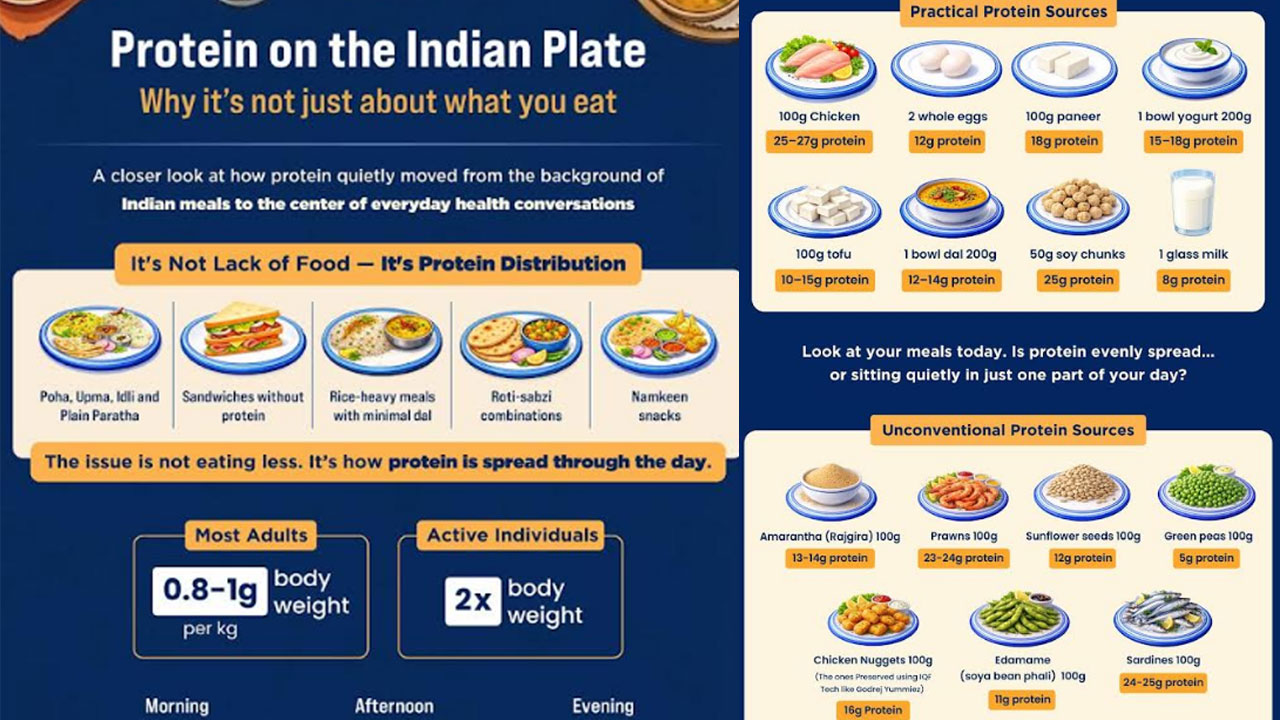
Hyderabad: For generations, the Indian kitchen was guided by habit, taste, and budget, with little thought given to macronutrient counts. However, as lifestyles shift and health conversations move from clinics to social media, protein has evolved from an invisible nutrient to a daily priority. On World Protein Day, experts highlight that the challenge for the Indian diet is not necessarily a total absence of protein, but rather its uneven distribution throughout the day.
Nutritionists point out that while staples like poha, upma, and rice-heavy meals provide fullness, they often fall short on protein unless intentionally paired with the right additions. The goal is now shifting toward strengthening existing meals rather than drastic dietary overhauls.
Expert Perspectives on Protein Accessibility
Dr. Manika Singh, Nutritional Consultant at Godrej Industries Group, emphasizes that awareness must now translate into practice. She suggests that the focus should be on including a reliable protein source consistently through meals, especially at breakfast, lunch, and dinner, using familiar and accessible foods.
Mr. Shantanu Raj, Head of Marketing at Godrej Jersey, notes that protein is no longer just for fitness enthusiasts but is a family nutrition priority. He highlights the role of dairy in closing the access gap, citing that 76% of households prefer paneer, making it a powerful tool for improving protein intake at scale. Brands are responding with affordable, convenient formats like small-pack badam milk and value-priced paneer to fit seamlessly into busy routines.
The Reality of Timing and Sources
Meeting protein goals is as much about when you eat as what you eat. Key insights for a balanced plate include:
- The body utilizes protein more efficiently when intake is spread across all meals rather than concentrated in one.
- Breakfast is typically the weakest protein meal in Indian diets; strengthening this transition supports sustained energy.
- Protein consumed earlier in the day reduces hunger later, while late evening intake supports overnight repair and recovery.
- Small additions across the day are more effective than one large protein-heavy meal.
Practical Protein Sources (Per Serving)
- 100g cooked chicken: ~25–27g protein
- 50g soy chunks (dry weight): ~25g protein
- 100g sardines: 24–25g protein
- 100g prawns: 23–24g protein
- 100g paneer: ~18g protein
- 200g Greek yogurt / hung curd: ~15–18g protein
- 100g chicken nuggets (IQF Tech): 16g protein
- 100g tofu: ~10–15g protein
- 200g cooked dal: ~12–14g protein
- 2 whole eggs: ~12g protein
- 250ml glass of milk: ~8g protein
Unconventional Protein Sources
- 100g Amaranth (Rajgira): ~13–14g protein
- 100g Edamame (soyabean phali): 11g protein
- 100g Green Peas: 5g protein
As the conversation evolves, brands like Godrej Jersey, The Whole Truth, and The Health Factory are making it easier for Indians to access quality nutrition without compromising on the familiarity of their traditional palate.
Related News

Stars Unite in Mumbai for The Earthshot Prize 2026 Awards Night Prime Video Named Exclusive Streaming Partner
HCCB-Backed Archer Ganesh Mani Ratnam Thirumuru Wins Gold and Bronze at 20th Asian Games

Ultraviolette Expands Retail Footprint with New UV Space Station in Anantapur

Amazon Expands Ultra-Fast Delivery Service ‘Amazon Now’ to Over 120 Cities Across India

GREW Solar Announces Channel Partnership with Energy Cubez in Kerala