

PETRONAS Lubricants India and Tata Motors Partner to Pilot Scalable Used-Oil Recycling Model
- Published By: Vishal
- September 9, 2026 / 06:03 PM IST


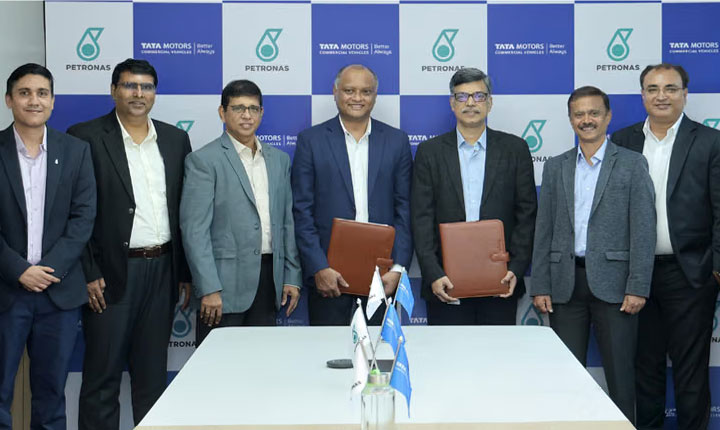
PETRONAS Lubricants India, a prominent name in advanced industrial and automotive lubricant technology under the PETRONAS group, has partnered with India’s leading commercial vehicle manufacturer, Tata Motors, through a Memorandum of Understanding. The collaboration focuses on establishing a responsible collection and recycling framework for used automotive lubricants. The two industrial leaders will simultaneously roll out a structured, scalable pilot model across the states of Maharashtra and Tamil Nadu to address critical environmental challenges while backing India’s national circular economy goals and Extended Producer Responsibility compliance.
Leadership Perspectives on Environmental Circularity:
Commenting on the launch of the pilot project, Binu Chandy, India Managing Director of PETRONAS Lubricants India, emphasized that achieving true circularity relies on reintegrating re-refined base oil back into finished lubricants. He noted that the initiative highlights the strength of their channel network in curbing operational carbon footprints. Echoing this sentiment, Vikram Agrawal, Head of Spares and Non-Vehicle Business at Tata Motors, highlighted that sustainable partnerships are vital for resource stewardship across the automotive value chain, aiming to create a scalable recycling framework that generates long-term value and industry progress.
Traceable Processing and Hazardous Waste Management:
Because used lubricants are legally classified as hazardous waste, the initiative establishes a secure, transparent, and traceable mechanism governing every stage from initial collection and storage to final recycling. Under the pilot framework, PETRONAS Lubricants India will spearhead the aggregation and safe movement of used oil via specialized authorized channels, directing them exclusively to registered, genuine recyclers. Simultaneously, Tata Motors will utilize its extensive network of authorized service centers to streamline systematic collection and encourage eco-friendly disposal habits across its entire ecosystem. Ultimately, this process converts discarded waste into high-quality re-refined base oil, driving resource efficiency and setting higher benchmarks for waste management in India.
Related News
Kinetic Watts and Volts Expands Andhra Pradesh Footprint with Vizag 3S Facility and 100 Milestone Deliveries

Bandhan Bank Enters Credit Card Market with Four New Variants in Partnership with Mastercard

Hyundai Motor India Appoints World No. 1 Para Archer Sheetal Devi as Brand Ambassador
ServiceNow Enterprise AI Maturity Index 2026: India’s Enterprise AI Investment Surges 119%

Amazon Launches ‘Creator Connections’ in India to Empower Creators with Performance-Led Commerce Opportunities