
Just Two Minutes to Midnight… What is the Story Behind the Clock That is Scaring the World?
- Published By: Tech Team
- July 8, 2026 / 05:23 PM IST


— Surya Prakash Josyula
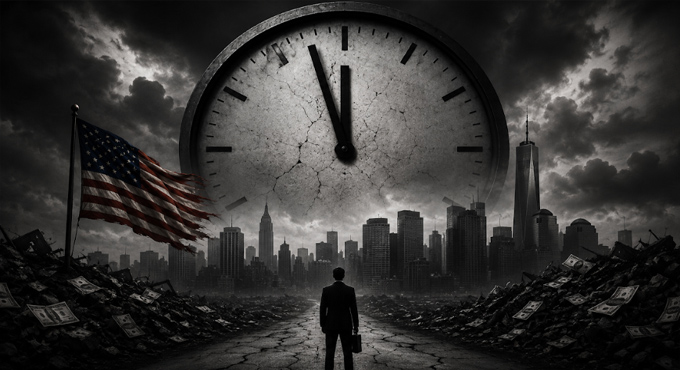
The numbers point to one thing, the markets show another, but what is scaring the world the most right now is a clock. It shows that there are just two minutes left to midnight. Why has this clock become so dangerous all of a sudden?
This is no ordinary clock. It is the ‘Debt Default Clock’, which shows how close the world’s biggest economy is to a massive danger zone. On Sunday, the Debt Default Clock Review Committee moved its timer from three minutes to just two minutes to midnight. According to the committee’s definition, this is the closest the US has ever been to what can be called a major fiscal crisis in its history.
According to estimates by the CBO, the federal interest costs for the US are projected to hit a massive $1 trillion in the fiscal year 2026. This does not mean everything will collapse tomorrow, but it is a serious warning that the world simply cannot afford to ignore.
The numbers behind this warning are even more worrying. Latest data reveals that for every new dollar the US government borrows, nearly 66 cents go directly toward paying interest on its existing debt. At the same time, the total US national debt has climbed to roughly $39.4 trillion. This means before creating any new wealth, they are forced to carry the heavy burden of old debts.
Why is the World Worried?
The reason is simple. The US is the central hub of the global economy. If there is even a small tremor there, its shockwaves are felt across global markets, currencies, and investments. That is why every time this clock moves forward, investors worldwide get alerted.
But Why Tension for India?
If uncertainty grows in global markets, the flow of foreign investments into India might slow down. The stock markets could witness sharp ups and downs, and the value of the Indian Rupee could come under pressure. At the same time, experts suggest that if money shifts toward gold—which is traditionally seen as a safe investment—gold prices in India could shoot up.
What Could Change If This Crisis Deepens?
Huge volatility and ups and downs in global stock markets
Direct impact on the Dollar-Rupee exchange rate
A likely increase in gold prices
Pressure on foreign institutional investments (FIIs) in the Indian market
A potential ripple effect on the IT and export sectors
Right now, this clock is just a warning signal. But history tells us one thing clearly: major financial crises do not happen overnight. First, the numbers start changing. Then, the markets react. Finally, the world realizes the true meaning of the warning. The financial world is now waiting to see if we are currently standing at that very doorstep.
Related News

Homegrown Tech Brand Mivi Steps Into Smartphone Market With Mivi One 5G Series Starting at ₹11,999 on Flipkart

Star Health Expands Healthcare Partnerships in Rajahmundry to Improve Cashless Access

Natural Diamond Council Rebrands as ‘The Diamond Collective’ with New Global Strategy

SENNES Takes Lab-Grown Diamonds to Milan Fashion Week with Dhruv Kapoor
AU Small Finance Bank’s Wheels Business Crosses ₹50,000 Crore AUM Milestone