
India Can Slash Import Reliance by Unlocking Natural Resource Potential: Vedanta Chairman Anil Agarwal
- Published By: Tech Team
- March 14, 2026 / 10:06 PM IST


Hyderabad: Vedanta Chairman Anil Agarwal has called for a decisive national push to unlock India’s vast natural resource potential, asserting that accelerating domestic exploration and production is the key to achieving energy security and ending the country’s heavy dependence on imports.
Speaking at a prominent industry conclave, Agarwal underscored the magnitude of India’s current economic challenge. He pointed out that despite possessing some of the world’s richest geological reserves, India still imports over 90% of its oil, more than 95% of its copper, and nearly 100% of its gold.
Strategic Necessity Amid Global Volatility
Agarwal highlighted that the need for domestic self-reliance has become even more urgent given the ongoing West Asia crisis and potential shipping disruptions near the Strait of Hormuz. He argued that India must rapidly scale up the exploration of oil, gas, coal, and critical minerals to safeguard against global supply shocks.
“India’s energy demand is expected to double in the coming years,” Agarwal noted. “It is imperative for the country to diversify and strengthen its domestic energy ecosystem now to reduce long-term vulnerability.”
Policy Reforms and the “Self-Certification” Model
The Chairman emphasized that while India has the capacity to increase production several times over, the sector is often held back by regulatory hurdles. He advocated for a shift toward trust-based governance, calling for:
- Simplified Regulatory Frameworks: Reducing lengthy approval processes that delay projects.
- Self-Certification: A model where the government sets the rulebook and entrepreneurs comply strictly, subject to periodic audits.
- Empowering Entrepreneurs: Creating an environment that encourages risk-taking and innovation.
Success Stories in Privatization
Drawing on Vedanta’s history of turning around state-owned entities, Agarwal cited Hindustan Zinc and Bharat Aluminium Company (BALCO) as prime examples. Following privatization and the introduction of professional management, production at these assets increased five to ten times. He noted that the government still retains significant stakes in these companies (26% and 49% respectively) and highlighted that Vedanta has contributed ₹4.5 lakh crore to the government exchequer over the past decade.
Economic Impact and Job Creation
Unlocking domestic reserves across oil, gas, gold, and fertilizers would lead to a massive ripple effect in the economy, according to Agarwal. He predicted that such a move would result in:
- Large-scale job creation across the country.
- Higher government revenues for nation-building.
- Globally competitive Indian resource companies.
Concluding his remarks, Agarwal reiterated that India remains one of the most attractive global destinations for long-term investment. He called for a collaborative effort between the government, private industry, and global investors to mobilize the large-scale capital required to transform India into a resource-independent powerhouse.
Related News

Godrej Professional Launches ‘Majesté’ No-Ammonia Hair Colour Range, Trains 700+ Stylists Nationwide

Ampere Expands Hyderabad Footprint with Launch of SANSTECH Automotive Experience Centre in Bahadurpura

Aon Survey Projects 9.1% Salary Growth in India for 2027, NBFCs and Energy Sectors to Lead

Getfive Funds Secures SEBI Approval for ₹500 Crore Category-I AIF ‘Getfive Opportunity Fund II’
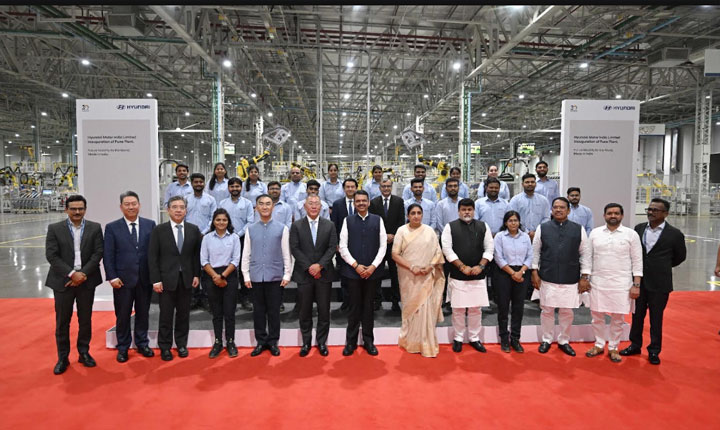
Hyundai Motor India Inaugurates State-of-the-Art Manufacturing Facility in Pune, Reaches 4 Million Vehicle Exports Milestone