
FSSAI Bars Sale of Old Monk Variants, Bagpiper, and Royal Challenge Over Artificial Flavouring
- Published By: Phanindra
- August 6, 2026 / 08:38 AM IST


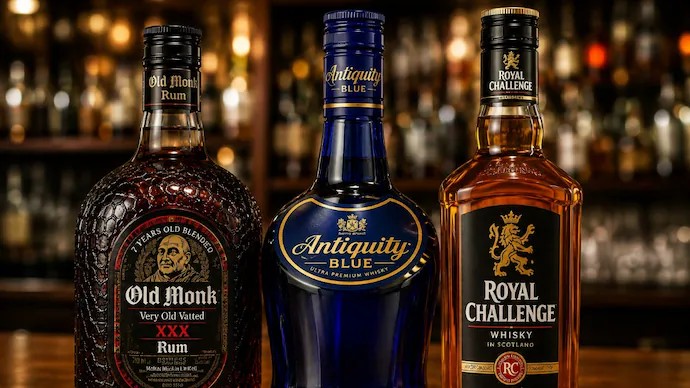
The Food Safety and Standards Authority of India (FSSAI) has delivered a significant shock to some of the country’s most popular liquor brands. The regulatory body has barred the sale of specific variants of well-known whisky and rum brands, including Old Monk, Antiquity Blue, Royal Challenge, and Bagpiper Deluxe. This action comes after laboratory tests revealed that these products contained artificial or nature-identical flavourings, violating prescribed manufacturing standards. The affected batches were traced back to manufacturing facilities operated by Diageo India’s United Spirits, Inbrew Beverages, and Mohan Rocky Springwater.
The Flavouring ControversyAccording to the FSSAI, standard manufacturing practices for alcoholic beverages require the characteristic taste and aroma to be developed naturally through raw materials like molasses, malt, or grapes, followed by fermentation, distillation, and a proper maturation process. However, the regulator found that to cut costs and skip the lengthy maturation process, these companies were directly adding external flavourings—such as “whisky flavour” to whisky and “rum flavour” to rum. The FSSAI stated that there is no legitimate technological justification or internationally recognized practice that supports adding the flavour of a standardized alcoholic beverage to the beverage itself. The authority pointed out that these products were predominantly made from neutral alcohol, which lacks inherent flavor, and should have been labeled as “Rum-flavoured Spirit” or “Whisky-flavoured Spirit” instead of being misrepresented as standard rum or whisky.
In a specific example, the FSSAI also flagged the “7 Years Old Blended” claim on an Old Monk XXX Rum variant as misleading. Investigations revealed that the primary ingredient was unaged neutral spirit, with matured rum constituting less than 5% of the blend. Under existing regulations, an age statement must correspond to the youngest spirit in the blend. While the FSSAI clarified that it permits general flavourings like coffee or vanilla, the use of flavours identical to the spirit itself is strictly prohibited. Industry executives, however, have expressed concern over the decision, believing their practices were compliant with Indian regulations. Which Brands Are Affected?The FSSAI has prohibited the sale of the following specific products based on laboratory findings: Mohan Rocky Springwater: Three variants of Old Monk rum (manufactured in Maharashtra). United Spirits: Antiquity Blue Whisky, Royal Challenge Whisky, and McDowell’s No. 1 Rum (manufactured in Madhya Pradesh). Inbrew Beverages: Bagpiper Deluxe Whisky and Old Cask Deluxe XXX Rum (manufactured in Madhya Pradesh). Associated Alcohol & Breweries: Central Province Whisky and McDowell’s No. 1 Celebration Matured XXX Rum. The regulator has also issued notices to other manufacturers and carried out inspections in Goa and Maharashtra, indicating that further action may be expected. However, it remains unclear if the ban applies exclusively to the products manufactured at these specific facilities or if it extends nationwide. Market Impact India is one of the world’s largest alcohol markets, generating an estimated $40 billion (₹3.81 lakh crore) in annual revenue.
The brands targeted by this ban belong to the mass/budget category (Indian-made Foreign Liquor or IMFL), which enjoys massive demand across the country. This crackdown on the liquor industry follows the FSSAI’s recent strict directives against energy drink manufacturers like PepsiCo and Red Bull. Market analysts anticipate that this latest regulatory action could have a significant impact on the sales and market share of major players like Diageo India, while also raising broader concerns for the domestic spirits industry.
Related News

BenQ Unveils “MOBIUZ Game Art Museum” Experience at Tokyo Game Show 2026

Dreame Technology Launches Flagship X60 Ultra Complete Robot Vacuum in India
Turtle Wax Marks 80 Years of Global Leadership as CEO Laurie King Visits India to Accelerate Expansion Plans

Hyundai Motor India Opens Bookings for the New Intelligent Utility Vehicle, Hyundai BAYON
Telangana AI Summit 2026 Drives State’s Vision to Become a Global Artificial Intelligence Hub