
Ethanol ATMs Coming Soon: India’s Biofuel Story Races Ahead of E20 Blending
- Published By: Phanindra
- July 22, 2026 / 07:05 AM IST


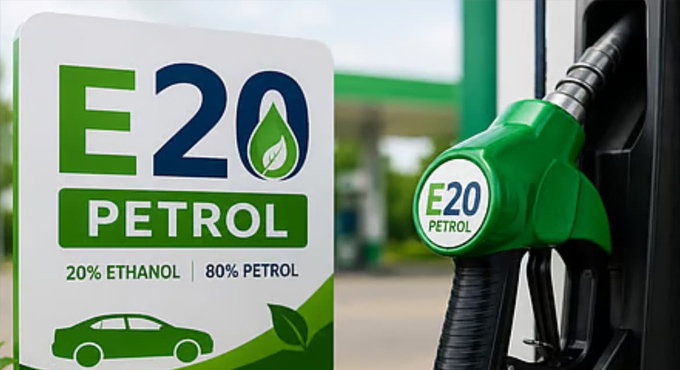
India’s ethanol journey is entering a transformative phase. While the primary goal so far has been reducing crude oil imports through 20% ethanol blending in petrol (E20), the government is now focusing on introducing ethanol as a mainstream cooking fuel. Authorities are exploring the concept of ‘Ethanol ATMs’ where consumers can purchase ethanol in cans for use in specially designed stoves. Additionally, the government is intensifying its focus on flex-fuel vehicles, Sustainable Aviation Fuel (SAF), and international exports. Ethanol blending has surged from a mere 1.5% in 2014-15 to 20% today, saving over ₹1.4 lakh crore in foreign exchange and creating robust new revenue streams for farmers, sugar mills, and distilleries.
Ethanol’s Entry Into the Kitchen
India’s domestic ethanol production capacity is touching 24 billion liters annually. However, with the combined demand for petrol blending and industrial needs sitting at just 14.5 billion liters, the government is actively seeking new avenues for the massive surplus. To address this and reduce the country’s heavy reliance on imported LPG for household needs, plans are underway to repurpose domestically produced ethanol as a viable cooking fuel.
The government envisions a brand-new retail ecosystem featuring special stoves and a network of ‘Ethanol ATMs’ for direct and easy consumer refills. This initiative is expected to lower the government’s subsidy burden while providing a massive boost to the rural economy. Furthermore, India is strategically focusing on exporting its surplus ethanol to neighboring countries that lack independent production capacities, such as Nepal, Bangladesh, and Indonesia.
Expanding into Aviation Fuel
Moving beyond surface transport, the Centre has mandated the blending of at least 1% Sustainable Aviation Fuel (SAF) in international flights by 2027. To meet this upcoming target, the conversion of ethanol directly into jet fuel using ‘Alcohol-to-Jet’ technology is being heavily accelerated. In a major infrastructural step forward, NTPC Green Energy and GPS Renewables are jointly establishing India’s first ethanol-to-jet plant near Visakhapatnam.
No Immediate Plans to Exceed 20% Blending
Meanwhile, Minister of State for Petroleum Suresh Gopi clarified in the Rajya Sabha that there is no immediate proposal to increase the ethanol blend in petrol beyond the current 20%. Any future implementation of blends higher than E20 will strictly follow comprehensive scientific studies, technical testing, and extensive consultations with automobile manufacturers, oil marketing companies, and research institutions.
He also confirmed that there is no plan to reintroduce pure petrol or lower blends like E10 nationwide. Reverting to lower blends would significantly escalate logistics costs and compromise the established benefits of energy security, environmental protection, and enhanced farmer incomes.
Addressing Mileage Concerns and Economic Impact
Addressing consumer apprehensions, the government noted that while E20 fuel might cause a minor 3% to 5% drop in mileage for older vehicles, it is not a major concern. Crucially, officials emphasized that there is currently no scientific evidence to support claims that E20 fuel damages vehicle engines.
Highlighting the massive macroeconomic success of the blending program so far, officials revealed that it has resulted in immense foreign exchange savings of ₹1.97 lakh crore and reduced crude oil imports by 3.16 crore tonnes. Environmentally, it has cut carbon emissions by a staggering 952 lakh tonnes. Most importantly, the green energy initiative has generated an impressive additional income of over ₹1.66 lakh crore for the Indian farming community.
Related News

BenQ Unveils “MOBIUZ Game Art Museum” Experience at Tokyo Game Show 2026

Dreame Technology Launches Flagship X60 Ultra Complete Robot Vacuum in India
Turtle Wax Marks 80 Years of Global Leadership as CEO Laurie King Visits India to Accelerate Expansion Plans

Hyundai Motor India Opens Bookings for the New Intelligent Utility Vehicle, Hyundai BAYON
Telangana AI Summit 2026 Drives State’s Vision to Become a Global Artificial Intelligence Hub