

Beyond the Wheel Chinese Automakers Bet on AI and Global Markets Amid Domestic Slump
- Published By: Tech Team
- April 25, 2026 / 02:47 PM IST


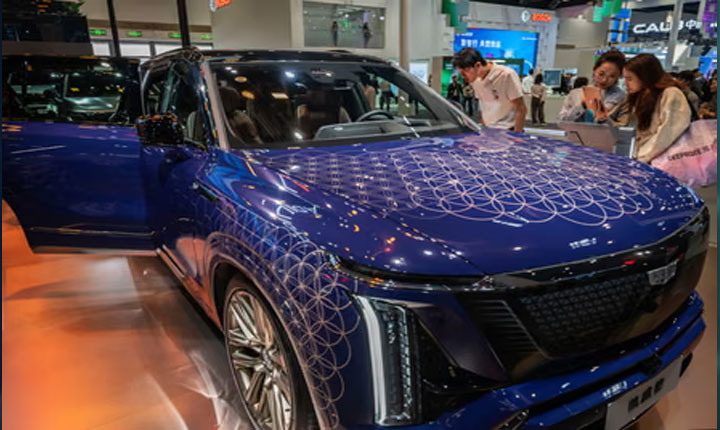
Autonomous: At the world’s largest auto exhibition in Beijing, the message from China’s automotive titans was clear: the future of the car isn’t just electric it’s autonomous. As domestic sales figures cool, manufacturers are pivoting toward high-tech software and aggressive international expansion to maintain their momentum.
The AI Arms Race:
In an increasingly crowded domestic market, traditional hardware is no longer enough to win over consumers. Industry leaders are now treating vehicles as mobile AI hubs. Huawei recently announced a massive investment of 80 billion yuan (£8.7bn) over the next five years to refine its self-driving software, while Xpeng and Xiaomi are integrating advanced virtual assistants. These systems allow drivers to issue complex commands, such as finding a shopping mall entrance, or even automate personal tasks like making restaurant reservations and adjusting home lighting based on the driver’s stress levels.
According to Tu Le of Sino Auto Insights, this level of “intelligent driving” saturation makes the Chinese market unique. With domestic passenger vehicle sales dropping by 17% in the first quarter of 2026 following the end of government subsidies, software-as-a-service has become a vital new revenue stream.
Exporting Innovation:
While home-grown demand falters even for giants like BYD, which has seen seven months of declining sales international exports have surged by over 60%.
The UK has emerged as a primary target for this expansion. Chery, China’s largest car exporter, has seen explosive growth since its UK launch in 2025, selling 13,500 units in just six months. The company is now eyeing a global goal of 10 million annual sales by 2030 and is actively considering establishing R&D and production facilities on British soil.
The Global Robotaxi Push:
The competition is also moving into the “robotaxi” space. Geely plans to deploy thousands of driverless taxis globally next year, directly challenging US firms like Waymo. Meanwhile, Baidu has secured partnerships with Uber and Lyft to bring its self-driving software to the streets of London later this year.
Despite technical hiccups such as recent stalls in Wuhan and a cautious regulatory environment in Beijing, Chinese firms are finding success in “culturally agnostic” markets like the UK and Canada. As they face stiff tariffs in the US and EU, these manufacturers are leveraging their lead in AI to secure a foothold in the next era of global mobility.
Source: The Guardian
Related News

Stars Unite in Mumbai for The Earthshot Prize 2026 Awards Night Prime Video Named Exclusive Streaming Partner

HCCB-Backed Archer Ganesh Mani Ratnam Thirumuru Wins Gold and Bronze at 20th Asian Games

Ultraviolette Expands Retail Footprint with New UV Space Station in Anantapur

Amazon Expands Ultra-Fast Delivery Service ‘Amazon Now’ to Over 120 Cities Across India

GREW Solar Announces Channel Partnership with Energy Cubez in Kerala