Singapore’s Satellite Toll System Sparks Global Privacy Debate
- Published By: Tech Team
- July 12, 2026 / 11:10 AM IST


By Surya Prakash Josyula
If your bank account gets hacked, you lose money. But what if your location data leaks? A new toll system implemented by Singapore is currently making the entire world stop and think.
If you lose money from your bank account, you can always earn it back. But what happens if your location data—where you went, when you went, and the specific areas you visited—gets out? What if your daily habits, your travel routes, and the patterns of your movements are all recorded in a single system? How safe would that be? This isn’t a science fiction movie; it is a major debate happening globally right now.
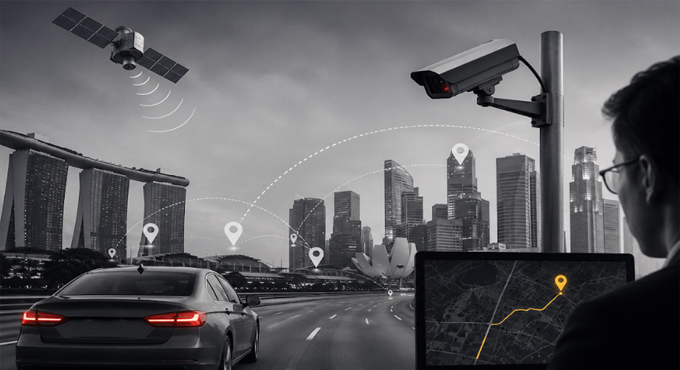
Singapore is implementing a country-wide system called ERP 2.0, which completely removes toll gates and collects tolls based on satellite tracking. However, the world isn’t talking about the toll collection itself; it is talking about privacy.
Under this system, there are no physical toll gates, yet the toll is still deducted. In India, money is deducted through FASTag only when a vehicle crosses a toll plaza. In contrast, Singapore is installing a device called an On-Board Unit (OBU) inside every car. This device uses satellite location data to manage toll payments. Beyond tolls, the OBU automatically handles parking fees and even alerts drivers inside the car about road accidents or road closures. Over 95% of cars there have already been fitted with these devices, and Singapore aims to completely shut down traditional toll gates by January 2027.
The real fear here is not about the money, but the data. The biggest question surrounding this system is how secure such location data will truly be. Privacy experts are deeply concerned about the potential misuse or leakage of travel details, questioning what might happen if information regarding where you went, when, and for how long falls into the wrong hands. In response, the Singapore government maintains that the data is strictly used for traffic management and states that toll transaction information is deleted after a few days.
Singapore’s primary goal with this system is not to increase revenue, but to reduce traffic. By charging higher rates during peak hours, the government hopes to curb unnecessary travel. While this technology also has the potential to charge tolls based on the exact distance traveled, Singapore has not fully implemented that model yet. The benefits of this approach include controlling traffic during peak hours, charging users based on actual road usage rather than relying heavily on petrol and diesel taxes, and cutting down the massive costs required to build new physical toll plazas.
Could this come to India?
While a GPS-based toll system has been discussed in India previously, experts note that implementing a Singapore-style system in a massive country like India would not be easy. They believe that even if such technology arrives in the future, it is highly likely to be introduced in phases or kept optional.
Ultimately, the most valuable resource in the world today is neither gold nor oil—it is data. That is why the global conversation around Singapore’s new system centers entirely on location data rather than the toll itself. Physical toll gates might disappear from the roads, but if a digital footprint is left behind for every single journey, will that footprint remain confined to traffic management, or will it be repurposed for something else? That remains the ultimate question puzzling the world.