

Will AI Replace VFX Artists? Hollywood’s Cost-Cutting Push Sparks Debate
- Published By: techteam
- July 12, 2026 / 11:15 AM IST


By Surya Prakash Josyula
A film begins.
The lights go out inside the theatre.
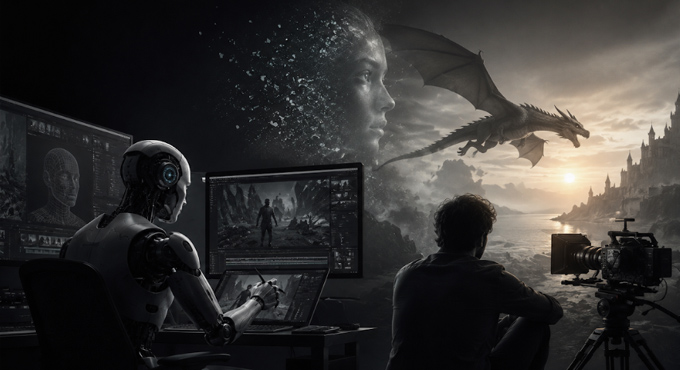
A dragon flies across the screen. The ocean rises. A fantasy world comes alive before the audience.
Everything looks magical on screen. But behind that magic, a silent shift is already underway.
The visual experience audiences enjoy for two hours is typically created by hundreds of animators, VFX artists and computer graphics professionals. They spend months, sometimes years, building those worlds.
For many of them, it is not just work. It is their livelihood.
Now, some Hollywood producers and studio executives believe the same work could be done by much smaller teams with the help of AI.
They also estimate that AI tools could reduce animation production costs by 30% to 90%. While these projections are still under discussion and not yet proven at scale, they have already raised serious questions.
If those predictions hold true, not just films, but the entire filmmaking process could change.
Jobs That Could Be Affected First
Artificial intelligence is expected to impact several roles across the film industry, particularly entry-level and repetitive production jobs. According to current industry discussions, these are the areas that could experience the biggest changes.
1. Junior VFX and Rotoscoping Artists
Removing green screens, replacing backgrounds and rotoscoping have traditionally required artists to work frame by frame. AI tools can now perform many of these tasks within seconds with impressive accuracy. As a result, entry-level VFX positions could face the biggest impact if AI adoption continues to grow.
2. 3D Modelers and Character Designers
Creating characters, buildings and environments for animation or VFX projects usually takes months. AI tools such as Midjourney and Stable Diffusion can generate high-quality visual concepts from text prompts within minutes. This could reduce the demand for basic-level design work, especially during the early stages of production.
3. Rendering and Cleanup Teams
Rendering, lighting and shading are among the most time-consuming stages of animation production. AI is making these workflows significantly faster, allowing smaller teams to complete work that previously required hundreds of junior animators.
4. Dubbing and Voice-over Artists
AI voice cloning has already become a major discussion in the Indian film industry. The technology can recreate an actor’s original voice, tone and emotional performance across multiple languages. This could reduce opportunities for dubbing artists handling smaller roles as well as certain translation-related work.
5. Junior Artists for Crowd Scenes
Large-scale films often require hundreds or thousands of junior artists for war sequences and crowd scenes. AI now allows filmmakers to shoot with a much smaller group and digitally generate massive crowds, reducing the need for large numbers of background performers.
The Film That Started the Discussion
Much of the current debate revolves around an animation project called “Space Unicorn.”
The project’s production goals have attracted significant attention across Hollywood.
Industry estimates suggest that a large-scale animated film typically costs between $100 million and $200 million, or roughly ₹850 crore to ₹1,700 crore. However, the team behind Space Unicorn aims to complete the film with a budget of $15 million, a crew of around 40 people, and a production timeline of two years.
According to the team, such a project would have been impossible five years ago. They believe AI has made it achievable. While these remain production targets rather than proven results, many in the industry believe the project could mark the beginning of a major shift in animation filmmaking.
The Bigger Concern Is Not AI, But Invisible Job Losses
The discussion is no longer focused only on AI technology. It is increasingly centred on the future of thousands of professionals working in VFX and animation.
Hyderabad alone is home to thousands of artists employed in VFX and animation studios. If similar AI-driven production models become common in Hollywood, the same trend could eventually reach Tollywood.
Whether filmmaking workflows change, production teams become smaller or entirely new roles emerge remains uncertain. However, the industry can no longer ignore these questions.
There Is Another Side to the Story
The AI debate is not entirely about job losses.
For decades, studios such as Disney, Pixar and DreamWorks dominated world-class animation because they had access to massive budgets, large teams and extensive production resources. If AI delivers the expected results, smaller studios, independent filmmakers and compact creative teams may also be able to produce world-class visuals.
For that reason, many see AI as both a challenge and an opportunity. While some professionals fear job losses, others believe the technology could make high-quality filmmaking more accessible than ever before.
Not Everyone Sees AI the Same Way
Not everyone in Hollywood shares the same opinion about AI.
Some AI-powered animation projects announced by Amazon faced criticism from people who argued that the technology reduces human creativity. Amid those controversies, one director reportedly left the project.
At the same time, several experienced professionals who previously worked at Pixar have described AI as a creative tool rather than a replacement for artists. In their view, AI will not replace human creativity but will help artists work faster and explore ideas more efficiently.
The Question Has Changed
AI is already becoming part of animation, dubbing, music and visual effects.
As a result, the debate has shifted from what AI can do to how much of the work currently handled by humans could eventually be performed by AI.
The bigger question is how far artificial intelligence can become a substitute for human creativity.
New Jobs Will Also Be Created
Technological revolutions have created new careers in the past. When computers became mainstream, many typing jobs disappeared, but software engineering emerged as a major profession.
The film industry could experience a similar transition, with new roles such as AI Prompt Engineers and AI Content Curators becoming increasingly important.
Final Take
The camera transformed cinema. Computer graphics changed filmmaking once again. Now, many believe AI could become the industry’s next major turning point.
Whether those expectations become reality or remain predictions will take time to answer. However, one thing is already becoming clear. The future of cinema may not be shaped only by box office performance. It may also be defined by the balance between human creativity and artificial intelligence.
The story has only just begun.
AI will not take your job. But someone who knows how to use AI might.
Related News
House Sold, Debt Still Remains: How the American Dream Is Turning Into a Home Loan Trap for Telugu Families
Singapore’s Satellite Toll System Sparks Global Privacy Debate

Middle Class Faces a Big Housing Shock: You Can Afford the EMI, But Not the Home
Apple vs OpenAI: The Billion-Dollar War Over iPhone Secrets
Why Is Stoicism Going Viral Again? The 2,000-Year-Old Mindset That Could Change the Way You Think