
INFINITESIMAL The Forbidden Math That Sparked A War for Truth
- Published By: shivaduvvuru
- July 17, 2026 / 02:02 PM IST


Imagine zooming in on a digital photo. From a distance, the picture looks smooth and continuous. But zoom in far enough, and you see it’s actually made of millions of tiny, solid squares: pixels.
In the 1600s, mathematicians asked a similar question about reality: Is a continuous line made up of an infinite number of distinct, infinitely tiny points?
This infinitely tiny, microscopic building block of a line is called an infinitesimal. It sounds simple, but it created a massive logical headache for the greatest minds of the era, acting as a glitch in the matrix that seemed to break the laws of logic.
THE LOGICAL DILEMMA:
The Zero Width Paradox: If these points have zero width, how does adding them together (0 + 0 + 0…) create a line with actual, measurable length?
The Infinite Divisibility Paradox: If they do have a tiny bit of width, then they aren’t actually the smallest possible points, because you could still cut them in half.
Why the Church Saw Math as a Threat:
In the 17th century, the Catholic Church specifically a powerful, highly intellectual group of priests called the Jesuits was fighting a massive religious war against Protestant reformers.
The Jesuits believed the best way to keep people loyal to the Church was to prove that the world was perfectly orderly, unchanging, and structured from the top down. They used Euclidean geometry to prove this. In geometry, you start with a few absolute, unquestionable rules, and everything else flows down in a perfect, rigid chain of logic. To them, geometry was proof of God’s perfect, authoritarian design.
Infinitesimals ruined this pretty picture. They were messy, chaotic, and full of paradoxes. The Jesuits feared that if people accepted a math where “rules could bend” and “messy logic was okay,” they would start questioning other absolute truths—like the authority of the Pope or the divine right of kings.
Consequently, on August 10, 1632, the Jesuit fathers officially banned the concept, decreeing that it could never be taught or even mentioned. Infinitesimal: The Forbidden Math
1The Split: Italy Stalls, England Soars:
The ban had a massive geopolitical impact, splitting Europe into two opposing intellectual camps that determined the scientific and economic future of nations.
1. The Authoritarian Camp (e.g., Italy) Because the Church banned infinitesimals, brilliant Italian scientists (like Galileo Galilei and his immediate followers) were forced to hide their work or stop researching altogether. Italy, which had been the shining star of the Renaissance, saw its scientific progress grind to a halt. Newton, Calculus, and the Modern World
2. The Pragmatic Camp (e.g., England) Having already broken away from the Catholic Church, England ignored the Jesuit bans. English thinkers realized that even if infinitesimals were theoretically “messy,” they were incredibly useful for solving real-world problems, like calculating the curved path of a cannonball or the volume of a ship’s hull.
Newton, Calculus, and the Modern World:
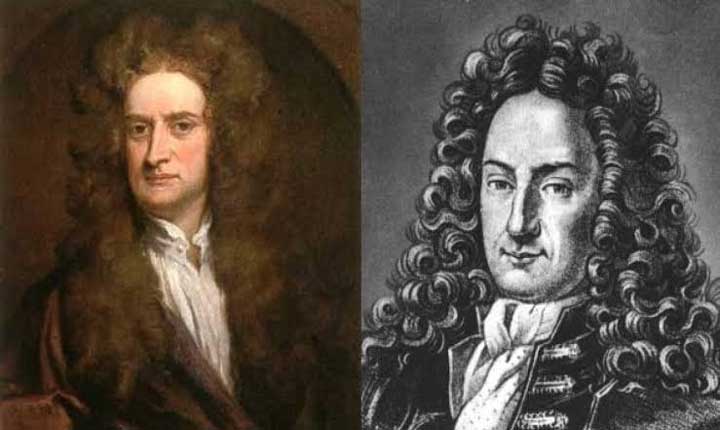
This intellectual freedom in England set the stage for a young Sir Isaac Newton to completely change human history.
Before Newton, math was great at measuring static things, like the area of a flat triangle. But it was terrible at measuring things that constantly changed like an object accelerating as it falls, or the changing speed of planets orbiting the sun.
Newton realized that by using infinitesimals treating time and motion as being made of infinitely tiny, microscopic steps he could calculate exact change at any single, frozen instant. This breakthrough became calculus. By using calculus, Newton proved the laws of gravity and motion, essentially writing the source code for modern physics.