
Delhi HC on Janhvi Kapoor’s Digital Rights Plea: “You’ll Have to Live in a Cave”
- Published By: techteam
- August 12, 2026 / 10:15 AM IST


— Surya Prakash Josyula
What should a celebrity do when fake accounts are created in her name?
What if AI is used to create obscene content using her face? What if fake booking agencies and chatbots are run using her identity?
And if she goes to court asking for everything related to her to be removed from the internet, should the court allow it?
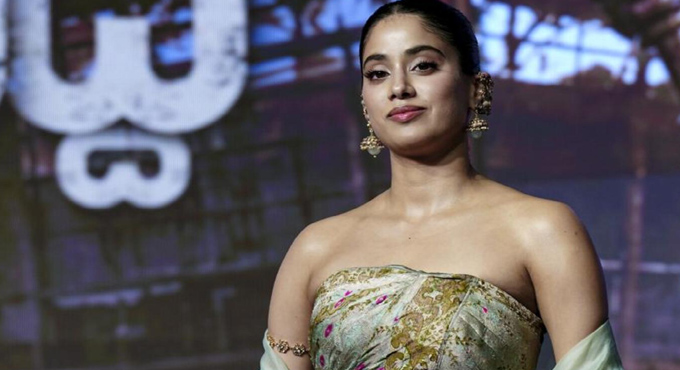
These questions came up before the Delhi High Court in Bollywood actress Janhvi Kapoor’s case.
Janhvi approached the court alleging that her name, photographs and identity were being used without permission for obscene AI content, fake social media accounts, fake booking agencies, chatbots and other commercial activities.
The court ordered the removal of obscene and offensive content linked to her. However, it was not ready to accept Janhvi’s request to remove more than 5,000 webpages and social media posts from the internet.
The court observed that such a request was too broad and could go beyond what was legally necessary.
Justice Anoop Jairam Bhambhani heard the case and asked Janhvi’s lawyers to submit a clear list of the webpages she was objecting to.
The lawyers were also asked to separately identify content that was clearly obscene, sexually explicit or offensive, as well as websites that were directly using Janhvi’s personality rights for commercial purposes.
Why did the court talk about a “cave”?
The most interesting part of the hearing came when the court considered Janhvi’s request to remove thousands of links.
The court said that it could not simply remove everything from the internet.
According to Bar and Bench, the court observed that it was not the “moral custodian” of the country and that solving one problem should not create an even bigger one.
The court also pointed to the importance of freedom of expression.
Fans can create pages about celebrities. They can praise them, but they can also criticise them.
The court reportedly said that if a celebrity wants comments and URLs about her to disappear completely, “ultimately, you will have to live in a cave.”
The remark highlights a larger problem.
Celebrities have a right to protect their identity and reputation. But that does not automatically mean that every page, photograph, comment or fan account about them can be removed from the internet.
The court therefore refused to grant a blanket dynamic injunction covering all kinds of online content.
At the same time, it granted protection against clearly obscene and objectionable content involving Janhvi.
What about photos and products?
The court also raised an important question about the difference between personality rights and copyright.
If someone sells a product using a photograph of Janhvi, does that automatically mean her personality rights have been commercially exploited?
The court pointed out that a photograph may belong to the photographer who took it. That photographer may also have the right to sell the photograph.
So, simply selling a photograph does not automatically mean that the celebrity’s personality rights have been violated.
The court also discussed a possible example of an artist printing Janhvi’s photograph on a cup and selling it.
In such a case, questions about copyright, ownership and personality rights may all have to be examined separately.
What did Meta say?
Meta also opposed Janhvi’s request.
Its lawyer, Varun Pathak, argued that it would not be practical to examine more than 5,000 links individually.
He also argued that an image created using AI is not automatically illegal simply because it was created using AI.
The rights of people who may be earning a livelihood from such content also need to be considered, Meta argued.
At the same time, the court made it clear that online platforms cannot simply escape their responsibilities.
The bigger question
Janhvi Kapoor’s case is not just about one Bollywood celebrity.
It raises a much bigger question about the internet and AI.
A celebrity should have the right to control the commercial use of her name, face and identity.
But where does that right end?
Can a celebrity remove every photograph, fan page, comment or post mentioning her?
Or does that cross the line into restricting freedom of expression?
The Delhi High Court has protected Janhvi against clearly obscene and objectionable content, but it has refused to order the removal of everything connected to her online.
The next hearing in the case is scheduled for August 17.
So, the real question is no longer just “Where is Janhvi Kapoor’s photo being used?”
It is this:
How much control should a celebrity have over her face, name and identity in the digital age?
That is the line the Delhi High Court is now trying to draw.
Related News

Why Is ISRO Letting Private Companies Run Its New ₹950-Crore Spaceport?
Hundreds of Years-Old Human Remains Are Being Sold Online! What Are Buyers Doing With Them?
True Nature of Tapas

The ‘Boss Scam’ Haunting India: What Is It and How Does It Happen?

“Sardar Sarvai Papanna” Movie Trailer Grandly Launched by Minister Ponnam Prabhakar