
Bajaj Finance Holds ‘Knockout Digital Fraud’ Awareness Programme in Mahbubnagar to Promote Cyber Safety Among Students
- Published By: Tech Team
- November 5, 2026 / 04:00 PM IST


BFL’s fraud awareness initiative in Mahbubnagar is part of its ongoing ‘Knockout Digital Fraud’ campaign aimed at educating citizens about cyber threats and helping them safeguard themselves against financial fraud and online scams.
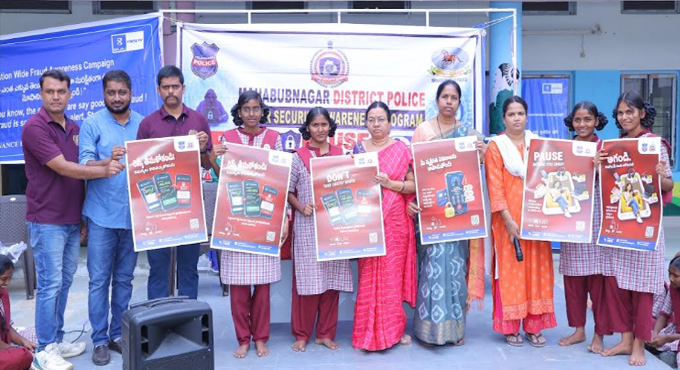
Bajaj Finance Ltd. (BFL), India’s largest private-sector Non-Banking Financial Company (NBFC) and part of Bajaj Finserv, organised a cyber fraud awareness programme under its ‘Knockout Digital Fraud’ initiative at TSWREIS Junior College for Girls, Ramreddygudem, Mahbubnagar, Telangana.
The programme was conducted to educate students about the growing risks of cybercrime and financial fraud, while equipping them with practical knowledge to protect themselves in an increasingly digital world. The session witnessed active participation from around 250 students, along with faculty members and representatives from Bajaj Finance.
During the programme, Sri Shravan Kumar, Inspector of Police, Cyber Crime, sensitised participants to various forms of cyber and financial fraud, including phishing attacks, fake investment schemes, digital arrest scams, fake loan offers, malicious APK files, suspicious links, OTP frauds, WhatsApp scams, QR code frauds and impersonation scams. He also highlighted the evolving methods used by fraudsters to exploit individuals through digital platforms.
Addressing the students, Sri Shravan Kumar said, “Cybercriminals are increasingly using fraudulent phone calls, impersonating police officers and bank officials, and creating fear through false allegations to deceive innocent people. Students must remain vigilant and should never share personal or banking information or transfer money in response to suspicious calls. Unknown WhatsApp video calls and fraudulent requests for Aadhaar or bank account verification should also be treated with caution. Awareness and timely verification are essential to preventing cyber fraud.”
He further encouraged students to focus on developing communication skills, maintaining consistent study habits and striving towards their career goals. “Academic excellence alone is not enough. Strong communication skills, confidence, curiosity and dedication are equally important for professional success. Students should never hesitate to ask questions and must make the best use of their educational opportunities to build successful careers and bring pride to their parents and institutions,” he added.
Participants were also advised to exercise caution while sharing personal information online and to remain vigilant while conducting digital financial transactions. The students were encouraged to report cyber fraud incidents promptly through the national cybercrime helpline 1930.
The programme was attended by Sri Avinthika and Sri Anitha Rani, Lecturers at TSWREIS Junior College for Girls, along with Sri Raghavendra B., Area Manager (RCU) and Sri Mahender Reddy, Manager, Bajaj Finance Limited, Mahbubnagar Branch.
The Knockout Digital Fraud programme aligns with the Reserve Bank of India’s focus on strengthening fraud risk management and public awareness. Through on-ground engagement and community outreach initiatives, Bajaj Finance continues to educate citizens on recognising cyber threats and adopting safe digital practices.
The programme is focused on drawing citizens’ attention to common financial frauds committed by scammers, including fake social media accounts, fraudulent WhatsApp groups, phishing links, malicious mobile applications and websites impersonating financial institutions and their employees.
Speaking on the occasion, a spokesperson from BFL said, “The financial safety of our consumers is paramount to us. We are constantly issuing online and offline advisories, on social media platforms, as well as through on-ground interactions with citizens, encouraging everyone to be cyber safe.”
Knockout Digital Fraud offers citizens practical guidance on protecting personal and financial information. The programme advises consumers not to share OTPs, PINs or banking credentials, avoid clicking on suspicious links or QR codes, verify the authenticity of digital communications and refrain from downloading applications from unknown sources. The initiative includes awareness workshops, digital safety campaigns and community outreach programmes across cities and towns in India.
Related News

CM Revanth Reddy reaffirms Telangana is the first rapidly developed state in the country

TG Government to continue dialogue with Maharashtra government on Tummidihetti barrage

CM Revanth Reddy reviews arrangements for Khelo India Games

CM Revanth Reddy orders officials to promote Hyderabad a clean and traffic-free city

Vice Chairman Chitti Babu Strongly Condemns False Allegations Against Minister Damodar Rajanarasimha