

The Quiet Switch: Why India’s Developers Are Turning to Chinese AI
- Published By: shivaduvvuru
- June 30, 2026 / 01:43 PM IST


The headlines focus on political friction between countries. But inside India’s tech companies, a much more practical story is playing out. Faced with the high price of American AI services, Indian developers are quietly swapping them out for cheaper, openly available models built in China.
This isn’t really about politics. It’s about math. When you’re running a business, the question isn’t which AI is most famous it’s how much useful work you get for every dollar you spend. By that measure, two Chinese names keep winning: Alibaba’s Qwen and DeepSeek.
DeepSeek: Doing More With Less:
DeepSeek’s reputation comes from efficiency rather than raw spending. Where many Western labs win by throwing more computing power at the problem, DeepSeek focused on making its models leaner so they need less expensive hardware to run.
The result is a model that stays fast and affordable even during long, complex tasks, without giving up much in quality. For a company watching its cloud bill, that difference adds up quickly.
Qwen: Built on a Mountain of Data:
If DeepSeek is the efficiency expert, Alibaba’s Qwen is the workhorse. It’s trained on an enormous amount of high-quality text, and it’s tuned to follow instructions closely.
That makes it especially good at the unglamorous but essential jobs businesses actually need: pulling structured information out of messy documents, filling in forms and data fields reliably, and handling multi-step tasks without going off the rails. In many of these practical situations, it holds its own against pricier Western options.
Z.ai: The New Favorite:
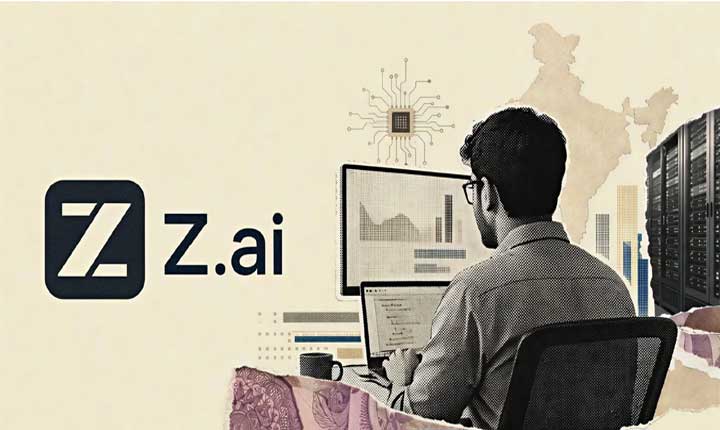
The newest name to watch is Z.ai, the company behind the GLM family of models. Its latest release landed in mid-2026 and quickly became the model developers couldn’t stop talking about partly because it’s genuinely good, and partly because it’s strikingly cheap.
What makes Z.ai stand out is what it’s built for: not just answering questions, but actually getting work done. It’s tuned for the kind of multi-step jobs that take real effort planning a task, writing and testing code, then circling back to fix its own mistakes. That’s exactly the type of work companies are rushing to automate. And like its rivals, it’s free to download and run on a company’s own machines, which keeps the costs remarkably low for the quality on offer.
How They Compare:
On standard tests of knowledge, reasoning, and coding, the top Chinese open models land in roughly the same range as leading Western ones close enough that, for most everyday business uses, the gap barely matters.
The real difference shows up on the invoice. Running these Chinese models can cost a small fraction of what the big American services charge for similar work. For a startup, that’s the whole game.
Why This Matters for India:
For Indian startups working with limited funding, the appeal is simple. Many of these models are openly available, so a company can run them on its own servers rather than paying per use to an outside vendor. That means lower costs, more control, and the freedom to finetune a model on local data and languages.
The bigger picture is independence. By building on tools they can host and customize themselves, Indian tech companies aren’t just cutting costs they’re laying the groundwork for an AI industry that doesn’t depend on anyone else’s pricing or permission. In a field that’s moving this fast, that kind of self-reliance may turn out to be the most valuable advantage of all.
Related News

ONE FAMILY, NO BORDERS Held in faith, lived in spirit
Nine Years of GST: India’s Unified Tax Regime Enters 10th Year with Record Collections
Maruti Suzuki Partners with Five Startups to Deploy EV Battery Recycling and Generative AI

Goldman Sachs Bullish on India’s Long-Term Sovereign Debt, Recommends 30-Year Bonds

Amazon Announces Prime Day 2026: Massive Deals on Galaxy S25 Ultra, iPad Air, and Fire TV