
Why Did PM Modi Select Nilekani, Who Contested on a Congress Ticket?
- Published By: Tech Team
- July 27, 2026 / 07:15 PM IST


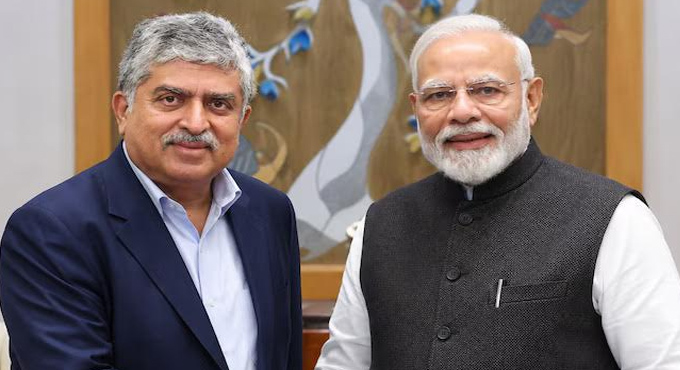
The Central Government has taken a crucial decision to bring reforms to the national examination system. To this end, a high-level task force has been constituted, with Infosys co-founder Nandan Nilekani appointed as its Chairman. Notably, he contested as a Congress candidate in the 2014 Lok Sabha elections. Nevertheless, the Modi government’s decision clearly signals that expertise in a given field is prioritized over political background.
Nilekani joined Congress in March 2014 and contested from the Bangalore South constituency, but lost to BJP’s Ananth Kumar by a margin of over 228,000 votes. Before entering politics, he was specifically chosen by the UPA government to lead the Unique Identification Authority of India (UIDAI), where he earned acclaim for designing the national identification program.
More than a decade later, the Modi government has turned to Nilekani once again for one of its most significant reform initiatives, indicating that technical expertise and organizational experience are valued above past political affiliations. Rather than restricting the committee strictly to academics and bureaucrats, the government has included experts from various domains including technology, space, intelligence, cybersecurity, education, educational policy, and public administration.
The panel indicates that the reforms will focus on establishing secure digital examination systems, preventing question paper leaks, strengthening cybersecurity, improving institutional accountability, and introducing structural changes to the examination process.
Through Nilekani’s appointment, the Center has once again demonstrated its willingness to rely on a tech expert who has served governments led by different political parties—signaling that, at least in this crucial reform process, capability takes precedence over political affiliation.
Related News
Keystone STEM Alliance: A Youth-Led Model Transforming STEM Education and Community Engagement
Blueband Sports Rally of Coimbatore Set to Host Round 2 of INRC 2026 with 64 Cars on the Grid
Thanks To Telugu Audience for Making Mandaadi a Blockbuster: Soori
Govt. of West Bengal participates in Walmart Vriddhi MSME Connect 2026 in Kolkata
Retired Air Marshal Jitendra Mishra Appointed as New CEO of Ayodhya Trust