
Want to work in the US? Pay ₹1 Crore? Trump’s New Twist

- Published By: Tech Team
- July 31, 2026 / 11:25 AM IST


— Surya Prakash Josyula
How much does it usually cost to go to the US?
₹40 lakh, ₹50 lakh… at most around ₹60 lakh. Everyone knows these calculations. According to this, families manage somehow through bank loans, mortgaging homes, or taking loans from relatives.
But… “How much does it cost to work in the US after completing studies?”
Until now, no one has asked this question, nor even imagined it. That is because people expect to earn money once they get a job; no one thinks they would have to pay lakhs of rupees just to be allowed to work. However, if the idea currently being considered by the Trump administration becomes a reality, international students may have to pay a staggering $100,000 (around ₹1 crore) to join a job after finishing their studies!
They are looking to attach this huge price tag to the OPT (Optional Practical Training) opportunity provided to foreign students who study in the US.
Will the calculation made by lakhs of families go wrong?
In our country—especially in our Telugu states—families send their children to the US with a clear plan: first an education loan, then two or more years of study, followed by a job on OPT. Paying off debts with that job, and then building a career in the US through an H-1B visa. The most crucial phase in this entire journey is OPT. Now, with a proposal to charge nearly ₹1 crore for this very opportunity, discussions have begun that the entire “US plan” might change.
OPT is the permission granted to regular international students to work in their field for one year after completing their course, and up to three years for those in STEM (Science, Technology, Engineering, and Mathematics) courses. Every dollar earned during these three years goes toward clearing the debts incurred back home.
Now, trying to impose a burden of ₹1 crore on that exact OPT phase means shaking the very foundation of the “American Dream.”
The real twist is not just in the fee!
There is another big question here: Should this ₹1 crore be paid by the student or by the hiring company? There is no clarity on this yet.
If the student has to pay: Families that have already mortgaged their homes and lands for education… where will they bring another ₹1 crore from just to get a job?
If the company has to pay: Will any company spend an extra ₹1 crore on a foreign student to hire them? Won’t they think, “Why waste so much money? It’s better to just hire a local American candidate”?
In other words, using the fee as a pretext to deny jobs to foreigners is the real strategy and trick behind this.
This is not just one decision… a sign of changing times
It is not just about OPT; the Trump administration is initiating multiple changes at once. Another new rule has surfaced that limits the maximum stay for international students in the US to 4 years.
Starting from the student visa, to post-study OPT, and further up to the H-1B visa… regulations are tightening at every single stage.
Should we pack up and be scared right now?
Currently, there are over 3.3 lakh Indian students in the US, and lakhs of people are working on OPT. That is why there is widespread concern as soon as this news broke.
However, there is no need to panic right now!
This is still only a proposal. It has not officially come into effect. Getting approval from the US Congress and handling the pressure from American universities will not be easy. US universities earn billions of dollars in revenue from international students, so they will not stay quiet either; they will try to block it.
In Conclusion…
One thing is certain: going to the US and studying there might not be the hardest part, but settling down there after studies is going to become a tightrope walk in the coming days.
From the long-held belief of “Life is settled if you do MS,” students and parents are now forced into a situation where they must think, “Should we even go to the US, or look for alternatives right here?”
Related News
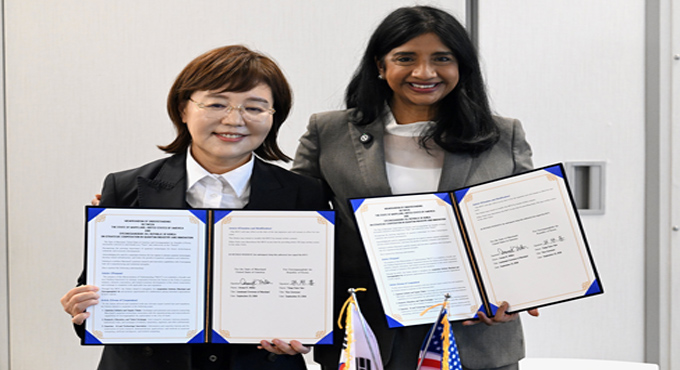
Lt. Governor Aruna Miller Signs Maryland-Korea Agreement to Advance Quantum Innovation

Bay Area Prepares for Grand Financial Services Business Opportunity Event in Fremont

Centre Grants Dedicated Foreigners Regional Registration Office (FRRO) to Amaravati
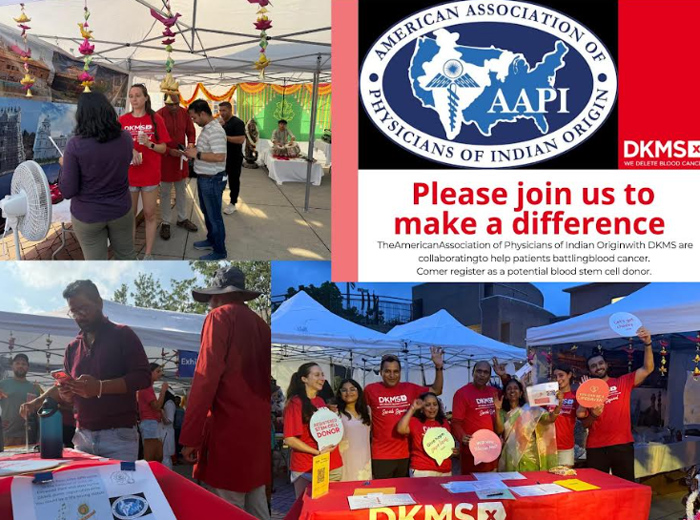
AAPI’s National Stem Cell Donor Drive Gains Momentum as Youth-Led Movement Expands Across U.S. and India

The Miracle Behind Every Dawn