

Wholesale Inflation Rockets to a 44-Month High of 9.68% as Energy Costs Explode
- Published By: Tech Team
- June 20, 2026 / 09:24 AM IST


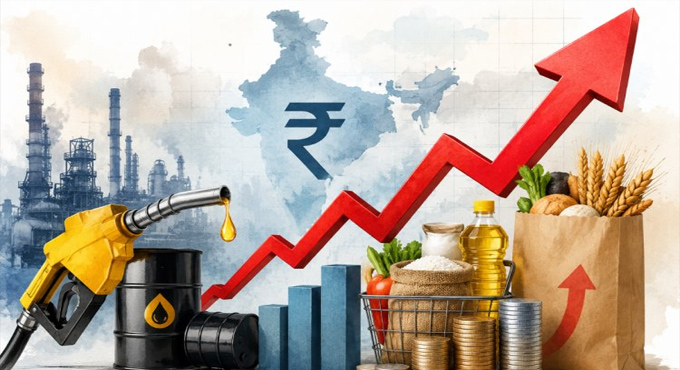
Global geopolitical tensions are taking a heavy toll on Indian manufacturing. With ongoing conflict fears in West Asia pushing international crude oil prices to extreme heights, corporate production costs across India have drastically escalated. As a direct result, the Wholesale Price Index (WPI) based inflation rate surged to a staggering 9.68% in May.
This dramatic spike marks the highest inflation level the country has witnessed in 44 months, matching a peak last seen in September 2022. It also signifies the eighth consecutive month of rising wholesale prices, climbing swiftly from the 8.3% recorded in April. The primary drivers behind this massive upward trajectory remain West Asian geopolitical stress alongside soaring prices for fuel, food items, chemicals, and base metals.
Energy and Fuel Costs Spearhead the Surge
The underlying data shows that the energy sector took the brunt of these global market disruptions. Crude petroleum and natural gas experienced an unprecedented inflation spike of 61.51%, while mineral oils closely followed with a massive 49.82% increase. This pushed the overall average inflation for the broader fuel sector to a steep 30.33%. These soaring energy costs triggered a powerful domino effect, driving inflation in the manufacturing sector up to 7.48% and accelerating food inflation to 4.49%.
Kitchen Budgets Face the Heat
The impact of these rising costs has traveled well beyond factory floors, hitting the budgets of everyday consumers. Food inflation jumped significantly to 4.49% in May, up from the 3.11% recorded in April. As raw agricultural products became substantially more expensive, food processing and manufacturing units had to pass the burden along, contributing heavily to the overall 7.48% rise across the manufacturing sector.
Government Overhauls the WPI System
In response to these rapidly shifting market realities, the central government has introduced major structural changes to track inflation with greater precision. The administration has officially retired older calculation templates, implementing a revised WPI series that establishes the 2022-23 financial year as the new base year. To better reflect modern consumer and industrial behavior, authorities have added 957 new items to the commodities basket. Crucially, this updated tracking system now accounts for clean energy developments, incorporating green power sources like solar, wind, and nuclear energy.
Furthermore, the government is actively doing the groundwork to transition toward a modern Producer Price Index (PPI) system, aiming to align India’s economic tracking with elite international standards.
Related News

BenQ Unveils “MOBIUZ Game Art Museum” Experience at Tokyo Game Show 2026

Dreame Technology Launches Flagship X60 Ultra Complete Robot Vacuum in India

Turtle Wax Marks 80 Years of Global Leadership as CEO Laurie King Visits India to Accelerate Expansion Plans

Hyundai Motor India Opens Bookings for the New Intelligent Utility Vehicle, Hyundai BAYON

Telangana AI Summit 2026 Drives State’s Vision to Become a Global Artificial Intelligence Hub