

Nepal’s First Tunnel Reflects a Bigger Bet on Infrastructure and Connectivity
- Published By: Tech Team
- August 6, 2026 / 10:36 AM IST


By Surya Prakash Josyula
Anyone who has driven through the Araku or Tirumala ghat roads in India knows one thing—building roads in the mountains is never easy. Every sharp bend, steep slope, and rocky hill reminds us how difficult such projects can be.
Now imagine doing that in the Himalayas.
That is exactly what Nepal has done. After nearly seven years of construction, the country has opened its first modern road tunnel by cutting through a mountain. For many countries, this may sound like just another infrastructure project. But for Nepal, it marks the beginning of a new chapter.
At first glance, it may seem like a small achievement. But history has shown that a single project—a port, an airport, a metro line, or a tunnel—can change the future of a nation. These are not just concrete structures. They are investments that improve connectivity, strengthen the economy, and make everyday life easier.
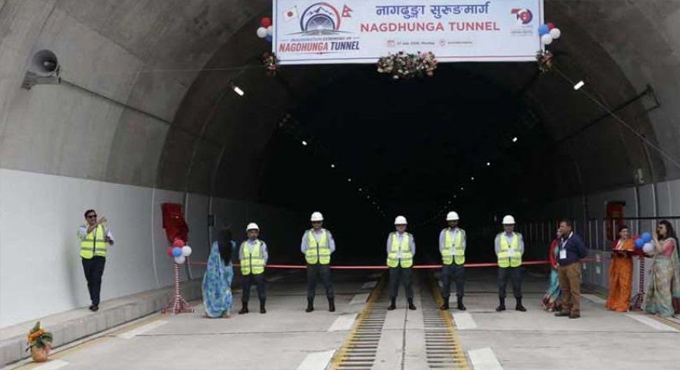
The newly opened Nagdhunga–Sisnekhola Tunnel connects Kathmandu with one of the country’s most important highways. The inauguration was attended by Nepal’s Minister for Infrastructure Development Sunil Lamsal, Japanese Ambassador Maeda Toru, and JICA President Tanaka Akihiko.
A Few Surprising Rules
The tunnel also comes with strict safety regulations.
Motorcycles are not allowed. Neither are pedestrians, bicycles, auto-rickshaws, or other slow-moving vehicles. Vehicles carrying petrol, diesel, gas cylinders, or other highly flammable materials are also banned.
The reason is simple. Inside a tunnel, even a small accident can quickly become a major disaster. Safety comes first.
Nepal has also introduced an electronic toll collection system. Using RFID-based N-Tags, drivers can recharge their accounts in advance and pass through the toll plaza without stopping. It is a small but important step towards smarter transport management.
Japan’s Quiet Role
One interesting part of this story is Japan’s involvement.
Japan provided around Rs 21.5 billion as a concessional loan, while the Nepal government invested another Rs 6 billion. Despite the difficult Himalayan terrain, changing weather, and engineering challenges, the project was completed after nearly 80 months of work.
But why did Japan invest so heavily in Nepal?
The answer goes beyond development aid.
Across South Asia, infrastructure has become part of a larger geopolitical competition. China has expanded its influence through the Belt and Road Initiative, while Japan has focused on funding high-quality infrastructure projects in countries like Nepal. This tunnel is not just about transportation—it also reflects growing strategic partnerships in the region.
More Than Just a Tunnel
The benefits of the project are expected to be significant.
Travel time will come down. Traffic congestion may reduce. Fuel consumption could fall. Freight movement is likely to become faster. Emergency vehicles will be able to reach their destinations more quickly. Together, these changes can improve economic activity and make daily travel smoother.
Projects like this also remind us of something important.
Building roads in mountainous regions is never easy. Yet Nepal has shown that with long-term planning, modern engineering, and political commitment, even the toughest landscapes can be transformed.
Nepal may be a small country on the world map, but bold decisions often matter more than size. Its first modern road tunnel is not just a passage through a mountain—it is a symbol of ambition, determination, and a nation preparing for the future.
Related News

India wins the bid to host UCI Road World Championship 2032 in Pune

Keystone STEM Alliance: A Youth-Led Model Transforming STEM Education and Community Engagement

The Miracle Behind Every Dawn

Transforming Healthcare Technology: Inside AMVIsion with Desai Siddabathula

Blueband Sports Rally of Coimbatore Set to Host Round 2 of INRC 2026 with 64 Cars on the Grid