
Maruti Suzuki Launches India’s First Flex-Fuel Car
- Published By: Tech Team
- June 4, 2026 / 07:58 PM IST


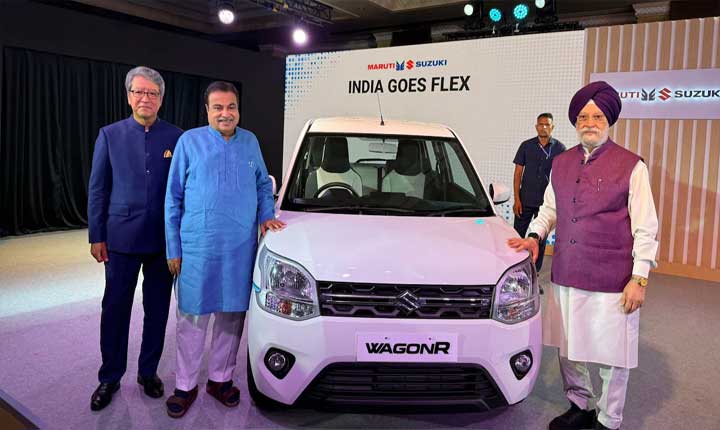
Maruti Suzuki: On the eve of World Environment Day, Maruti Suzuki India Limited officially ushered in a new era of sustainable mobility by launching India’s first flex-fuel vehicle. The landmark unveiling took place in New Delhi in the presence of Shri Nitin Gadkari (Hon’ble Minister of Road Transport and Highways) and Shri Hardeep Singh Puri (Hon’ble Minister of Petroleum and Natural Gas).
The flex-fuel technology has been introduced in the Wagon R, a mainstream favorite that has historically pioneered alternate fuel options like CNG and LPG in the Indian market.
What is a Flex-Fuel Vehicle?
A flex-fuel car gives drivers the flexibility to run their vehicle on any blend of ethanol and petrol, ranging from E20 (20% ethanol) up to E100 (100% ethanol). This innovation aligns directly with India’s national energy security and carbon reduction goals.
Key Economic and Environmental Benefits:
Reduced Oil Imports: Mass adoption will significantly cut down India’s dependence on foreign crude oil, saving valuable foreign exchange.
Rural Prosperity: Increased demand for ethanol directly boosts the agricultural sector, transforming farmers into energy producers (urjadatas).
Lower Emissions: Higher ethanol blends drastically reduce greenhouse gas emissions and local air pollution compared to conventional petrol.
“Flex-Fuel Vehicles can create a strong and sustainable demand for ethanol, benefiting our farmers, industry, and the environment together. I appreciate Maruti Suzuki for taking this leadership step.”
Shri Nitin Gadkari, Hon’ble Minister of Road Transport and Highways
Driving a Self-Reliant Energy Future:
While India’s ethanol infrastructure is still in its early stages, Maruti Suzuki aims to act as a catalyst for mainstream adoption. The company is pursuing a multi-technology approach to clean mobility—incorporating Battery Electric Vehicles (BEVs), Hybrids, CNG/CBG, and now, ethanol flex-fuel technology.
Government officials expect this launch to set a precedent, encouraging other automakers to introduce flex-fuel models while prompting the oil industry to rapidly expand the nationwide ethanol distribution infrastructure.
Related News
EV Charging Becomes a Seamless Part of Daily Life A New Travel Experience

Cleartrip Enters Holiday Packages Market with Flexible, Expert-Curated Itineraries

Truecaller Launches Scam Checker to Combat Digital Fraud with Community Intelligence

HDFC Mutual Fund Wraps Up Tirupati Leg of ‘Naari Nivesh Yatra’ to Boost Financial Literacy Among Women

Ai+ Smartphone Expands Festive Portfolio with Pulse 2 FE, NovaTab, and Nova LapTab