

ISWAI Report Highlights Indian Alcoholic Beverage Industry’s ₹6.2 Lakh Crore Economic Value and Massive Fiscal Contribution

- Published By: Vishal
- October 7, 2026 / 06:51 PM IST


According to ‘The Economic Value of the Indian Alcoholic Beverage Industry 2026’ report released by the International Spirits & Wines Association of India (ISWAI), India’s alcoholic beverages (Alcobev) sector achieved an estimated market size of ₹6.2 lakh crore in CY2025, accounting for approximately 1.8% of India’s nominal GDP. The sector plays a vital role in public finance, generating an estimated ₹4 lakh crore in tax revenues during FY2024-25 (comprising central and state levies), which represents roughly 6.6% of India’s total tax collections and 11.3% of indirect tax collections. Furthermore, alcohol-related revenues account for about 19% of states’ own tax revenues across evaluated states and union territories, offering predictable funding for public infrastructure, healthcare, education, and social welfare.
Employment Generation and Agricultural Value Chains:
The report underscores the extensive multiplier effect and employment footprint of the industry across various supply chains:
Agriculture and Farming: Supports an estimated 121.4 lakh to 128.1 lakh farmers across 24.2 lakh to 25.5 lakh farms producing grains, sugarcane, molasses, barley, and grapes.
Hospitality and Food & Beverage Services: Alcohol sales account for 14% to 19% of F&B industry revenues, supporting 9.2 lakh to 11 lakh jobs across licensed outlets.
Retail and Commerce: Organised off-premise retail alone supports 4.8 lakh jobs, with a total retail footprint of approximately 1.32 lakh licensed outlets nationwide.
Allied Industries: Accounts for roughly 70% of India’s container glass demand (a ₹10,000 crore market) and drives ₹5,800 crore in annual economic activity across logistics and transportation. In total, the sector sustains approximately 144 lakh jobs across agriculture, F&B services, and retail.
Growth Drivers, Premiumisation, and Regulatory Roadmap:
Premiumisation has emerged as a major growth engine as consumers increasingly trade up. The premium segment grew at a 10.2% CAGR between 2022 and 2025, significantly outpacing cheap (1.1%) and regular (1.4%) products. ISWAI CEO Sanjit Padhi and former Finance Commission Secretary Arvind Mehta noted that while the industry has achieved massive scale, future potential relies on strengthening value chains, boosting global exports, and navigating fragmented state-level regulations. Implementing regulatory consistency, rationalised taxation, digital compliance, and modernised distribution systems will be vital to unlocking the sector’s full economic and investment potential.
Related News
Ageas Federal Life Insurance Launches ‘Aurum Advantage’ GIFT City’s First Multi-Currency Life Insurance Plan
CDSL Launches ‘Reimagine Ideathon 2.0’ to Shape Financial Awareness and Cyber Safety Among Students

Smith & Jones Launches New Campaign Featuring Rasika Dugal to Help Consumers Evaluate Ginger Garlic Paste
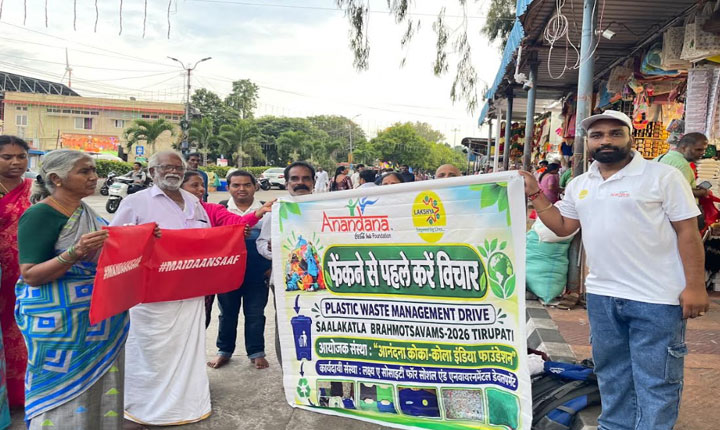
Anandana – The Coca-Cola India Foundation Launches First-Ever Waste Management Initiative at Tirupati Brahmotsavam 2026

JioHotstar Expands Into Middle East and North Africa (MENA) Through Strategic Partnership with STARZPLAY