

Govt Slashes Customs Duty on Electronics and Battery Manufacturing Inputs to Boost Gigafactories
- Published By: Phanindra
- July 11, 2026 / 10:17 AM IST


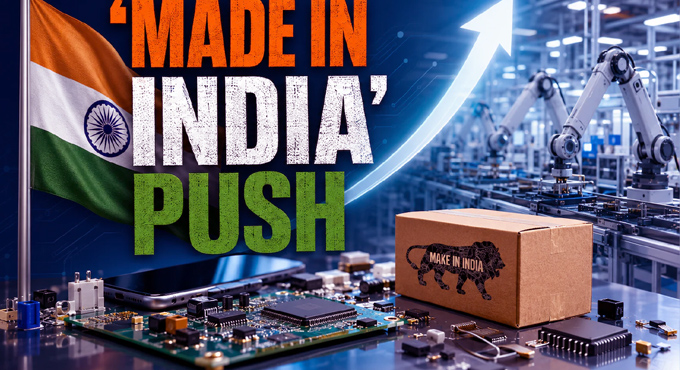
In a major bid to transform India into a global electronics manufacturing powerhouse, the central government has issued three pivotal notifications aimed at slashing domestic production costs. The government has completely exempted or significantly reduced the Basic Customs Duty (BCD) on select raw materials and highly advanced machinery. This strategic fiscal intervention is set to heavily fortify India’s industrial capabilities in both the electronics hardware and electric vehicle (EV) battery ecosystems. By blending extensions of existing tax reliefs with aggressive new exemptions, the updated policy framework significantly lowers the capital entry barriers for high-tech manufacturing nationwide.
Long-Term Tax Exemptions Extended Until March 2029
Under the newly updated guidelines, the government has provided an extensive lease of life to several critical tax reliefs that were already operational. Specifically, the BCD exemptions on five key components utilized in manufacturing displays for automobiles and specialized medical devices have been extended.
Additionally, a similar long-term tax holiday has been granted to six essential raw inputs used in fabricating wireless charging coils for mobile phones. The central government has locked in these specific exemptions to remain fully effective until March 31, 2029. However, the notifications explicitly clarify that these legacy display-related exemptions will continue to exclude components imported for standard smartphones and consumer smartwatches.
A Massive Boost for Domestic Lithium-Ion Battery Manufacturing
While the extensions offer policy stability, the government’s stance on lithium-ion battery manufacturing marks a complete structural overhaul. Scrapping the older, heavily restricted list of subsidized battery equipment, the ministry has introduced a massive, comprehensive list of 85 distinct types of advanced machinery now eligible for deep customs concessions. This newly exempted list covers capital-intensive hardware vital for establishing large-scale cell production, including high-tech equipment required for:
Advanced chemical coating and precision electrode winding.
Automated ultrasonic and laser welding systems.
High-throughput battery cell testing and formation infrastructure.
Commenting on this sweeping reform, Manoj Mishra, a representative from Grant Thornton Bharat, stated that simultaneously protecting local component supply chains while aggressively lowering the import costs of heavy capital machinery provides a massive incentive for global and domestic players. Mishra noted that this dual approach will act as a major catalyst for accelerating investments into domestic mega battery plants and large-scale gigafactories, positioning India as a highly competitive alternative in the global supply chain.
Related News

ITC Hotels Limited Announces Signing of Welcomhotel Roorkee Mandawar in Uttarakhand

Amazon Great Indian Festival Reloaded Launched: New Deals, Instant Discounts, and AI-Powered Shopping
IIT Hyderabad Launches India’s First Credit Course on ‘Goodness’ Alongside Mandatory Mental Well-being Curriculum

Sparx Taps Tamannaah and Lakshya for ‘Greatest of Today’ (G.O.T.) Campaign

Bain & Company Global Automotive Consumer Survey 2026: AI, Digital Adoption, and EV Trends Reshaping the Car-Buying Journey