
Copyright Clash Twists as Midjourney Challenges Film Studios Over Internal AI Exploitation
- Published By: techteam
- July 16, 2026 / 09:35 AM IST


Generally, right after a movie releases, we often hear producers complaining, “We lost heavily due to piracy.” But what if someone turned around and asked them, “Have you never watched pirated content yourself?” What could those producers possibly say?
Right now in America, an AI company has brought Hollywood face-to-face with a very similar situation.
Hollywood vs AI
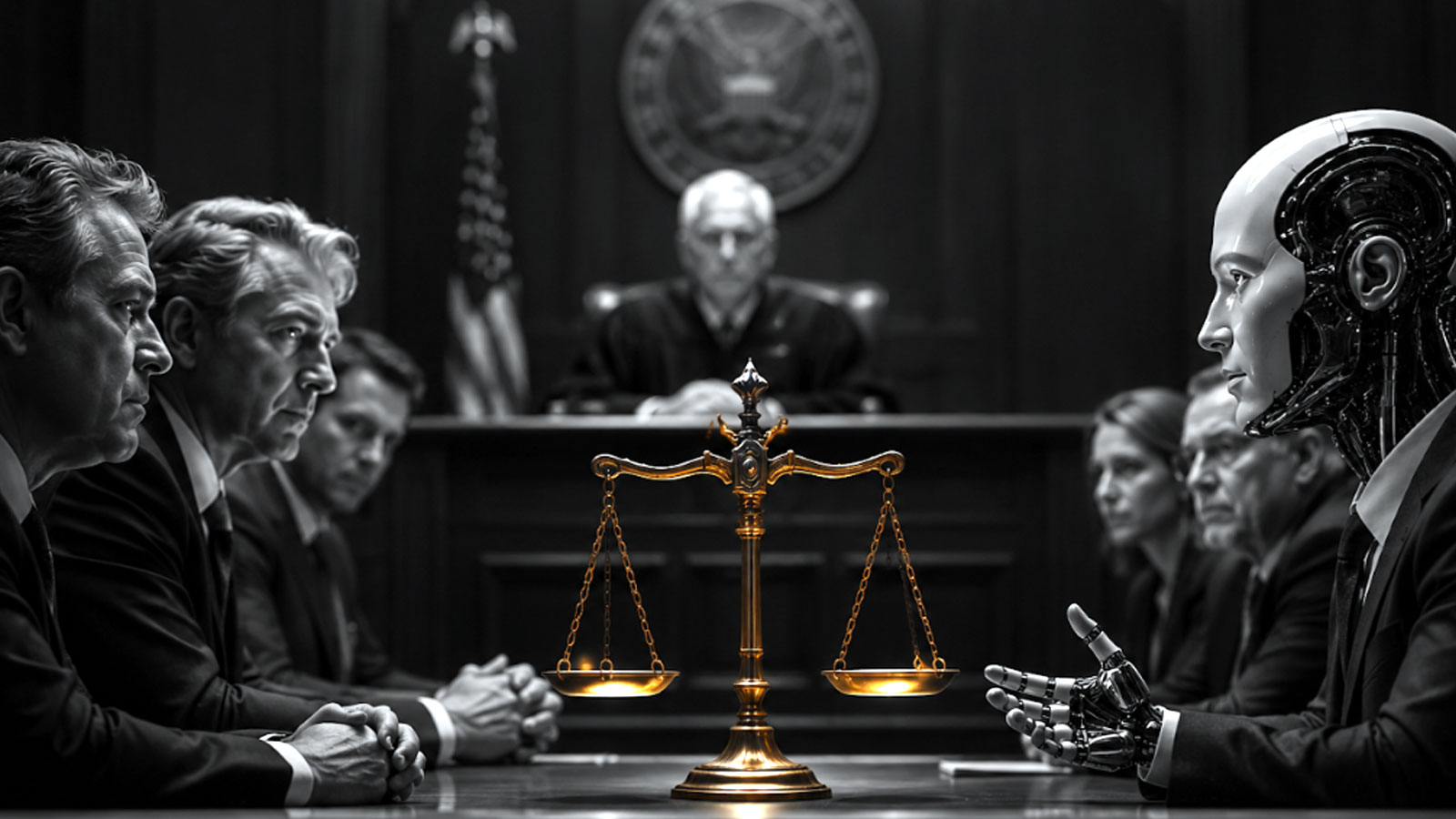
On one hand, there is an ongoing discussion about how Hollywood studios themselves are using AI to create posters, concept art, and storyboards. On the other hand, these very studios are filing massive lawsuits against AI companies, claiming, “You stole our copyright.” Weaponizing this hypocrisy, the famous AI firm Midjourney has now made a shocking demand in court against Hollywood giants like Disney, Warner Bros., and Universal.
What is Midjourney?
If ChatGPT writes text, Midjourney creates images. It is one of the world’s most popular AI image generation platforms, capable of generating brand new, movie-poster-quality images in seconds based on just a short text description (a prompt).
How the Case Began
Last year, Disney and Universal filed a lawsuit against Midjourney in a US court. Warner Bros. later joined this legal battle. The studios alleged that Midjourney was creating images of their copyrighted characters, such as Bart Simpson and Darth Vader, and had trained its AI models on their copyrighted content without permission.
Midjourney’s Counter-Attack
In court, Midjourney completely turned the case around with a single question.
“First, tell us if and how you are using AI. If it turns out that you are also creating movies using AI, can your copyright case against us even stand?” it asked.
Furthermore, Midjourney argues that training its AI models on copyrighted material falls under the legal boundary of ‘Fair Use’.
Demands Placed on the Studios
Midjourney wants the studios to reveal exactly how they are using AI behind the scenes and demands that they submit all relevant internal documents to the court. Not just that, Midjourney has also demanded that the studios produce every single prompt they have entered into the Midjourney platform, along with the resulting AI images. They are asking for the full usage data, rather than limiting it to just the images where copyright infringement is alleged.
What is the Strategy?
There is a clear strategy behind Midjourney’s demand. If it is proven that studios like Disney, Warner Bros., and Universal are already internally using AI for tasks like storyboarding, concept art, character design, and content ideation, then Midjourney gets an opportunity to argue in court that training AI models on copyrighted content is an accepted industry practice.
Key Questions in the Case
So, until now, the only question in this case was: “Did Midjourney train its AI using copyrighted content?” But now, another crucial question has been added: “How much are Hollywood studios themselves using AI?”
Will the Case Change Direction?
Legal experts believe that if it comes to light that the studios are using AI in a similar manner, the entire direction of this case could change.
What are the Studios Saying?
However, the studios are strongly opposing Midjourney’s demands. Their lawyers told the court that this information is entirely irrelevant to the case and that Midjourney is unnecessarily asking for these details.
David Singer, the lead attorney for the studios, argued that Midjourney is merely engaging in a “fishing expedition”—trying to dig out internal details to see if they can catch something useful. He clarified that they are not trying to stop AI technology or shut down Midjourney. Instead, their only goal is to stop the unauthorized copying and distribution of their iconic characters and movies.
The Impact of this Case
The impact of this case is not limited to Hollywood. It will serve as a future guide for major questions like: How should AI platforms like ChatGPT, Gemini, and Midjourney use internet content? Where should the boundaries of copyright lie? What rules should apply to creators working with AI?
That is why tech companies, the film industry, and content creators worldwide are closely watching this case.
Ultimately, this case is no longer just about whether Midjourney wins or Hollywood wins. The court is now searching for an answer to a single question: before accusing others, are you doing the exact same thing? And that answer has the potential to define the very future of AI.
Related News

The Agentic Shift: When AI Becomes the Actor

Fueling Domestic Security: India Doubles Diesel Export Tax Amid Surging Middle East Tensions

KK Maheshwari elected President and Srinivas Garimella Senior Vice President of FTCCI

Aditya Birla Housing Finance Expands Telangana Footprint with New Medchal Branch

World of Hyatt Expands Partnership with HYROX to India